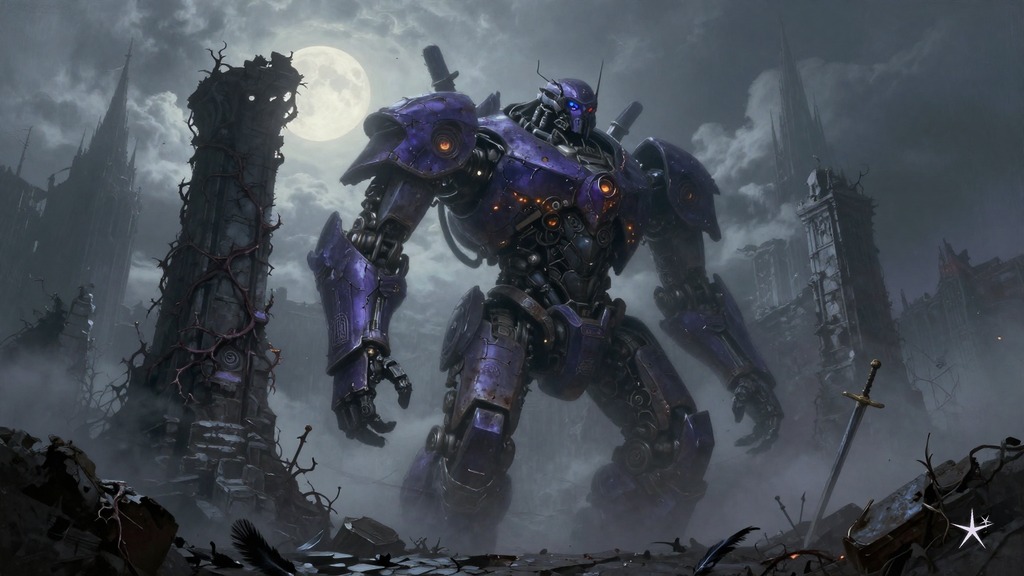
If you’ve been wondering whether The Big O manga ever got a proper ending or if it’s stuck in the same kind of unfinished limbo that hits many manga based on anime properties, good news: The Big O manga is completely finished. The entire story wraps up in just six volumes, and every one of them has been released in English.
Let’s break down exactly what that means, what the series covers, and how to get your hands on it.
Yes — The Big O Manga Is Finished (6 Volumes, Completed in 2003)
The short answer: yes, The Big O manga is a completed series. There’s no ongoing publication, no hiatus, and no unfinished cliffhanger to worry about.
Here are the key details:
- Original concept by: Hajime Yatate (a collective pen name used by the anime studio Sunrise)
- Manga written and illustrated by: Hitoshi Ariga
- Japanese publisher: Kodansha
- Japanese serialization run: July 1999 to October 2001 (collected volumes published in Japan in 2003)
- Total volumes (Japanese): 6
- Total volumes (English): 6
- English publisher: VIZ Media
That’s right — the entire manga was published within a single year. Hitoshi Ariga delivered a tight, self-contained story that doesn’t overstay its welcome. If you’re used to manga that stretch into dozens of volumes with no end in sight, The Big O is a refreshing change of pace. Six volumes, beginning to end, done.
The fact that it wrapped up so quickly in 2003 also means there’s zero ambiguity about its status. This isn’t a series that was cancelled mid-run or left dangling — it reached its planned conclusion.
How the Manga Wraps Up — And How It Differs from the Anime
This is where things get interesting, especially if you’re coming to the manga after watching the anime.
The Big O manga is not a panel-by-panel retelling of the anime. Hitoshi Ariga took the core concept — Roger Smith negotiating and fighting his way through Paradigm City in his massive robot, the megadeus Big O — and reshaped it into a story that stands on its own terms. (A megadeus, in this world, is a towering humanoid machine — think giant robot, piloted from inside.) The dark, moody atmosphere is intact, the mystery of why Paradigm City’s entire population has lost its memories still drives the plot, and the giant robot battles still hit hard. But the narrative has been compressed and restructured to fit a six-volume story.
What does that mean in practice?
- The pacing is tighter. Without the episode-by-episode format of a TV series, the manga moves through its story beats more efficiently. There’s less room for standalone, one-off episodes and more focus on driving toward resolution.
- The ending is different — and definitive. Without spoiling specifics, the manga reaches a conclusive endpoint. If you’ve seen the anime and found its finale left too many questions unanswered, the manga’s approach may feel more satisfying, or at least more clearly resolved. And if you haven’t seen the anime, that’s perfectly fine — this point won’t matter to you.
- The tone stays dark. Paradigm City is still a place defined by shadows, secrets, and the uncomfortable feeling that nothing is quite what it seems. The story blends shadowy detective-fiction mood with brooding, gothic dread — think rain-soaked streets, buried conspiracies, and an ever-present sense of unease. That combination of giant robots with genuine atmosphere is what sets The Big O apart from more action-focused series in the genre. Mecha (a genre built around giant robots and mechanical suits) is the frame, but mystery and mood are the substance.
If you watched the anime and loved the world but wanted a cleaner story from start to finish, the manga delivers that. And if you’ve never seen the anime at all, that’s perfectly fine — the manga works as a standalone experience. You won’t feel lost or like you’re missing context.
One thing worth noting: because the manga compresses and reimagines elements from the anime, some characters and plot threads are handled differently. Think of it less as a direct retelling and more as an alternate version of the same core story. Both versions are valid ways to experience Paradigm City.
What a Complete Set Looks Like — All 6 Volumes
Collecting The Big O manga is about as straightforward as it gets. The complete series consists of six volumes published by Kodansha in Japan and by VIZ Media in English. When you have volumes 1 through 6, you have the complete story — no side stories, no bonus volumes, no separate prequel manga you need to track down.
Here’s a quick overview of how the story progresses:
| Volume | What to Expect |
|---|---|
| Volume 1 | Introduces Roger Smith, the amnesiac city of Paradigm, and the giant robot Big O. Sets the tone and central mystery. |
| Volume 2 | Expands the world — new characters and deeper questions about the city’s lost past. |
| Volume 3 | The shadowy atmosphere thickens. The central conflict sharpens. |
| Volume 4 | The truth about Paradigm City starts coming into focus. Stakes rise significantly. |
| Volume 5 | Second-to-last volume — the story’s biggest reveals surface here. |
| Volume 6 | Series finale — the story reaches its conclusion. |
For context, this is an incredibly compact series. You could read the whole thing in a weekend without rushing. That makes it a solid pick if you want something satisfying and complete without committing to a multi-year reading project. If you’ve been burned by incomplete manga before — series that got cancelled or simply stopped updating — The Big O sidesteps that problem entirely.
The English editions were published by VIZ Media, so if you’re reading in English, those are the volumes you’re looking for.
The Big O
Where to Start Reading The Big O
Start at Volume 1. With only six volumes in the entire series, there’s no reason to skip ahead or jump in at a later point. The story is designed to be read from beginning to end in order, and at this length, reading the whole thing is a minimal time commitment.
Here’s what you should know before you start looking for copies:
Availability may be limited. The Big O manga was published in English over two decades ago, and the volumes are likely out of print at this point. That means finding brand-new copies at standard retail prices can be tricky. Your best options are:
- Used bookstores — both physical shops and online used-book sellers often have copies floating around
- Online marketplaces — secondhand copies turn up regularly, though prices can vary depending on condition and demand
- Library systems — some library networks still carry the series. If your local branch doesn’t have it, ask about interlibrary loan — a free service that lets your library borrow books from other libraries in the network on your behalf
No anime prerequisite required. You do not need to watch The Big O anime before reading the manga. The manga tells its own version of the story. Familiarity with the anime’s world will add some extra appreciation — you’ll recognize the art style, the character dynamics, the questions about memory and identity — but it’s absolutely not necessary.
Who will enjoy this the most? If you like any of the following, The Big O manga is worth your time:
- Dark, moody atmospheres — Paradigm City is drenched in shadows, secrets, and dread
- Giant robots with substance — the mecha fights serve the story rather than existing for spectacle alone
- Self-contained stories — no need to wait for future volumes or worry about cancellation
- Mystery-driven stories — the central question of what happened to Paradigm City’s memories gives everything a haunting, uneasy quality
And even if none of those describe you perfectly — if you’re simply looking for a short, finished manga with a real ending, The Big O is worth a look. Six volumes, a complete story, and no loose threads. That alone makes it worth picking up.
Frequently Asked Questions
Is there a sequel or continuation to The Big O manga?
One related manga does exist: Lost Memory (ロストメモリー), a second series also authored by Hitoshi Ariga, published in anticipation of the second anime season. Beyond that, no additional sequel or continuation manga for The Big O has been announced.
The six-volume main series tells a complete, self-contained story. So if you’re asking “is The Big O manga finished” because you’re worried about needing to wait for more — the main series is done. Lost Memory appears to have had limited distribution in English, so availability outside Japan may be difficult.
Do I need to watch the anime before reading the manga?
Not at all. The manga was created by Hitoshi Ariga as its own take on the original concept by Hajime Yatate. While it shares the same setting, characters, and core premise as the anime, the story takes its own path and reaches its own conclusion.
Watching the anime first might give you a richer sense of Paradigm City’s world and visual style, but the manga provides all the context you need within its own pages. Either order works fine — anime first, manga first, or manga only.
How many chapters does The Big O manga have?
The exact chapter count hasn’t been confirmed in widely available English-language sources — which isn’t unusual for an older, shorter series with limited documentation online. What we do know is that the complete story spans six volumes, serialized in Kodansha’s Magazine Z from July 1999 to October 2001, with the collected volumes published in Japan in 2003. The English edition from VIZ Media also consists of six volumes containing the full story.
For practical purposes, knowing it’s six volumes is all you need to plan your reading. The series is short enough that you can sit down with the first volume and reach the ending without needing to map out a chapter-by-chapter schedule.