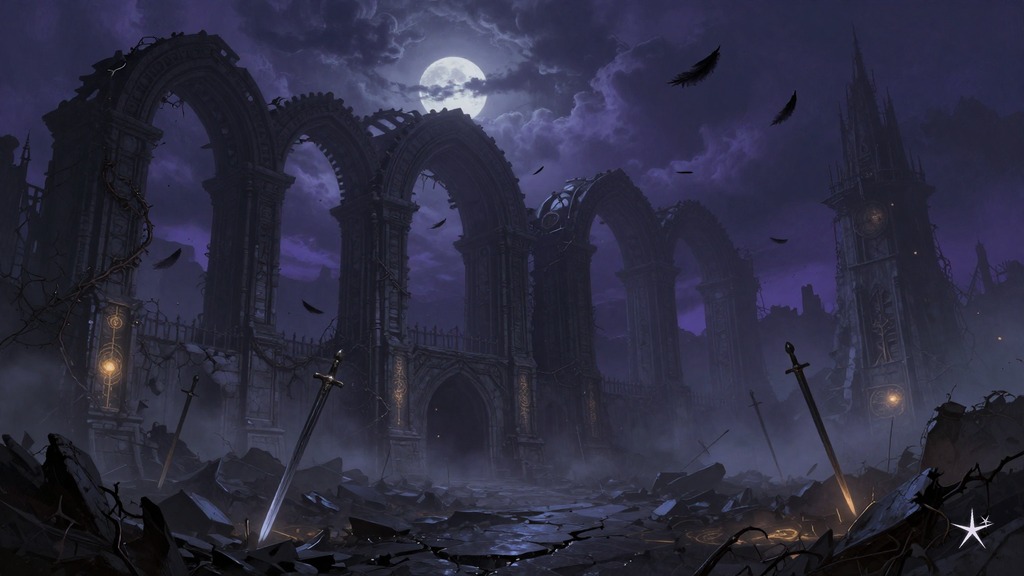
Looking for The Big O manga reading order? Here it is: six volumes, read in sequence from Volume 1 to Volume 6, and you’re done. No prequels, no alternate timelines to track. There is a Japanese-only spinoff manga called Lost Memory (2 volumes, also by Hitoshi Ariga) set between Volumes 5 and 6, but it has never been licensed in English — so for English readers, it’s six volumes, cover to cover.
Now, some context on what you’re getting into. Paradigm City is a place where everyone has lost their memories. Forty years ago, something happened — nobody knows what — and the entire population woke up with a blank slate. Into this amnesiac metropolis steps Roger Smith, a sharp-dressed negotiator who pilots a colossal mecha (a giant piloted robot) called Big O when talking fails and punching through buildings becomes necessary.
Let’s get into the full breakdown.
The Big O Manga Reading Order — All 6 Volumes in Sequence
The bottom line: The Big O manga is a completed 6-volume series written and illustrated by Hitoshi Ariga (有賀ヒトシ), based on the original concept by Hajime Yatate (矢立肇). You read it in publication order — meaning the order the volumes were originally released — from Volume 1 through Volume 6. Start with Volume 1. Each volume builds on the last, so jumping in at a random point will leave you lost.
Here’s your full reading order:
Volume-by-Volume Breakdown
- Volume 1 — Introduces Paradigm City, Roger Smith, his android companion Dorothy (a robot built to look and act human), and the butler Norman. You’ll get your first taste of the noir-drenched atmosphere — noir being a style defined by dark moods, morally ambiguous characters, and a cynical worldview — and the mystery of the city’s lost memories. Big O makes its entrance, and the tone is set: equal parts tough, unsentimental detective story and giant robot action.
- Volume 2 — Roger takes on new negotiations that pull him deeper into Paradigm City’s buried secrets. The world-building expands as you meet more of the city’s power players and get a stronger sense of just how strange this place really is. The mecha battles start to hit harder, too.
- Volume 3 — The mysteries deepen. Questions about what happened forty years ago start pressing in from multiple directions, and Roger’s role as negotiator puts him at the center of conflicts that go well beyond simple business disputes. The gothic, oppressive atmosphere of the city — think crumbling grandeur, heavy shadows, and a pervasive sense of dread — tightens its grip.
- Volume 4 — Stakes escalate. The conspiracies woven through Paradigm City’s power structures become harder to ignore, and Roger faces threats that challenge both his principles and his ability to keep punching his way through problems with a giant robot. The existential unease that defines the series really comes into focus here.
- Volume 5 — Things accelerate toward the endgame. Revelations about the city, its people, and the nature of memory itself start landing. Ariga’s art is firing on all cylinders during the mecha sequences in this stretch.
- Volume 6 — The finale. The threads of mystery, identity, and power converge. Without spoiling anything, know that this is a series comfortable with ambiguity — it wraps up its story, but it doesn’t hand you every answer neatly. That’s intentional, and most readers find the ending thought-provoking rather than frustrating. It’s the kind of conclusion that stays with you and rewards reflection.
The Big O
That’s the complete Big O manga reading order. A Japanese-only spinoff called Lost Memory (2 volumes by Ariga) is set between Volumes 5 and 6, but since it has never been released in English, there’s nothing extra you need to track down. Six volumes, straight through, done.
Why Reading Order Matters — The Manga and the Anime
Here’s something worth knowing before you start: The Big O was conceived as a media franchise. Sunrise developed both an anime series and a manga simultaneously, with Hitoshi Ariga’s manga actually beginning serialization in Kodansha’s Magazine Z in July 1999 — three months before the anime premiered in October 1999. This means the manga is not an after-the-fact adaptation of the anime; it’s a parallel work built from the same character and concept designs.
The Manga Tells Its Own Story
Because the manga and anime were developed alongside each other from the same core premise, they share the fundamentals — Roger Smith, Dorothy, Big O, Paradigm City, the amnesia mystery, the noir tone — but each tells its own version of events. Ariga had room to reshape, reinterpret, and take the story in directions that don’t perfectly mirror the anime. The manga is not a panel-by-panel recreation of the show, and the anime is not a shot-by-shot recreation of the manga.
This means you don’t need to worry about the manga “spoiling” the anime or vice versa. They’re more like parallel interpretations of the same world and characters.
Should You Read or Watch First?
Either order works, genuinely. If you’re coming to this as a manga reader — which, given that you searched for a reading order, you probably are — the manga stands completely on its own. You don’t need the anime as background. Ariga’s detailed mechanical artwork and gothic visual storytelling carry the story without any outside context.
If you decide to check out the anime afterward, you’ll get a different take on Paradigm City with orchestral music and vocal performances adding their own flavor. But the manga is a fully self-contained experience.
The reading order itself doesn’t change regardless of whether you’ve seen the anime — it’s still Volume 1 through 6, start to finish.
Which Edition Should You Buy
The English Edition
The English-language edition of The Big O was published by VIZ Media across 6 volumes, matching the complete Japanese run. The manga originally came out in the early 2000s, which means these volumes have been on shelves (or off shelves) for over two decades now.
Here’s the practical reality: finding brand-new copies at standard retail prices may take some hunting. The series is not a massive ongoing franchise with constant reprints, so availability fluctuates. Your best bets are:
- Digital editions — Check whether digital editions are currently available on platforms like Kindle, Kobo, or the VIZ Manga app. For an older, out-of-print title like this, digital availability is not guaranteed, but it’s worth checking — when available, digital tends to stay accessible even when physical copies go out of stock.
- Secondhand copies — Online marketplaces, used bookstores, and manga resellers often have individual volumes circulating. Condition and price will vary, so patience helps. If you prefer the feel of physical pages, this is likely your route.
- Library systems — Don’t overlook this. Many library networks carry manga, and interlibrary loan (a service that lets one library borrow a book from another on your behalf) can fill gaps in a collection. It’s free, and it’s worth checking before you buy.
Since there are only six volumes, collecting the complete set is a manageable project even if you have to piece it together over a few weeks.
The Japanese Edition
The original Japanese edition was published by Kodansha under the Magazine Z KC label (a subdivision Kodansha used to categorize certain titles). Publication ran from March 2003 to October 2003 — a very compact release window. If you read Japanese or collect original editions, these are worth knowing about, though they’ll be similarly tricky to find new at this point.
No Omnibus or Deluxe Edition
As of the information available, there’s no omnibus collection (multiple volumes bound into a single book), deluxe hardcover, or box set for The Big O manga. It’s the six individual volumes or nothing. This keeps things simple from a “which edition” perspective — you don’t have to choose between competing formats.
Guidance for First-Time Readers
What to Expect Tonally
The Big O sits at an unusual intersection of genres. It’s a noir detective story wrapped in a mecha action series built on top of an existential mystery — all drenched in a gothic, dystopian atmosphere (meaning a dark, foreboding setting where society has gone deeply wrong).
Paradigm City itself is one of the best settings in manga. Imagine a city that looks like a heavy, raw-concrete version of 1940s New York, permanently overcast, where domed districts separate the haves from the have-nots, and nobody remembers anything from before forty years ago. It’s unsettling in a way that creeps up on you. The amnesia isn’t just a plot device — it infects everything. People don’t know who they were. Institutions don’t know why they exist. The whole city is running on momentum and habit, and beneath that surface, things are deeply wrong.
For dark fantasy fans, this scratches a very specific itch: the feeling that the world itself is hiding something terrible, and the more you learn, the less comfortable you become.
Hitoshi Ariga’s Art
Ariga is known for incredibly detailed mechanical design work. The megadeuses — the in-universe name for the giant robots, including Big O itself — are rendered with a weight and solidity that makes them feel like actual machines rather than sleek, lightweight anime robots. There’s grit, there’s mass, there’s industrial heaviness.
The action sequences are dynamic and clear. You always know what’s happening in a fight, which is no small thing in mecha manga where battles can easily become visual chaos. Ariga’s backgrounds also do a lot of heavy lifting for the atmosphere — Paradigm City feels like a real place, decaying and grand in equal measure.
The Ambiguity Is the Point
Fair warning: The Big O is a series that raises more questions than it answers, and that’s intentional. The mystery of what happened forty years ago, the nature of memory and identity in Paradigm City, the truth about the megadeuses — the manga explores these themes without necessarily resolving them into neat explanations.
If you’re the kind of reader who needs every plot thread tied up with a bow, adjust your expectations. If you’re the kind of reader who enjoys sitting with uncertainty and turning ideas over in your head after the last page, you’re going to love this. The ambiguity feels earned — the story gives you enough to build your own interpretation, and that sense of lingering mystery is part of what keeps readers thinking about Paradigm City long after they close Volume 6.
Approach It as Its Own Experience
Even if you’ve watched the anime, come to the manga fresh. Let Ariga’s version of Paradigm City be its own thing. The differences aren’t deficiencies — they’re features. Some moments will land differently on the page than they did on screen, and that’s part of the fun of experiencing a story through a different medium and a different creative voice.
FAQ
What is The Big O manga reading order?
Volume 1 through Volume 6, in that exact sequence. The series is complete at six volumes, all written and illustrated by Hitoshi Ariga. A Japanese-only spinoff called Lost Memory (2 volumes) exists and is set between Volumes 5 and 6, but it has never been licensed in English, so there’s nothing extra to fit into the reading order. Start at Volume 1, read straight through to Volume 6, and you’ve experienced the full story.
How many volumes of The Big O manga are there?
Six volumes total. The series is complete — no volumes are missing, no hiatuses to worry about, no “will they ever finish it?” anxiety. You can read the whole thing from start to finish right now.
Is The Big O manga the same story as the anime?
Not exactly. The manga and anime were developed simultaneously as part of the same media franchise, but each tells its own version of the Paradigm City story. The core premise, main characters, and tone are shared between both versions, but the specific events and how the story unfolds differ. Think of them as two takes on the same concept rather than identical stories in different formats.
Is the English manga still in print?
The English edition from VIZ Media has been available for over twenty years, and fresh print runs aren’t guaranteed for a niche title with that kind of history. You may find new copies through some retailers, but your best options are checking for digital editions (try Kindle, Kobo, or the VIZ Manga app — though availability for older titles is not guaranteed), secondhand markets, and libraries. If digital editions are available, they’re the most convenient option. If you want the physical reading experience, be prepared to hunt a bit.
Do I need to watch the anime before reading the manga?
No. The manga stands on its own as a complete story. Watching the anime first can give you additional context and a different perspective on Paradigm City, but it’s not required to understand or enjoy the manga. Either order works — read first and watch later, watch first and read later, or just do one and not the other. There’s no wrong approach here.
What genre is The Big O?
It’s a blend of noir, mecha, mystery, and gothic dystopia. If you like dark atmosphere, morally gray characters, giant robot fights, and stories about identity and memory, it’s a strong pick. It appeals to dark fantasy fans specifically because of its oppressive setting and the pervasive sense that something profoundly wrong lurks beneath the surface of Paradigm City.