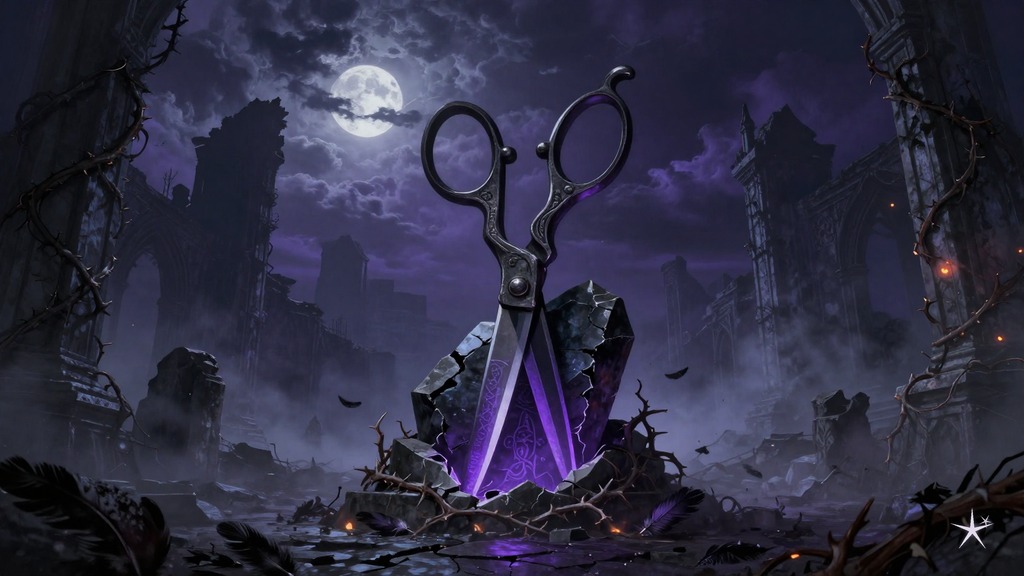
The Severing Crime Edge manga volumes number 11 in total, and the series is fully complete. If you’re here wondering what to expect from each volume and where to buy them, you’re in the right place.
A boy with cursed scissors. A girl whose hair can never be cut. Murder weapons passed down from real killers. The Severing Crime Edge (断裁分離のクライムエッジ — the original Japanese title) by Tatsuhiko Hikagi is one of the most unusual dark fantasy manga you’ll come across. Let’s get straight to it.
The Severing Crime Edge Manga Volumes: All 11 Books in a Complete Series
The Severing Crime Edge runs 11 volumes total, and the series is fully complete. No waiting for the next release, no hiatuses to stress about — the whole story is here from start to finish.
Tatsuhiko Hikagi published the manga chapter by chapter in Monthly Comic Alive, a manga magazine, from May 2009 to September 2015. Those chapters were then collected into volumes published in Japan under the MF Comics label by Media Factory. All 11 volumes have been released in both Japanese and English, with the English editions available digitally.
For anyone who hasn’t encountered this series before, the premise is striking: Kiri Haimura is a boy obsessed with cutting hair. He meets Iwai Mushanokouji, a girl cursed with hair that no ordinary blade can sever. The only thing that works? A pair of scissors that once belonged to a murderer — a “Killing Good,” which is the series’ term for cursed weapons inherited from real killers. The name uses “good” in the sense of a physical object or possession (like “goods and services”), not something positive. Each weapon’s wielder is called an “Author” — a strange title the story uses to describe the person who carries and is bound to a Killing Good. Authors feel the original murderer’s compulsion to kill. And there are many of them, each carrying their own cursed tool, all drawn toward Iwai for reasons tied to the nature of the curse itself.
It’s a genuinely original concept. Dark, strange, romantic, and violent in ways that set it apart from most manga in the genre. The full 11-volume run gives Hikagi enough space to develop the idea thoroughly, moving from that eerie initial setup through escalating conflicts and into a definitive conclusion.
All 11 Volumes at a Glance
Here’s a breakdown of key milestone volumes across the series to give you a sense of how the story develops. The table highlights major turning points — the volumes between these landmarks continue building the same threads, filling in supporting cast, deepening the mythology around the Killing Goods, and developing the complicated relationship between Kiri and Iwai. The descriptions below are based on the general progression of the premise rather than detailed plot spoilers.
| Volume | JP Release Year | What to Expect |
|---|---|---|
| Vol 1 | 2009 | The story begins here — Kiri, Iwai, and the Crime Edge scissors are introduced. The concept of Killing Goods and the curse surrounding Iwai’s hair is established. This is where you’ll know if the series is for you. |
| Vol 2 | 2010 | Other Killing Goods wielders enter the picture. The battle structure that drives much of the series takes shape as Authors clash. |
| Vol 5 | 2012 | The conflicts between Authors escalate into darker psychological territory. The series pushes deeper into what it means to carry a murderer’s legacy. |
| Vol 8 | 2014 | Late-series intensity ramps up. Alliances shift, stakes rise, and the horror elements hit harder. |
| Vol 10 | 2015 | Climactic confrontations build toward the finale. The threads Hikagi has been weaving start pulling tight. |
| Vol 11 | 2015 | The final volume. The series reaches its conclusion — every major conflict and character journey wraps up here. |
There’s a clear sense of escalation across the whole run — the early volumes focus more on setup and character introduction, while the later half commits fully to the darker implications of the premise.
A note on pacing: The first volume does a lot of heavy lifting establishing the rules and logic of the fictional world. If you’re intrigued but not fully hooked after volume 1, giving it through at least volumes 2 or 3 is worthwhile. The battle dynamics and psychological elements that make this series distinctive really start clicking once more Authors appear.
How Dark Does It Get — Tone and Content Notes
This is important to address head-on, because The Severing Crime Edge occupies an unusual tonal space that works for some readers and frustrates others.
The Dark Fantasy Core
The series is built on a genuinely disturbing foundation. Every Killing Good is a real murder weapon — scissors, razors, needles, and worse — and each one carries a kind of psychological residue from its original owner, meaning the weapon’s violent history influences whoever holds it. The Authors who wield these weapons don’t just fight with them. They feel compulsions. The urge to kill isn’t abstract or metaphorical; it’s depicted as something visceral and constant that the characters struggle against.
This means the manga regularly deals with:
- Violence and blood — fights involve cursed weapons designed to kill, and the manga doesn’t shy away from showing the consequences
- Psychological horror — the central tension isn’t just physical danger but the question of whether someone carrying a killer’s weapon can resist becoming a killer themselves
- Implied torture — some Killing Goods and their associated backstories involve deeply unpleasant methods
- Blood — present throughout, especially as conflicts intensify in the later volumes
Hikagi takes the “inherited murder weapon” concept seriously. The horror isn’t played for shock alone — it’s woven into the character development and the moral questions the story asks. What does it mean to inherit a compulsion you didn’t choose? Can love overcome a curse that demands violence? These are the threads running underneath the action.
The Tonal Mix That Divides Readers
Here’s the part that tends to split opinions: The Severing Crime Edge also contains sexually suggestive scenes included for audience appeal and lighter romantic comedy elements. The same series that depicts characters struggling against murderous impulses will shift into scenes of romantic awkwardness or physical comedy that feel tonally very different.
For some readers, this contrast works — it mirrors the way the characters try to maintain normalcy despite their dark circumstances. For others, the jarring shift between genuine horror and lighthearted suggestive content undermines the darker themes.
This is worth knowing upfront. If you’re looking for a relentlessly grim dark fantasy, the lighter moments may frustrate you. If you’re okay with a series that oscillates between moods — sometimes within the same chapter — there’s a lot to appreciate in how Hikagi handles both tones.
Content Warnings Summary
- Violence and blood (frequent)
- Psychological horror and murderous compulsions
- Implied torture
- Some sexual content and suggestive scenes
- Dark themes involving inherited violence
Is There an Anime Adaptation?
Yes — a 13-episode TV anime adaptation of The Severing Crime Edge exists, and it covers the early portion of the manga’s story, roughly the first several volumes. However, the manga ran until 2015 and contains significantly more content than the anime adapted.
If you watched the anime and want to know what happens next, the manga is where you need to go. The later volumes take the story into territory the anime never reached, with escalating conflicts, deeper character development, and the actual conclusion to the series.
The manga is the original source material that the anime was adapted from, which means the manga is the complete version of this story. It’s where Hikagi’s full vision plays out, from the initial premise through to its resolution across all 11 volumes. The anime serves as a decent introduction to the concept and characters, but it’s essentially an incomplete experience.
For anime fans considering the manga: volume 1 is recommended as your entry point even if you’ve seen the show. The manga’s pacing and tone differ enough from the anime that starting fresh gives you the best experience, and at 11 volumes total, the commitment isn’t enormous.
Where to Buy The Severing Crime Edge in English
All 11 volumes of The Severing Crime Edge are available in English as digital editions. You can find them on Amazon Kindle and other digital manga platforms. They’re generally priced comparably to other digital manga volumes, so there are no unusual cost surprises if you’re already familiar with buying manga digitally.
For anyone just starting out, the straightforward advice is this: grab volume 1 and give it a few chapters. The premise is unusual enough that you’ll likely know pretty quickly whether this series is for you. The Killing Goods concept, Kiri and Iwai’s dynamic, and the overall atmosphere are all established early.
If you’re hooked after the first volume, the good news is that the complete series is available right now — no waiting for future releases, no risk of the series being left unfinished. You can read straight through from volume 1 to volume 11 at whatever pace suits you.
The Severing Crime Edge
Getting Started and What to Know
- Commit to at least 2-3 volumes before deciding. The first volume establishes the world, but the series’ real strengths — the Author battles, the psychological tension, the escalating stakes — emerge once the supporting cast and competing wielders enter the picture.
- Be prepared for tonal shifts. As mentioned in the content notes above, this series moves between dark horror and lighter moments. Knowing that going in helps set expectations.
- Digital is the primary way to read the English edition. Physical English-language copies aren’t widely available, so digital is your most reliable option for the complete series.
Is It Worth Reading All 11 Volumes?
For dark fantasy manga fans — especially those who appreciate unusual premises and don’t mind tonal variety — absolutely. The Severing Crime Edge does something genuinely different with its cursed-weapon concept, and having the complete 11-volume run available means you get the full story with a real ending.
This is a series that took a bizarre idea — murderers’ weapons as inherited curses — and committed to exploring it across six years of publication. The result is a dark fantasy manga that doesn’t quite feel like anything else out there.
If scissors that compel their wielder to cut, a girl with uncuttable hair, and a cast of people carrying the legacies of killers sounds like your kind of strange — you’ll find a lot to love across these 11 volumes.