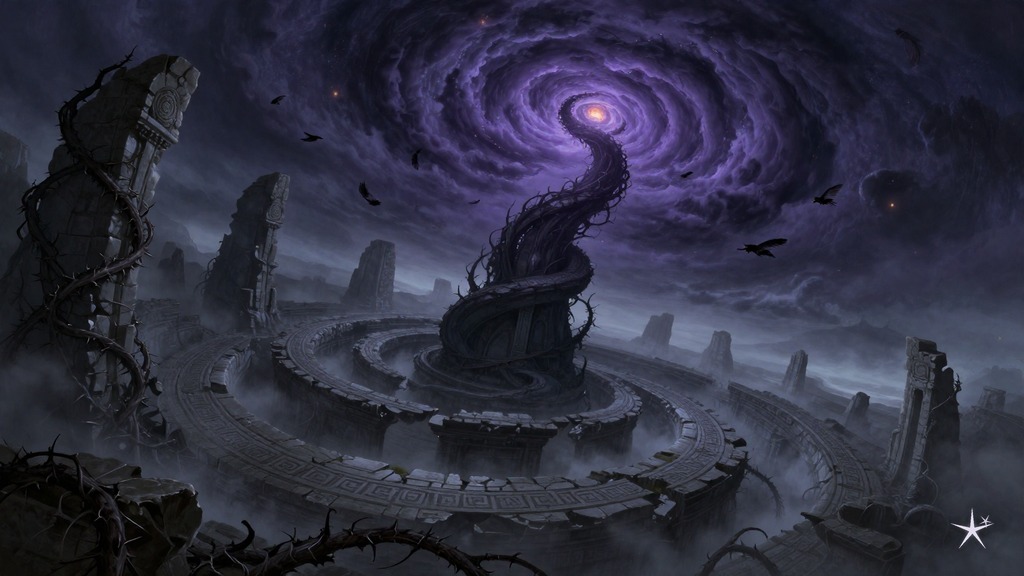
Good news if you landed here wondering about the Uzumaki manga reading order — this one is beautifully simple. No sprawling multi-series timeline, no side stories published out of sequence, no “where do I even start?” confusion. Uzumaki is a single, complete horror manga by Junji Ito that you read from beginning to end. That’s it.
But there are still some genuinely useful things to know before you pick it up, especially around editions, what to expect from each volume, and how the anime adaptation fits into the picture. Let’s walk through all of it.
Uzumaki Manga Reading Order: One Story, Start to Finish
Here’s the short version: Uzumaki is one continuous story told across three volumes (each volume is a single book collecting several chapters of the story). Read Volume 1, then Volume 2, then Volume 3. There are no spinoffs, no prequels, no alternate timelines, and no branching reading paths.
The series was created by Junji Ito and originally published chapter by chapter in Big Comic Spirits, a Japanese manga anthology magazine (published by Shogakukan, one of Japan’s largest publishers) between 1998 and 1999. It’s a completed series — the story has a definitive beginning, middle, and end. You’re not waiting for new chapters or worrying about a long pause in publication.
For English readers, VIZ Media — the main English-language publisher for Japanese manga in the West — publishes Uzumaki, and the format most people grab today is the 3-in-1 Deluxe Edition, a single hardcover that collects all three volumes under one cover. If you want the entire story in one book with no hunting around for individual volumes, that’s the way to go.
The reading order really is that straightforward. But the details around editions and what each volume actually covers are worth knowing, so let’s get into it.
Original Volumes vs. the Deluxe Edition
Even though the reading order itself is simple, you do have a choice to make about which version of Uzumaki to buy. Here’s what exists:
Original Japanese Collected Volumes (3 Books)
The manga was originally collected into three volumes by Shogakukan in Japan:
- Volume 1 — released October 1998
- Volume 2 — released April 1999
- Volume 3 — released November 1999
These are the original Japanese editions. Unless you read Japanese, these aren’t what you’re looking for — but they’re worth mentioning because they establish the three-volume structure that every subsequent edition follows.
English Individual Volumes (3 Paperbacks)
VIZ Media published Uzumaki in English as three separate paperback volumes. These follow the same volume breakdown as the Japanese release. They can still be found through various retailers, though availability varies since VIZ has shifted focus to the Deluxe Edition.
If you happen to spot individual volumes secondhand or at a local shop, they contain the same story content — there’s nothing missing or different about the narrative itself.
The 3-in-1 Deluxe Edition
This is the version most readers end up with today, and for good reason. The Uzumaki 3-in-1 Deluxe Edition from VIZ Media collects all three volumes into a single hardcover book. It features larger pages compared to the individual paperbacks and premium presentation that does justice to Junji Ito’s incredibly detailed artwork.
When your manga is this visually driven — and Uzumaki’s horror absolutely depends on its visuals — print quality matters. The larger page size means you can actually see the intricate detail in Ito’s drawings that makes his spirals so deeply unsettling. Fine details that might get lost in a smaller paperback format come through clearly here.
Digital Editions
Uzumaki is also available digitally through VIZ and other digital manga platforms. Digital is a perfectly fine way to read the story, and it has the obvious convenience advantages. That said, horror manga in particular tends to hit harder in physical form — there’s something about holding the page, about the weight and texture of the experience, that adds to the dread. But that’s a personal preference, not a rule.
Which Edition to Buy
The Deluxe Edition is the easy recommendation. One book, complete story, beautiful presentation. You don’t have to track down three separate volumes, you don’t have to worry about one being out of stock while the others sit on your shelf waiting. You sit down, you open it, and you read Uzumaki from first page to last. At its typical retail price, it’s a solid value for a premium hardcover collecting a complete series.
Uzumaki (3-in-1 Deluxe Edition) / Junji Ito (Viz Media)
The Complete Uzumaki Manga Reading Order
Now let’s talk about what you’re actually reading in each section of the story. The Deluxe Edition runs approximately 650 pages across 20 chapters — a length you can finish in a few focused reading sessions. No major spoilers here, just enough context to understand the narrative structure and know what you’re getting into.
Volume 1 — The Spiral Curse Takes Root
The story opens in the small coastal town of Kurōzu-cho, where something is wrong. The spirals are everywhere — in nature, in architecture, in the obsessive behavior of the townspeople. What begins as isolated, strange incidents gradually reveals itself as something much larger and much worse.
Volume 1 establishes the core premise and introduces you to the main characters navigating this increasingly hostile reality. The body horror elements — meaning scenes where human bodies warp, stretch, and transform in deeply disturbing ways — begin here, but they start at a level that lets you acclimate before things escalate. Ito is masterful at this — he gives you just enough normalcy to feel safe before pulling the ground out from under you.
The chapter structure in Volume 1 (and across the whole series) is worth noting. Each chapter functions almost like a self-contained horror episode — a specific manifestation of the spiral curse affecting a specific person or situation. But they’re all connected, building on each other and advancing the larger story. It’s a series of standalone episodes that also tell one continuous, escalating narrative, and it works incredibly well.
Volume 2 — The Curse Spreads
By Volume 2, the spiral obsession is no longer limited to a few individuals. The entire town of Kurōzu-cho is caught in it. The manifestations become more bizarre, more grotesque, and more inescapable. What seemed like isolated weirdness in Volume 1 is now clearly a systemic, spreading infection of reality itself.
This middle section is where Ito’s imagination really runs wild. The body horror intensifies significantly, and the situations characters find themselves in become increasingly nightmarish. The sense of dread deepens because you start to realize there may be no escape — not for the characters, and not for the reader who’s now completely committed to seeing how this ends.
Volume 2 also expands the scope of the horror beyond individual body transformations into environmental and architectural distortions. The town itself is changing. The geometry is wrong. Everything spirals.
Volume 3 — The Spiral Consumes Everything
The final volume takes everything that’s been building and drives it to an apocalyptic conclusion. The distinction between the town, its people, and the spiral itself begins to dissolve. This is Uzumaki at its most ambitious and its most overwhelming.
Without spoiling the ending, Volume 3 delivers a conclusion that matches the scale of the horror Ito has been constructing. This is cosmic horror — the kind where humans are powerless against forces far beyond their understanding — rendered in manga form, and the ending reflects that. It’s not a comfortable resolution. Some readers find it deeply satisfying; others find it haunting in a way that’s hard to shake. Both reactions are appropriate.
Reading Straight Through
One important note: read the volumes in order, and don’t skip chapters. Because each chapter has that standalone feel, you might be tempted to jump around or skip one that doesn’t immediately grab you. Don’t. The cumulative effect is the entire point. Individual chapters build atmosphere and establish rules that pay off later. A chapter that seems like a standalone horror vignette will echo forward in ways you won’t expect.
The Deluxe Edition makes this natural — you just keep turning pages. There’s no break between volumes, no moment where you have to set one book down and pick up another. The escalation from first page to last is seamless.
The Uzumaki Anime and How It Relates to the Manga
An anime TV adaptation titled UZUMAKI was produced by Production I.G (a well-known Japanese animation studio) and aired on Adult Swim, the late-night programming block on Cartoon Network in the US. The anime adaptation consists of 4 episodes and is a completed run. If you’ve heard about Uzumaki through the anime, you might be wondering whether you need to read the manga at all, or whether the anime changes the reading order somehow.
The anime covers the manga’s story, but it should be treated as a companion piece rather than a replacement for reading. Here’s why: Junji Ito’s artwork is not just illustration accompanying a story — it is the horror. The way he renders spirals, the obsessive detail in his drawings, the way a page turn reveals something your brain needs a moment to process — these are experiences that exist specifically in the manga medium.
Animation can capture the narrative and atmosphere, but the particular dread of staring at a still image drawn with Ito’s precision is something only the manga delivers. The anime is its own creative work with its own merits, but the manga is the definitive version of Uzumaki.
The recommended approach: Read the manga first. Experience the story as Ito created it. Then, if you want more Uzumaki, watch the anime afterward. You’ll appreciate both versions more that way — you’ll see what the anime adapted, what it interpreted differently, and what only works on the printed page.
The anime does not change, extend, or reorder the manga’s story in any way that affects your reading order. Volume 1 through Volume 3 (or the Deluxe Edition cover to cover) remains the complete experience.
Tips for First-Time Uzumaki Readers
A Great Entry Point
If you’re new to horror manga — or new to Junji Ito specifically — Uzumaki is one of the best places to start. It’s a complete story in a manageable length, it showcases everything that makes Ito’s work distinctive, and it’s widely available. You don’t need any background knowledge in manga conventions or Japanese horror traditions to appreciate it. The horror lands immediately regardless of your manga background.
Reading at Your Own Pace
That chapter structure mentioned earlier has a practical benefit for new readers: you can read Uzumaki in sessions without losing the thread. Each chapter has a satisfying shape on its own, so stopping after a chapter feels natural rather than jarring. With roughly 20 chapters across approximately 650 pages, many people devour the whole thing in one or two sittings (it’s absolutely that compelling), but there’s no penalty for spreading it over a few reading sessions.
That said, don’t leave too much time between sessions. The cumulative horror depends on the weight of everything you’ve already read pressing down on what comes next. A chapter a night over a few days is a great pace. A chapter a month would lose the effect.
Content Note
This needs to be said clearly: Uzumaki contains intense body horror and sustained psychological dread. People’s bodies distort, transform, and break in deeply disturbing ways. Beyond the visual horror, the story carries a tone of mounting hopelessness and powerlessness — a creeping sense that no one can escape what’s happening, and that the forces at work don’t care about human suffering at all. The horror is not gratuitous — it serves the story’s themes about obsession, conformity, and indifference on a scale beyond human comprehension — but it is graphic and unrelenting, especially in Volumes 2 and 3. This is a mature horror story that is not suitable for younger readers.
If body horror is a hard boundary for you, Uzumaki will cross it. If sustained dread and a pervasive sense of doom are difficult for you, this story leans into both heavily. But if you can handle these elements in the context of a well-crafted story, Uzumaki is one of the finest examples of horror in any medium.
Where to Go After Uzumaki
Once you’ve finished, you’ll probably want more Junji Ito. His body of work is extensive, and several other titles — such as Tomie and Gyo — explore similar territory: horror driven by body transformation, the mundane becoming nightmarish, and forces that defy human understanding. Uzumaki is often considered his defining work, but it’s far from his only great one. His catalog rewards further exploration once you’ve finished.
Start Reading Uzumaki Today
Here it is, compressed into a few sentences:
Pick up the Uzumaki 3-in-1 Deluxe Edition published by VIZ Media. It collects the complete story — all three volumes, roughly 20 chapters and 650 pages — in one hardcover with premium presentation. Open it to the first page. Read to the last. There is no complicated reading order, no supplementary material you need first, no prerequisite knowledge required.
Uzumaki is one of the greatest horror manga ever created — Ito’s draftsmanship and imagination make it unlike anything else in the medium. The Deluxe Edition puts the entire experience in your hands in the best possible format. Grab it, find a quiet room (maybe leave a light on), and start reading.