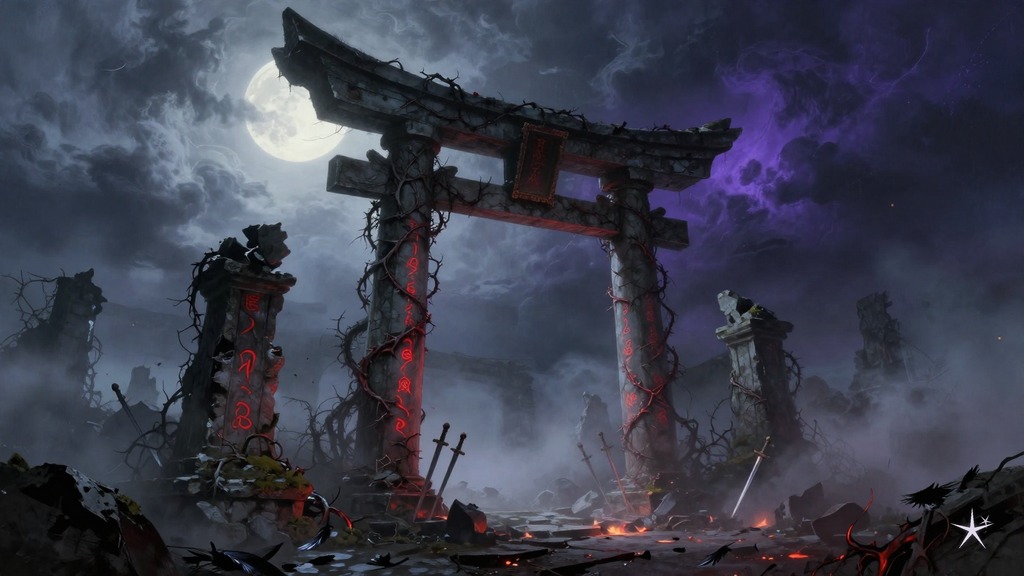
The Blood-C manga is 4 volumes long and the series is complete — no more books are coming. If you’ve been searching for info on the Blood-C manga volumes, that’s the short answer. Now here’s the longer one: this is one of the most collectible dark fantasy series out there. At just four volumes, the entire story fits on a single shelf. But don’t let the short length fool you. Blood-C packs in enough grotesque monsters, identity-shattering twists, and bleak horror to rival series three times its size.
Here’s a look at each volume, what makes the series tick, and how to get your hands on it.
Blood-C Manga Volumes at a Glance — A Complete Four-Volume Dark Fantasy Horror
Blood-C is a completed dark fantasy horror manga published in 4 volumes. The series ran from July 2011 to November 2012 in Japan, published by KADOKAWA under their Kadokawa Comics Ace label (a sub-brand KADOKAWA uses specifically for certain manga lines). The English edition was released by Dark Horse Comics, also in 4 volumes.
The creative team behind Blood-C is a fascinating collaboration. The original concept comes from Production I.G, a highly influential Japanese animation studio known for works like Ghost in the Shell. CLAMP — a four-woman manga artist collective famous for series like Cardcaptor Sakura and xxxHolic — contributed the story and original character designs to the project. The manga art itself is by Kotone Ranmaru. That’s a powerhouse lineup for a four-volume series.
The story follows Saya Kisaragi, a shrine maiden — a young woman who serves at a traditional Japanese Shinto shrine, performing rituals and spiritual duties — living a quiet life in a small town. That quiet life lasts until night falls and she takes up her sword against horrific creatures called Elder Bairns. What starts as a seemingly straightforward monster-hunting setup quickly spirals into something far more disturbing. The town, the people Saya cares about, her own memories — nothing is safe from the story’s relentless need to tear away comfortable illusions.
Because it’s only four volumes and fully completed, Blood-C is a strong entry point for readers who want a self-contained dark fantasy experience without committing to a long-running series. The whole story is dense enough to be satisfying but compact enough to finish in a single sitting.
What Happens in Each Volume
A quick note: these descriptions stay spoiler-light. The reveals in Blood-C are a huge part of the experience, so I’ll give you enough to make a buying decision without ruining the twists.
Volume 1 — The Shrine Maiden’s Double Life
The first volume introduces Saya Kisaragi’s world, and it’s deliberately disarming. By day, Saya is a cheerful, slightly clumsy high school student who helps out at her father’s shrine. She has friends, a routine, and a warm community around her. It feels almost like a slice-of-life manga — a genre focused on the quiet, everyday rhythms of characters’ daily lives rather than big action or drama.
Then the Elder Bairns appear.
At night, Saya transforms into a sword-wielding warrior, fighting grotesque monsters that defy easy description. Volume 1 establishes this jarring contrast between the peaceful small-town atmosphere and the brutal, visceral combat sequences. Traditional shrine imagery crashes headlong into body horror — a style of horror built around grotesque transformations and violations of the human form. Kotone Ranmaru’s art handles both registers — the everyday sweetness and the nightmarish violence — with equal commitment.
The setup feels deceptively simple. A girl fights monsters, protects her town, and goes to school the next morning. But even in this first volume, small details feel slightly off. The town is a little too perfect. Saya’s life is a little too neatly compartmentalized. The cracks are already there if you know where to look.
Volume 2 — Cracks in the Illusion
Volume 2 is where Blood-C starts pulling the rug out. The Elder Bairn attacks escalate in both frequency and savagery. These aren’t skirmishes anymore — the monsters are getting stronger, more varied, and harder to kill.
More importantly, Saya starts questioning things. Her reality doesn’t quite add up. The people around her start behaving in ways that feel rehearsed, and the violence bleeds closer to the supporting cast. When characters Saya cares about come under direct threat, the stakes shift from “fight the monster of the week” to something far more personal and unsettling.
The series’ signature graphic violence intensifies here. Blood-C earned its reputation for unflinching horror, and volume 2 is where readers will know definitively whether this series is for them. The dark fantasy elements aren’t decorative — they’re the foundation of a story that’s building toward something genuinely disturbing.
Volume 3 — Unraveling
This is the turning point. Volume 3 delivers major revelations about the town, the people Saya has been protecting, and the true nature of her mission. Characters she trusted are recontextualized in ways that reframe everything that came before.
The truth behind the Elder Bairns and Saya’s role in the larger scheme becomes clearer, and it’s bleak. The dark fantasy horror reaches its peak intensity here — not just in terms of violence (though there’s plenty), but in the emotional devastation of watching a protagonist realize that her entire understanding of the world has been constructed for someone else’s purposes.
Volume 3 is the bridge between Blood-C’s deceptively gentle beginning and its ruthless conclusion. If the first two volumes built the house, this one sets it on fire.
Volume 4 — The Bitter Truth
The final volume lays everything bare. The full conspiracy is exposed, and nothing — absolutely nothing — in Saya’s world was what it seemed. Every comfortable assumption, every friendly face, every quiet moment at the shrine gets recontextualized in the harshest possible light.
The climactic confrontations with the forces behind the Elder Bairns deliver on the promise of everything the series has been building. Saya faces not just physical threats but the philosophical horror of a life built entirely on lies.
The conclusion is characteristically dark. Blood-C doesn’t offer easy comfort or tidy resolution. It connects to the broader Blood franchise mythology while standing as its own complete, devastating story. Readers who appreciate dark fantasy that commits fully to its bleakest implications will find the ending earned. Those hoping for a triumphant final battle may want to adjust expectations — this series knows exactly what kind of story it’s telling, and it doesn’t flinch.
Blood-C, Vol. 4 (final volume)
Elder Bairns and the World of Blood-C — Why This Is Pure Dark Fantasy
The Elder Bairns are what set Blood-C apart from the crowd of monster-hunting manga. These aren’t your typical fantasy villains with clear motivations and convenient weaknesses. They’re ancient, shape-shifting creatures bound by agreements with humans — deals that go back generations and implicate entire communities in the horror.
That’s the key to Blood-C’s dark fantasy identity: the horror lies in human complicity. The Elder Bairns are terrifying on their own — Kotone Ranmaru draws them with a visceral creativity that makes each encounter feel genuinely unpredictable. But the real dread comes from the realization that the town’s residents have a relationship with these monsters. The violence isn’t happening despite the community. It’s happening because of it.
Blood-C filters the shrine maiden warrior archetype through an ultra-violent, darkly cynical lens. Saya wields a sacred sword and performs rituals at her father’s shrine, drawing on traditional Japanese spiritual imagery. But the series twists those familiar elements into something deeply uncomfortable. The shrine isn’t a sanctuary — it’s part of the mechanism.
Thematically, Blood-C explores identity, memory manipulation, and sacrificial violence. Saya’s journey is ultimately about discovering that her sense of self has been engineered. Her memories, her relationships, her purpose — all constructed. That’s a horror that goes deeper than any monster attack, and it gives the series a philosophical weight that elevates it beyond simple gore.
A note on content: Beyond the graphic physical violence, Blood-C deals heavily in psychological horror — specifically the trauma of discovering your memories and identity have been fabricated. Readers sensitive to themes of gaslighting, loss of autonomy, or engineered reality should be aware that these elements are central to the story, not incidental.
For readers wondering about the broader Blood franchise: Blood-C is part of a larger universe that includes Blood: The Last Vampire and Blood+, but each entry tells its own story with its own characters. Think of them as separate stories that share a common theme — sword-wielding heroines fighting inhuman creatures — rather than chapters in one continuous narrative. You don’t need any prior franchise knowledge to read and appreciate Blood-C. It stands completely on its own as a self-contained dark fantasy tale.
Manga vs. Anime — Where They Overlap and Diverge
Here’s something important to understand: Blood-C originated as an anime, not a manga. Most manga series get adapted into anime after the manga is already running — Blood-C went the other direction. The anime was produced by Production I.G first, and the manga is a companion adaptation that retells the same story in book form. This reversed origin affects how the two versions relate to each other.
Both the anime and the manga tell the same core story of Saya Kisaragi and the Elder Bairns. The major plot beats, the central conspiracy, and the devastating conclusion are present in both versions. If you’ve watched the anime, you know where the story goes. If you’ve only read the manga, you’ve gotten the full narrative.
Where they diverge is in pacing and presentation. The anime ran for 12 episodes, and a common criticism is that the early episodes feel slow — lots of repetitive daily-life scenes before the horror kicks in. The manga, condensed into just 4 volumes, tightens this considerably. Some readers find the manga’s pacing a genuine improvement, cutting through the anime’s more leisurely buildup to get to the unsettling revelations faster.
Visually, there are notable differences. Kotone Ranmaru’s manga art has its own distinct style, while the anime uses CLAMP’s character designs — tall, willowy figures with elongated proportions. Those designs look quite different from Ranmaru’s work on the page. Ranmaru brings a grittier, more immediate quality to the horror sequences that works well in the manga format.
One important distinction: the anime has a sequel film, Blood-C: The Last Dark, that continues Saya’s story beyond the TV series’ ending. The manga actually covers this ground too — its four volumes adapt both the 12-episode TV anime arc and the events of The Last Dark film. Volume 4 specifically expands on the film’s storyline, meaning the manga and the full anime (TV series plus film) cover the same narrative scope. If you want the complete story as a focused reading experience, the manga delivers the whole arc — TV series and film — in just four books.
For dark fantasy fans specifically, the manga is a compelling option. Four volumes of concentrated horror with tight pacing and committed violence. No padding, no waiting — just the story, start to finish.
| Manga | Anime | |
|---|---|---|
| Format | 4 volumes (covers TV arc + film arc) | 12 episodes + sequel film |
| Origin | Companion adaptation | Original production |
| Pacing | Condensed, faster | Slower early episodes |
| Art style | Kotone Ranmaru | CLAMP character designs (tall, willowy proportions) |
| Story scope | TV series + The Last Dark film arc | TV series + The Last Dark film |
| Creator | Production I.G / CLAMP / Ranmaru | Production I.G / CLAMP |
Which Edition to Buy
Blood-C keeps things simple. There are two editions to consider:
English edition — Published by Dark Horse Comics in 4 volumes. This is the standard English-language release and the most accessible option for English-speaking readers. Dark Horse has a strong track record with manga releases, and the Blood-C volumes are well-produced. You can find these at major book retailers, both physical and online — search for “Blood-C Dark Horse” at your preferred shop.
Japanese edition — Published by KADOKAWA under the Kadokawa Comics Ace label in 4 volumes. The Japanese volumes were released between July 2011 and November 2012. If you’re studying Japanese or prefer to read in the original language, this is the edition to look for.
As of this writing, there are no known omnibus editions, deluxe editions, or box sets for Blood-C in either language. The standard single volumes are the only format available. Given that the series is only four books, this isn’t much of a drawback — you’re not facing a 20-volume investment where a collected edition would save significant money.
Physical vs. digital is worth considering. Because Blood-C completed publication over a decade ago, physical copies can sometimes be harder to track down — availability fluctuates with retailer stock and secondary market supply. If you’re having trouble finding physical copies at standard retail, digital editions are a reliable alternative with guaranteed availability through platforms like BookWalker, Kindle, or other digital manga storefronts. That said, four physical volumes make for a clean, compact shelf display, and the horror art benefits from the larger page size of a physical book.
At only 4 volumes, collecting the complete Blood-C manga is one of the most affordable and straightforward dark fantasy collecting projects you can take on. No chasing down rare volumes, no waiting for future releases, no complicated situations where you need to figure out which book comes next. Just four books, one story, done.
Frequently Asked Questions
How many Blood-C manga volumes are there?
4 volumes. The series is complete — no additional volumes are planned or expected. All four volumes are available in both Japanese (KADOKAWA) and English (Dark Horse Comics).
Is the Blood-C manga finished?
Yes. Blood-C is a completed series. The final volume was published in November 2012 in Japan. The story has a definitive ending. You can read the entire series without worrying about cancellations, hiatuses, or cliffhangers that never get resolved.
Who created the Blood-C manga?
Blood-C is a collaboration. Production I.G (a major Japanese animation studio) created the original concept. CLAMP (a celebrated four-woman manga artist collective) contributed the story and original character designs. The manga artwork is by Kotone Ranmaru. It’s an unusual creative setup that reflects the series’ origins as an anime project adapted into manga form.
Do I need to watch the anime before reading the manga?
No. The manga tells a complete, self-contained version of the Blood-C story. You can pick up Volume 1 with zero prior knowledge and follow the entire narrative without confusion. Watching the anime first might spoil some of the manga’s twists (since they share the same core plot), so if you’re interested in both, you might actually want to start with the manga for a tighter experience.
Is Blood-C connected to Blood+ or Blood: The Last Vampire?
They’re part of the same franchise, but each entry tells its own independent story with different characters and settings. Blood-C, Blood+, and Blood: The Last Vampire share common themes — sword-wielding heroines fighting inhuman creatures — but you don’t need to have seen or read any of them to enjoy the others. Blood-C stands entirely on its own.
Is the Blood-C manga as violent as the anime?
Yes. The dark fantasy horror and graphic content carry over from the anime to the manga. Blood-C is known for its unflinching depictions of violence, and the manga doesn’t soften this. The Elder Bairn encounters are brutal, and the series doesn’t shy away from showing the consequences of that violence on both named characters and bystanders. Beyond the physical violence, the psychological horror — particularly around memory manipulation and identity destruction — is equally intense. If you found the anime’s content disturbing, expect a similar level in the manga. This is very much a mature-audience series.