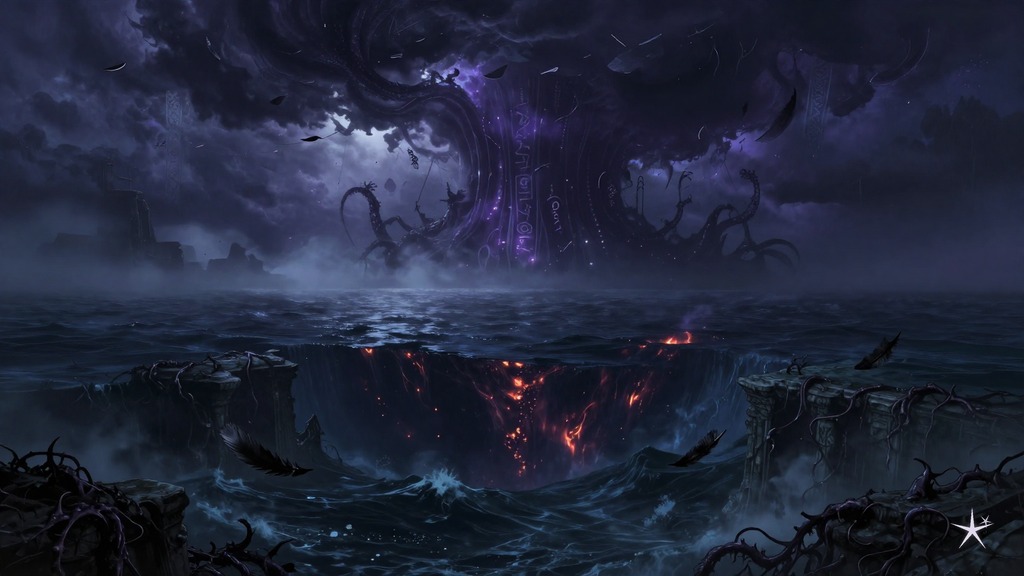
If you’re looking up Children of the Sea manga volumes, the answer is straightforward: there are 5 volumes, and the series is complete. That makes it one of those rare manga you can collect in full without a massive commitment.
Let’s break down the volumes, what each one covers, and how to get your hands on them.
Children of the Sea Manga Volumes: All 5 in a Complete Series
Children of the Sea (海獣の子供) has 5 volumes containing 43 chapters total. In manga, chapters are individual installments originally published one at a time in a magazine, then collected into these book-length volumes. The series is complete — no waiting for new releases, no indefinite pauses in publication, no cliffhanger limbo.
The manga was created by Daisuke Igarashi (五十嵐大介) and originally published chapter-by-chapter in Monthly IKKI, a magazine from Shogakukan (one of Japan’s largest publishing houses). The English edition is published by VIZ Media, one of the biggest English-language manga publishers, also in 5 volumes matching the Japanese release.
So what’s it actually about? At its core, this is a cosmic supernatural tale set in and around the ocean. A girl named Ruka encounters two mysterious boys — Umi and Sora — who were raised by dugongs (large sea mammals, similar to manatees) in the sea. What starts as a strange summer story spirals into something vast, metaphysical, and genuinely unsettling. Think marine biology colliding with existential dread, rendered in some of the most intricate artwork you’ll find in any manga.
The series earned recognition at Japan’s Media Arts Festival, and for good reason. It’s not your typical dark fantasy with swords and demons. It’s weirder, quieter, and arguably more disturbing because of how it makes you feel small against forces you can’t comprehend. If that sounds like your kind of thing, you’re in for a treat.
A 2019 animated film adaptation by Studio 4°C also exists, which is how many readers first discover the manga. The film is visually striking in its own right, but the manga offers a deeper, more detailed version of the story.
All 5 Volumes at a Glance
Here’s a quick breakdown of all five Children of the Sea manga volumes so you know what you’re getting into. Japanese release dates are listed — the English editions from VIZ Media followed from 2009 to 2013.
| Volume | JP Release | What Happens |
|---|---|---|
| Vol 1 | 2007 | Ruka meets the mysterious boys Umi and Sora, who were raised by dugongs. Strange events begin at the aquarium where Ruka’s father works. The ocean is calling. |
| Vol 2 | 2007 | Marine creatures worldwide start behaving abnormally. The boys’ connection to the sea grows more unsettling, and the scope of the mystery expands far beyond one aquarium. |
| Vol 3 | 2008 | Things escalate dramatically. Supernatural oceanic phenomena intensify, and Ruka is pulled deeper into a world she doesn’t fully understand. |
| Vol 4 | 2009 | Reality begins to fracture. The ocean is preparing for something — a vast event of terrifying magnitude. The sense of dread becomes overwhelming. |
| Vol 5 | 2012 | The finale. A cosmic “birth festival” unfolds in a hallucinatory, overwhelming climax that brings the story to its definitive conclusion. |
A few things worth noting about the release timeline: volumes 1 and 2 came out in the same month (August 2007), while the gap between volumes 4 and 5 stretched from 2009 to 2012. That long wait between the final two volumes was part of the original publication schedule — but since the series is now complete, you can read straight through without any interruption.
The whole series spans just five books. Each manga volume is typically around 200 pages, so you could realistically read the full set in a weekend, though you might want to take your time. Igarashi’s art is dense with detail, and the later volumes especially reward slow, careful reading.
How Dark Does Children of the Sea Get?
Let’s talk about what kind of darkness these Children of the Sea manga volumes contain. This is not a gore-fest. There are no battle scenes drenched in blood, no torture sequences, no monster-slaying. The darkness here is something different — and for many readers, something more deeply unsettling.
Cosmic and existential dread is the engine of this series. Cosmic horror is a genre rooted in the idea that humanity is insignificant against vast, unknowable forces — and Igarashi builds that feeling masterfully. The ocean in this manga is ancient and utterly indifferent to human existence. The terror comes from realizing how small and irrelevant people are against forces that operate on timescales and spatial dimensions we can barely perceive. If you’ve ever stood at the edge of the ocean at night and felt that primal unease — this manga captures that feeling and stretches it across five volumes.
Body horror elements are present, particularly in the later volumes. Characters undergo transformations that blur the line between human and oceanic entity. People dissolve, merge, and change in ways that feel deeply wrong. Igarashi doesn’t linger on these moments gratuitously, but he doesn’t flinch from them either. The art makes these sequences beautiful and horrifying simultaneously.
Emotional intensity runs high throughout. Themes of loss, isolation, and the terror of encountering something genuinely incomprehensible give the story real emotional weight. Ruka’s journey isn’t a story where the hero gains power and dominates every obstacle — it’s the experience of being caught up in something so much bigger than herself that understanding it may not even be possible.
And then there’s Igarashi’s art style. His drawn lines are incredibly detailed, almost psychedelic in the later chapters. Ocean life is rendered with naturalistic precision that suddenly warps into abstract, hallucinatory imagery. The visual experience amplifies every unsettling moment. Pages become harder to parse as the story reaches its finale — and that’s intentional. You’re meant to feel overwhelmed, just like Ruka.
Who is this for? If you enjoy atmospheric, slow-burn supernatural horror — the kind that creeps under your skin rather than jumps at you — Children of the Sea is a strong pick. Readers who love Uzumaki (Junji Ito’s spiral-obsessed horror manga about cosmic dread) or Mushishi (a meditative series about a wanderer encountering unknowable nature spirits) will find a lot to appreciate here. If you strictly want action-driven dark fantasy with clear villains and fight choreography, this probably isn’t your starting point.
Is the Series Finished?
Yes, completely finished. Children of the Sea was published chapter-by-chapter in Monthly IKKI from 2005 to 2011, with the final collected volume released in 2012, and concluded with volume 5. The story reaches a definitive ending — no loose threads dangling for a sequel, no “read a separate novel series for the real ending” situation.
There is no sequel, no spin-off, and no continuation. Daisuke Igarashi told the story he wanted to tell, wrapped it up, and moved on. The entire series is available in English from VIZ Media.
This is genuinely one of the best things about Children of the Sea as a recommendation. Five volumes, complete story, clear beginning and end. You know exactly what you’re committing to before you start, and you can experience the whole thing without any external dependencies.
For readers who are tired of picking up a series only to discover it’s on indefinite pause or 40+ volumes deep with no end in sight — this is a refreshing change.
Which Edition Should You Buy?
The primary English edition consists of standard VIZ Media single volumes — five books that match the Japanese release structure one-to-one.
These are standard manga-sized paperbacks. Nothing oversized or deluxe about them in terms of format. But Igarashi’s artwork is extraordinarily detailed. We’re talking about pages where individual sea creatures are drawn with near-scientific precision, and cosmic sequences are packed with intricate detail that fills every corner of the page. Physical copies let you appreciate that detail in a way that small screens often can’t.
With only five volumes to collect, the full set is quite manageable in terms of both shelf space and cost. At typical retail prices, you’re looking at a standard manga paperback price per volume — with only five to buy, the complete set won’t break the bank. You’re not looking at a multi-year investment. This is a complete series you can own without much financial stress.
One practical note: because Igarashi’s art gets increasingly abstract and layered in the later volumes, reading on a phone screen can genuinely diminish the experience. Digital manga reading is common and convenient, but if you have the option, a physical copy or at minimum a tablet-sized screen is worth considering. The art does a lot of heavy lifting in this series, and you want to see it clearly.
Children of the Sea, Vol. 5 (final volume)
Where to Buy Children of the Sea Manga Volumes in English
VIZ Media is the English-language publisher for Children of the Sea, and the volumes are available through major retailers — both physical bookstores and online shops.
Physical copies can be found at most large booksellers and online retailers that carry manga. Since the series has been out for a while and is a completed work from a well-known publisher, availability is generally good. If a particular volume happens to be temporarily out of stock somewhere, checking a different retailer usually solves the problem.
Digital editions are also available through platforms like the VIZ Manga app, Kindle, and other major digital manga storefronts. If you prefer reading digitally or want instant access, this is a convenient option — though as mentioned above, the physical format really does serve Igarashi’s art well.
A few tips for collecting the set:
- Start with volume 1 (obviously, but worth saying — this is not a series where you can jump in at a random volume and follow along).
- Buy all five if you commit. The story builds continuously and the payoff in volumes 4 and 5 depends entirely on what came before. Reading just the first volume or two won’t give you the full picture of what makes this series special.
- Check multiple retailers for the best availability. Since it’s a completed series from VIZ Media, you shouldn’t have trouble finding copies, but stock levels can vary by retailer.
Children of the Sea is one of those manga that feels like a hidden gem even though it’s been available in English for years. Five volumes, a complete story, stunning artwork, and a deeply atmospheric take on cosmic horror set against the ocean. If any of that appeals to you, grab volume 1 and see for yourself — you’ll know within the first few chapters whether this series is going to hook you.