Gantz is one of those manga — Japanese comics read right to left — that people don’t forget. If you’re looking for a complete guide to all the Gantz manga volumes, you’re in the right place. Hiroya Oku’s sci-fi horror series throws ordinary people into impossible life-or-death battles against alien creatures, and the stakes never let up across its entire run. Whether you’re wondering how many volumes there are, what order to read them in, or whether the anime (Japanese animation) tells the whole story, this guide covers all of it.
Gantz Manga Volumes at a Glance — 37 Books of Sci-Fi Horror
Gantz is a completed dark fantasy manga written and illustrated by Hiroya Oku. It was serialized — meaning it was published chapter by chapter in a magazine over time — in Weekly Young Jump, a popular Japanese manga magazine. The series ran for 383 chapters across 37 volumes (collected paperback books, each containing roughly 10 chapters of the story).
The first Japanese volume hit shelves on December 16, 2000, and the final volume wrapped up in August 2013.
In English, all 37 volumes are published by Dark Horse Manga, an American publisher that licenses Japanese manga and releases them in English. The entire series is available to read from start to finish right now. There’s no waiting for new chapters, no worrying about the series going on an indefinite pause, no catching up to a moving target. The story is done, and you can experience the whole thing on your own schedule.
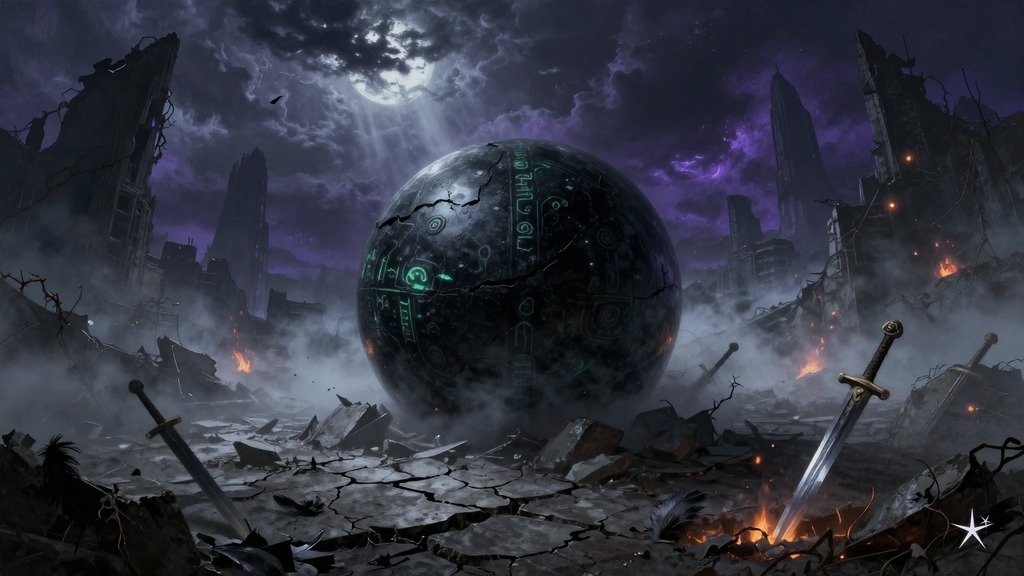
At its core, Gantz follows people who die and are mysteriously resurrected inside a Tokyo apartment. A featureless black sphere — the Gantz — assigns them missions to hunt bizarre and deadly aliens. Survive enough missions, rack up enough points, and you might earn your freedom. Fail, and you die for real this time.
It’s violent, strange, frequently disturbing, and completely gripping. The series tackles death, survival instinct, and what people become when the normal rules of society evaporate. If you’re drawn to dark fantasy manga that doesn’t pull its punches, Gantz belongs on your radar.
Every Major Story Arc and the Volumes That Cover It
One thing to know before jumping in: Gantz doesn’t label its story arcs — self-contained story segments within the larger narrative — with title cards the way some manga do. The community has organized the series into commonly recognized arcs based on the major missions and narrative shifts. The volume ranges below reflect how most readers group the story, though you’ll find slight variations depending on who you ask.
The beauty of Gantz’s structure is escalation. Each arc raises the difficulty, the number of casualties, and the emotional weight. What starts as a small-scale survival game in Tokyo eventually becomes something unimaginably larger.
Early Missions and the Rules of the Game (Volumes 1–11)
The opening stretch of Gantz — roughly Volumes 1 through 11 — establishes everything: the premise, the rules, and the tone. Kei Kurono and Masaru Kato die in a subway accident and wake up in a room with a giant black sphere, a handful of confused strangers, and zero explanation. The sphere gives them skintight suits, bizarre weapons, and a target. Hunt the alien. Don’t die. That’s it.
These early volumes are where Oku hooks you. The first missions — including hunts targeting the Onion Alien, Tanaka Alien, and Buddhist Temple Alien — are chaotic, terrifying, and deliberately messy. Characters don’t know what they’re doing, people die horribly, and the “game” feels completely unfair. The point system gets introduced early on: accumulate 100 points and you get a choice — freedom, a powerful weapon, or the ability to resurrect a dead teammate. The core cast starts to take shape around Kurono and Kato.
What makes these volumes hit hard is the mundane reality that surrounds the missions. Between hunts, the characters go back to their normal lives — school, relationships, jobs — carrying the trauma of what they’ve been through with no one to talk to about it. That contrast between the everyday and the nightmarish is a huge part of what defines Gantz.
Escalation — Larger Threats and Shifting Alliances (Volumes 12–25)
As the series moves into its middle stretch — approximately Volumes 12 through 25 — the scope expands dramatically. The missions get harder. The aliens get smarter, stronger, and more numerous. And critically, the story reveals that the Tokyo team isn’t the only group of hunters — other Gantz spheres exist in other cities, each with their own roster of resurrected fighters.
This is where Gantz shifts from a survival horror setup into something more layered. New characters rotate in (and out, often permanently), alliances form and fracture under pressure, and the question of what the Gantz sphere actually is — and who or what is behind it — starts creeping to the foreground. The background mythology deepens considerably, and missions that once felt like isolated monster hunts begin connecting into a larger picture.
Oku also uses this middle section to explore how different people respond to the Gantz system. Some become cold-blooded killers. Some try to protect others at their own expense. Some break down entirely. The character work in these volumes is underrated — beneath all the action and horror, there’s a genuine examination of human nature under extreme duress.
The Catastrophe and Final Arc (Volumes 26–37)
The final major arc of Gantz — Volumes 26 through 37 — redefines the entire series. Without spoiling specifics, the conflict escalates from city-level alien hunts to a full-scale global catastrophe. Everything the reader thought they understood about the rules of the game gets upended, and the story becomes something closer to apocalyptic science fiction.
This is the most divisive section of the manga. Some readers consider it the peak of the series — the payoff for hundreds of chapters of buildup, with massive set pieces and genuinely shocking revelations. Others feel the ending rushes certain plot threads or leaves questions partially unanswered. Both reactions are valid, and you’ll likely form your own opinion as you read.
What’s undeniable is the ambition. Oku goes all-in during these final volumes, and the sheer scale of what he attempts is remarkable for a manga that started with two guys confused in an apartment. Whether the landing is perfect is up to you, but the ride there is unforgettable.
The World and Lore — What Makes Gantz Dark Fantasy
At first glance, Gantz might seem like pure science fiction — aliens, high-tech suits, futuristic weapons. But the series earns its place in the dark fantasy space through its atmosphere, its themes, and the way it treats its supernatural elements.
The Black Sphere is the centerpiece of the world-building. The Gantz sphere resurrects the dead, teleports them to mission zones, equips them with weapons and suits, and scores their performance. But for most of the series, nobody understands why. It’s essentially an inscrutable god-like object that treats human lives as expendable game pieces. That blend of technology and the unknowable gives the series a distinctly dark fantasy flavor.
The alien bestiary is wildly creative and genuinely unsettling. Oku doesn’t default to generic monsters — the creatures in Gantz range from bizarre and almost comedic to deeply horrifying. Some look like Buddhist statues come to life. Others are towering monstrosities that defy easy categorization. The variety keeps every mission feeling fresh and unpredictable.
Body horror and dehumanization run through the entire series. Characters are torn apart, rebuilt, duplicated, and discarded. Death is frequent, graphic in its storytelling impact, and rarely dignified. Oku uses this violence not for shock value alone but to reinforce the nihilistic undercurrent of the story: in the world of Gantz, human life has a literal point value, and that dehumanization is the horror.
And then there’s Hiroya Oku’s art. His hyper-detailed, digitally created style gives Gantz a look unlike almost anything else in manga. The realistic backgrounds, the intricate suit designs, the meticulously drawn alien creatures — it all creates a sense of uncanny realism that makes the horror land harder. When something terrible happens in Gantz, it looks real in a way that amplifies the impact.
The series also grapples with mature themes including sexual content and graphic violence throughout its run. This is firmly adult manga — it’s not gratuitous without purpose, but readers should go in knowing the series doesn’t shy away from uncomfortable territory.
Manga vs. Anime — Where the Adaptations Diverge
If you’ve encountered Gantz through one of its adaptations and you’re wondering whether the manga is different — yes. Significantly.
The Gantz anime TV series (26 episodes across two seasons) adapts only a portion of the manga’s story, covering roughly the first several volumes’ worth of content before diverging with an original ending that doesn’t reflect where Oku took the narrative. If you watched the anime and felt like the story was incomplete or unsatisfying, that’s because you were seeing a fraction of the full picture. The manga goes vastly further in scope, character development, and world-building. If you’re coming from the anime and want to experience the full story, starting from Volume 1 is the best approach — the manga adds significant detail and context even in the sections the anime adapted.
GANTZ:O is a CGI animated film (a movie made with computer-generated imagery rather than traditional hand-drawn animation) that adapts a specific mid-series arc. Visually, it’s impressive — the CG brings Oku’s detailed art style to life in a way that the earlier anime couldn’t. But it’s a single arc pulled from the middle of a 37-volume story. It works as a standalone action spectacle, but it’s not a substitute for reading the manga. Think of it as a sample of one mission rather than the full experience.
The live-action films took substantial creative liberties with the source material, condensing and altering the story to fit a movie format. They’re their own thing — entertaining for some, frustrating for others, but not representative of the manga’s narrative.
The bottom line: none of the adaptations tell the complete Gantz story. The manga is the only way to experience the full 383-chapter narrative as Hiroya Oku intended it. If you’re interested in Gantz at all, the manga is where you want to be.
Which Edition Should You Buy
Dark Horse Manga publishes the English edition of Gantz in 37 single volumes. These are the standard release and the primary way English-speaking readers have accessed the series since it first came to the West.
Gantz, Vol. 37 (final volume)
A few things to keep in mind when collecting:
- Availability can fluctuate. Gantz is a completed series that’s been out for years, and some individual volumes occasionally go out of print — meaning the publisher isn’t currently producing new copies — and can become harder to find in physical format. If you spot a volume you need at a reasonable price, it’s generally worth grabbing rather than waiting.
- Digital editions offer more consistent access. If you’re not committed to physical copies, digital storefronts like Kindle, Kobo, and BookWalker typically carry Gantz volumes even when physical copies are temporarily unavailable. Digital versions can save you the headache of tracking down out-of-stock books.
- The series carries a mature content rating. This is important if you’re buying for a collection that others might browse, or if you’re considering it as a gift. Gantz contains graphic violence, sexual content, and disturbing imagery throughout. It’s intended for adult readers.
- Buy in order. This sounds obvious, but Gantz is a continuous narrative — there’s no good entry point in the middle. Volume 1 is the place to start, and the story builds sequentially from there. Skipping around will leave you confused and spoiled on major plot developments.
- Multiple edition formats are available. Beyond the 37 single-volume paperbacks, Dark Horse published a 12-volume omnibus edition — each omnibus collecting three volumes into one larger book — between 2018 and 2023. These omnibus volumes are available through major retailers including Amazon US. Additionally, Dark Horse announced a Gantz Deluxe Edition at Anime Expo in July 2026 — an oversized hardcover format with the first volume (collecting volumes 1–3, over 600 pages) scheduled for April 2027. If you prefer fewer, larger books, the omnibus is a good option now, and the deluxe hardcovers will be another choice once they begin releasing.
For readers who prefer to test before committing to 37 volumes, the first few books give you an accurate sense of the series’ tone and style. If the opening missions grab you, the series only intensifies from there. If the content is too much, you’ll know early enough to make that call.
Frequently Asked Questions
How many volumes of Gantz are there?
37 volumes total, both in the original Japanese and in the English edition from Dark Horse Manga. The series spans 383 chapters.
Is Gantz still ongoing?
No. The manga concluded in August 2013 with the release of its final volume in Japan. It’s a complete, finished story.
Who publishes Gantz in English?
Dark Horse Manga holds the English license — meaning they have the legal rights from the Japanese publisher to translate and sell the series in English — and have published all 37 volumes.
Do I need to watch the anime before reading?
Not at all. The manga is the complete experience, and the anime only covers a portion of the story before diverging with its own ending. You can absolutely start with Volume 1 and never touch the anime. If anything, reading the manga first gives you the full context that makes the adaptations more interesting to revisit afterward.
Is Gantz connected to any spinoffs?
Yes. The primary English-available spinoff is Gantz:G, published in English by Dark Horse Comics across three volumes (2018–2019), with an omnibus edition released in September 2025. A second spinoff, Gantz:E, is set in the Edo period — a different historical era within the same universe — but is currently published in Japanese only, with no English license announced as of this writing. Readers who finish the main 37-volume series and want more can look into Gantz:G, which is available in English now. The main series is self-contained and tells a complete story on its own. The spinoff material is supplementary rather than required.
Is Gantz appropriate for younger readers?
No. The series contains extensive graphic violence, body horror, sexual content, and mature themes throughout. It’s squarely aimed at adult readers and carries a mature content rating for good reason.
Where should I start?
Volume 1. Gantz is a single continuous story from beginning to end — there’s no recommended skip-ahead point and no standalone arc that works out of context. Start at the beginning and read straight through.