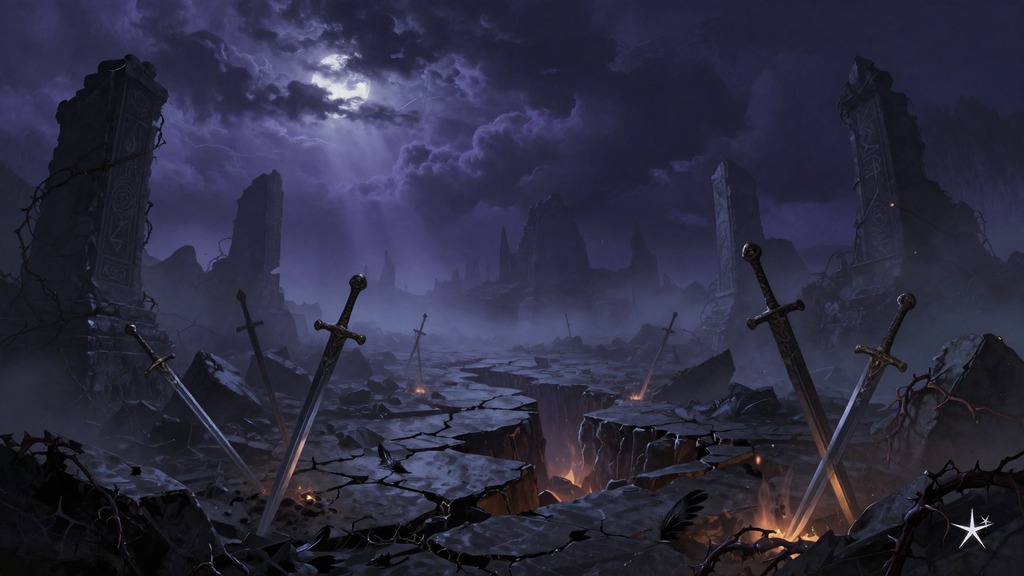
Berserk is a dark fantasy manga series — and one of those titles where the sheer size of the collection can stop you before you even start. With 43 Berserk manga volumes published in Japan and 42 currently available in English, plus multiple editions and an ongoing story with a complicated real-world history, it’s a lot to sort through when all you want to know is what do I actually buy?
Quick answer: there are 43 volumes in Japan and 42 in English. New reader? Start with Volume 1 in either format.
This guide breaks it all down: how many volumes exist, which format to choose, what the major story sections are, and what to watch out for when building your collection. One thing to know upfront — Berserk contains extreme violence and depictions of sexual assault. These elements are addressed more fully at the end of this guide, but if you’re sensitive to that kind of content, it’s worth being aware of before you start.
How Many Berserk Manga Volumes Are There
Here’s the short answer: 43 volumes in Japan, 42 currently available in English.
The English editions are published by Dark Horse Comics. The Japanese series has been published in chapters — individual installments released periodically in manga magazines — first in Monthly Animal House, then Young Animal (since 1992) — since 1989. (Think of it like a TV show airing episodes weekly; those episodes are later collected into book-form volumes.) That’s over three decades of continuous publication, making Berserk one of the longest-running dark fantasy manga in existence.
Berserk remains an ongoing series. Its creator, Kentaro Miura, passed away on May 6, 2021, before the story could be completed. Publication of new chapters resumed in June 2022, with Studio Gaga handling the artwork under the supervision of Kouji Mori, Miura’s close friend. New chapters and volumes continue to be released in Japan.
For English readers, there are two main ways to collect the series:
- Standard single volumes — 42 volumes available, traditional manga-sized paperbacks
- Deluxe Edition — 14 oversized hardcover volumes, each collecting roughly three Japanese volumes’ worth of content
A complete English collection today means either all 42 singles or all 14 Deluxe volumes. The Deluxe set covers content equivalent to roughly the first 40–41 Japanese volumes, so the most recently released single (Volume 42, released March 2025) contains material that hasn’t appeared in any Deluxe volume yet.
Standard Singles vs. Deluxe Edition — Choosing Your Format
This is the big decision for anyone starting Berserk, and there’s no wrong answer — just trade-offs.
Standard singles are the traditional format. At 42 volumes, they represent the most complete English-language collection available right now. They’re standard manga size and typically carry a cover price in the mid-teens per volume, making them the more affordable entry point. They include every chapter that Dark Horse has translated to date. If staying current with the story matters to you, singles are the way to go, because they’re always a step ahead of the Deluxe releases.
Deluxe Edition volumes are the premium option. These are large-format hardcovers — significantly bigger than a standard manga volume — printed on high-quality paper with sturdy binding. Each one collects approximately three Japanese volumes of content (Deluxe Vol. 14 is an exception: it collects two JP volumes plus the official guidebook). With 14 Deluxe volumes released so far, they cover a massive chunk of the series. They carry a higher list price (roughly three times what you’d pay for a single volume), which adds up across 14 books. Budget-conscious readers should factor this in before committing to the Deluxe format.
The real selling point of the Deluxe Edition is Miura’s artwork. Berserk is famous for some of the most intricate, detailed illustration in manga history, and those two-page illustrations — where a single image spans both the left and right pages — genuinely benefit from the larger page size. Panels that feel cramped in a standard paperback open up dramatically in the Deluxe format.
Here’s a quick comparison:
| Feature | Standard Singles | Deluxe Edition |
|---|---|---|
| Volumes available | 42 | 14 |
| Size | Standard manga | Oversized hardcover |
| Content per volume | 1 Japanese volume | ~3 Japanese volumes (Vol. 14: 2 + guidebook) |
| Paper / print quality | Standard | Premium |
| Price per volume (list) | Lower | Higher |
| Most current content? | Yes (Vol 42) | No (lags behind singles) |
| Publisher | Dark Horse Comics | Dark Horse Comics |
The key trade-off: singles are cheaper per volume and more current. The Deluxe Edition is the premium format and arguably the best way to experience Miura’s art at the scale it deserves. Both are published by Dark Horse Comics, so the translation is the same either way.
Which Format Is Best for a First-Time Reader
There’s no single right answer here, but a few guidelines that might help:
- If you want to start reading right away and stay current with the story: go with singles. You’ll have access to the latest translated volume without waiting for future Deluxe releases to catch up.
- If art presentation matters most to you: the Deluxe Edition is genuinely stunning. The larger format transforms the reading experience, especially during Berserk’s most visually ambitious sequences.
- If budget is a concern: singles have a lower per-volume cost, and you can buy them one at a time without a large upfront investment. The Deluxe volumes are a bigger commitment per purchase.
- If you can’t decide: mixing formats is completely fine, and lots of collectors do exactly that. Many readers own the Deluxe set for the bulk of the series and then buy new singles as they release to stay ahead of the Deluxe publication schedule.
- If you’re coming from one of the anime adaptations: the manga starts at Volume 1 regardless of which anime version you watched. The manga covers far more ground than any adaptation.
Start with whichever format fits your reading habits and budget. You can always adjust later.
Key Volumes Every Reader Should Know
Berserk spans several major story sections across its 42 English volumes. In manga, a story arc — or “arc” — is a self-contained stretch of the narrative with its own beginning, buildup, and climax, similar to a season of a TV show. Here’s a roadmap so you know what you’re getting into. These volume ranges are approximate landmarks — transitions don’t always fall neatly on volume boundaries — but they’ll orient you as a new reader.
Volumes 1–3: The Black Swordsman Arc
This is where it all begins. Guts is introduced as a lone, scarred warrior hunting demons with an enormous sword and a mechanical arm. The tone is brutal and bleak from page one. These opening volumes establish the world’s hostility and Guts’ rage without fully explaining where either comes from. It’s a deliberate choice — Miura drops you into the aftermath before showing you the cause.
Some readers find the early volumes rough compared to what follows. If Volume 1 feels abrasive, push through to Volume 4. That’s where Berserk becomes the series people can’t stop talking about.
Volumes 3–14: The Golden Age Arc
This is the emotional backbone of the entire series. The story jumps back in time to show Guts as a young mercenary — a soldier for hire — joining a mercenary company called the Band of the Hawk, led by the charismatic and ambitious Griffith. What unfolds is a story about friendship, ambition, loyalty, and betrayal on a mythic scale.
The Golden Age arc is widely considered one of the greatest story arcs in manga. It builds slowly and carefully, developing its cast with unusual depth for an action series, and then delivers a climax — a catastrophic event called the Eclipse — that is among the most devastating sequences in the entire form. This arc is the reason Berserk has endured for over thirty years.
Volumes 14–21: The Conviction Arc
After the shattering events of the Golden Age, Guts is on a revenge quest, fighting alone against demonic forces while grappling with his own trauma. The Conviction arc introduces a powerful religious institution and deepens the series’ engagement with fanaticism and institutional corruption. The demonic threats escalate, and the story’s mythology expands considerably.
Volumes 22–35: The Falcon of the Millennium Empire Arc
The scale of the story opens wide. Griffith returns to the physical world, the supernatural war intensifies, and Guts gradually builds a new group of companions. This arc balances massive battle sequences with quieter character work. It’s also where some of Miura’s most jaw-dropping artwork appears — entire chapters that look like they belong in an art museum rather than a manga magazine.
Volumes 35–42 (English) / 35–43 (Japanese): The Fantasia Arc
The world has been fundamentally transformed, and Guts’ journey takes him to a place called Elfhelm — a sanctuary of elves and magic — and beyond. The Fantasia arc shifts in tone — there are moments of genuine warmth and beauty alongside the darkness, which makes the story feel richer and more emotionally complex than ever. This is where the series stands as of the latest English release, Volume 42.
Berserk Volume 42
Availability Pitfalls and Out-of-Print Risks
Building a Berserk manga volumes collection isn’t always as simple as adding books to your cart. The series has gone through multiple waves of scarcity over the years, and certain volumes can be temporarily hard to find at standard retail prices.
Why volumes go out of stock: Berserk’s popularity tends to surge in waves. The 2016–2017 anime adaptation drove a major spike in demand. Miura’s passing in 2021 triggered another. Each time, certain mid-run volumes — especially those in the Golden Age arc — sold out faster than Dark Horse could reprint them.
The good news: Dark Horse has consistently reprinted volumes in response to these demand spikes. If a volume you need is temporarily unavailable, it’s more likely to be restocked eventually than to disappear permanently. The Deluxe Editions have generally maintained steady availability since their launch.
What to watch out for:
- Third-party price gouging. When a volume goes temporarily out of stock at major retailers, third-party sellers often list it at two or three times the cover price. Be patient rather than overpaying — reprints usually follow within a few months.
- Counterfeit volumes. Berserk’s popularity has unfortunately attracted counterfeit printings, especially from overseas sellers offering suspiciously cheap “complete sets.” Stick with reputable retailers.
- Condition issues with used copies. Berserk singles have been in print since the early 2000s in English. Older printings may have yellowed pages or worn spines. If condition matters to you, buy new when possible.
The most practical approach: buy volumes as you find them at retail price rather than waiting to purchase the entire series at once. If a specific volume is out of stock, check back in a few weeks.
Is the Series Finished — Will Your Collection Stay Complete
Berserk is not finished. This is important to know before you start collecting.
Kentaro Miura passed away on May 6, 2021, leaving the story incomplete. For over a year, the series’ future was uncertain. Then, in June 2022, new chapters began appearing again. Studio Gaga — the studio Miura founded and trained — took over the artwork, with Miura’s close friend Kouji Mori supervising the story based on what Miura had shared with him about the intended direction.
As of now, 43 volumes have been published in Japan, with English Volume 42 being the most recent release (March 2025). More volumes are expected as the story continues.
What this means for you as a collector:
- Your collection will grow. New volumes will continue to be released in both Japanese and English. This is not a completed set you can buy once and shelve.
- The story’s endpoint is uncertain. While Studio Gaga and Kouji Mori are continuing the series with care and respect for Miura’s vision, no one has confirmed exactly how many volumes remain or precisely when the story will conclude.
- Each new volume is an event. Berserk releases are relatively infrequent compared to weekly manga, so each new volume tends to generate significant attention and can sell quickly.
If you’re the type of reader who needs a finished story before committing, this is worth knowing upfront. Berserk may not have a definitive ending for years. But for many readers, the journey itself — the art, the characters, the emotional weight of what’s already on the page — is more than worth it even without a final chapter.
Who Berserk Is For — and Who Should Think Twice
Berserk is the defining dark fantasy manga. That’s not hyperbole — it’s the series that established and popularized the genre for an entire generation of readers and creators. Its influence is visible across manga and video games alike, and dozens of series have followed in its wake.
What makes it remarkable:
- The artwork. Kentaro Miura’s illustration is in a class of its own. The level of detail, the composition, the sheer ambition of his full-page and two-page illustrations — there’s nothing else quite like it in manga. This alone is reason enough to pick up the series.
- Psychological depth. Guts is not a simple action hero. He’s a deeply traumatized person fighting through a world that seems designed to break him, and his internal struggles are rendered with as much care as the external battles.
- Mythic scope. The story spans decades of in-world time, moves through multiple genres — military drama, horror, high fantasy, and more — and builds a world that feels genuinely vast.
- Emotional weight. Berserk earns every emotional beat. The highs are high, the lows are devastating, and the relationships between characters feel achingly real.
Who should think twice:
- Younger readers. Berserk is a manga created for an adult audience (categorized as “seinen,” meaning it targets adult men rather than teens). It contains extreme graphic violence, depictions of sexual assault, and pervasive horror involving grotesque physical transformation and mutilation. These elements are integral to the story’s themes rather than gratuitous, but they are intense and unflinching.
- Readers sensitive to depictions of sexual violence. Several key plot points involve sexual assault. The series treats these events with gravity rather than titillation, but they are present and depicted explicitly.
- Readers who need closure. As discussed above, Berserk is ongoing with no confirmed ending date. If an unfinished story will frustrate you, weigh that before starting a 42-volume commitment.
For everyone else — if you want a sprawling, uncompromising dark epic that rewards patience, that features artwork unlike anything else in manga, and that builds characters who feel like real people navigating an impossibly cruel world — Berserk manga volumes are where it starts. Pick up Volume 1 in whichever format fits your budget, and give it through Volume 4 before you decide.