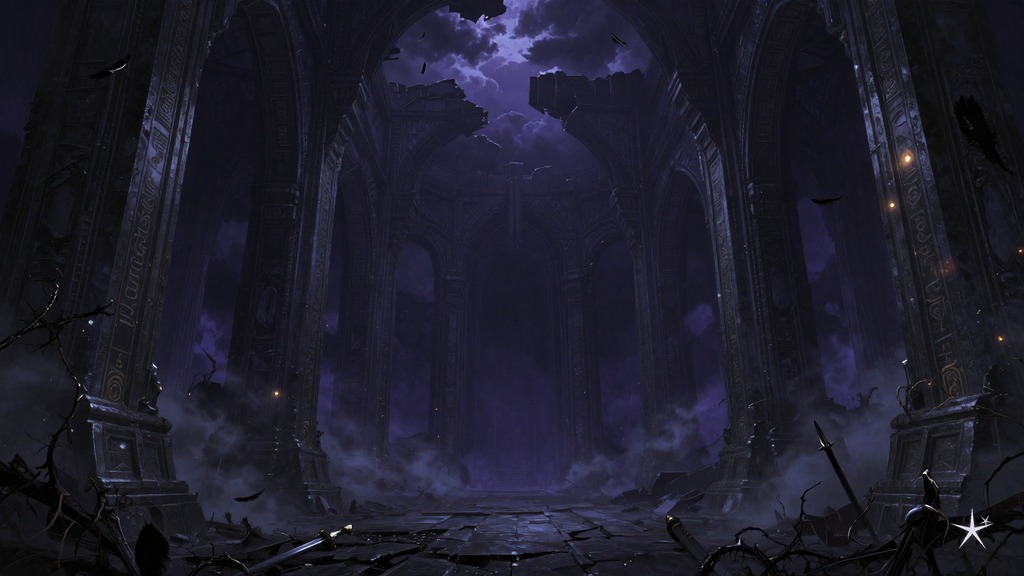
BLAME! manga is finished. The series is fully complete, and you can read the whole thing right now without waiting for a single new chapter. Whether you’ve spotted those striking, vertigo-inducing covers on a shelf or just heard the title mentioned online, here’s the full rundown.
Yes, BLAME! Is Finished — The Manga Is Complete at 10 Volumes
BLAME! is a completed manga series spanning 10 volumes. It was created by Tsutomu Nihei (弐瓶勉) and originally published chapter by chapter in Monthly Afternoon, a manga magazine from publisher Kodansha. The series ran from the late 1990s into the early 2000s, and every chapter has been collected into book form — there’s nothing left dangling or unfinished.
The Master Edition is currently in print and available from major retailers, so you won’t have any trouble finding copies.
This matters because BLAME! is one of those series that feels like it could go on forever. The world it depicts — an endlessly expanding megastructure built by rogue construction machines — is so vast and alien that you might assume the story just trails off into darkness. It doesn’t. Nihei wrote a definitive ending.
For anyone coming from the anime side of things (including the 2017 Netflix film by Polygon Pictures) or just discovering the series through word of mouth, this is the key takeaway: BLAME! tells a complete story across 10 volumes. You can pick it up knowing there’s a real conclusion waiting at the end.
It’s also worth noting that BLAME! holds a unique position in dark fantasy and sci-fi manga. Very few series commit this hard to atmosphere and environmental storytelling. The finished status makes it an ideal binge read — no weekly cliffhangers, no indefinite breaks to worry about, just ten volumes of one of the most architecturally stunning manga ever drawn.
How BLAME! Ends — Killy’s Path Through the Megastructure
The story follows Killy, a lone wanderer searching for Net Terminal Genes — a rare genetic trait that would let a human interface with the megastructure’s master network and potentially shut down the endless, out-of-control construction that has consumed the world. Along the way, he encounters scattered human settlements clinging to survival, hostile Silicon Life creatures (biomechanical beings that oppose humanity), and the relentless Safeguard — an automated defense system that deploys deadly enforcers to eliminate any human it deems unauthorized.
The manga reaches a genuine conclusion. Killy’s quest arrives at a resolution, and the story’s central conflict around the Net Terminal Genes does get addressed. But — and this is important to set expectations — the ending is characteristically Nihei. It’s stark, atmospheric, and far more visual than expository. If you’re expecting a detailed epilogue that explains every mystery of the megastructure, that’s not what BLAME! is.
The ending rewards careful reading. There are visual cues and subtle narrative beats that carry enormous weight if you’ve been paying attention to the world throughout the series. Many readers find themselves going back through earlier volumes after finishing, picking up details they missed the first time.
This ambiguity is a feature, not a bug. BLAME! has always communicated through its environments and its silence as much as through dialogue (of which there is very little). The conclusion fits that philosophy perfectly. It’s the kind of ending that sticks with you and generates long conversations about what exactly happened and what it means — which, for a series this atmospheric, feels exactly right.
If you want every story thread neatly resolved, you may find it frustrating — and that’s a fair reaction. If you love manga that trusts its readers and its art to carry the story, the ending is deeply satisfying.
The Complete Set — Volumes, Editions, and What to Buy
Here’s where things get practical. There are two main editions of BLAME!, and for English-language readers one of them is clearly the way to go.
Original Japanese Edition
The original Japanese release from Kodansha runs 10 volumes in standard manga format. These are out of print in many regions and harder to find, so they’re mainly of interest to collectors or Japanese-language readers.
English Master Edition (Recommended)
The English release collects all 10 original volumes into 6 oversized paperback books — the BLAME! Master Edition. Each book combines roughly one to two original volumes into a single, larger-format collection. This is the definitive way to read the series in English, and it’s not even close.
Here’s why: BLAME! is a manga where the art is the story. Nihei drew impossibly detailed architectural spaces — corridors that stretch for miles, ceilings lost in darkness, structures so massive they have their own weather systems. In a standard-sized volume, a lot of that detail gets crushed. The Master Edition’s larger pages let the artwork breathe the way it was meant to.
Each Master Edition volume is a substantial paperback with quality paper stock. They look great on a shelf and they feel great in your hands. At typical retail pricing, each volume falls in line with what you’d expect for a premium hardcover manga collection. For a series this visual, the physical reading experience genuinely matters.
The final Master Edition volume completes the series, collecting the last stretch of Killy’s trek through the megastructure.
BLAME!, Vol. 10 (final volume)
Which Edition Should You Choose?
For English-language readers, the Master Edition is the clear pick. The larger format isn’t just a luxury — for BLAME! specifically, it meaningfully changes how well you can follow the story. So much of the narrative is communicated through environmental detail that losing resolution to a smaller page size is a real loss. The Master Edition is currently in print and widely available at major retailers.
Spin-Offs and Related Works in the BLAME! Universe
Nihei built a world big enough to support more than one story. Here’s what else exists in the BLAME! universe:
NOiSE
NOiSE is a prequel manga set in the same universe as BLAME!, taking place in an earlier era of the megastructure’s history. It’s a single-volume work that provides some additional context for the world’s backstory. It’s a quick read and worth picking up if you finish BLAME! and want more of that world, but it’s absolutely not required to understand the main series.
BLAME! Academy and So On
This one catches people off guard: BLAME! Academy and So On is a comedic spin-off that reimagines the BLAME! cast in a school setting. It’s a complete tonal reversal from the main series — lighthearted, silly, and clearly made as a fun side project. Think of it as Nihei letting loose after years of drawing oppressively vast corridors.
Nihei’s Other Works
Tsutomu Nihei’s later manga — including titles like Knights of Sidonia and APOSIMZ — share thematic and aesthetic DNA with BLAME!. You’ll recognize the interest in massive structures, heavily modified human bodies, and hostile environments. But these are separate stories in separate universes. They’re not BLAME! sequels or continuations. If you finish BLAME! and want more of Nihei’s work, both series are available in collected editions and worth looking for on the same shelves.
The Important Thing
None of these are required reading. The main 10-volume BLAME! series is entirely self-contained. You can read it, finish it, and have a complete experience. The spin-offs and related works are bonuses for people who want to spend more time in Nihei’s world.
Where to Start Reading BLAME!
The recommended entry point is straightforward: Master Edition Volume 1. It collects the beginning of the series in the best available English format and gives you enough material to know whether BLAME! is for you.
A Fair Warning About the Reading Experience
BLAME! is unlike most manga you’ve probably read. Here’s what to expect going in:
- Minimal dialogue. Some chapters have almost no spoken words. Entire sequences play out purely through visuals. This is intentional.
- Deliberate disorientation. You will not fully understand what’s happening at first. The series drops you into the megastructure alongside Killy, and you’re meant to feel the same overwhelming sense of scale and confusion that he experiences. Don’t panic — just keep reading and things will begin to cohere.
- Visual storytelling. Pay close attention to the environments. The architecture isn’t just background art — it tells the story of the world. The way spaces change as Killy moves through the megastructure communicates as much as any dialogue could.
- Slow revelation. The history and rules of the world reveal themselves gradually, often through brief interactions or visual context clues. BLAME! doesn’t hold your hand, but it does give you what you need if you’re paying attention.
If reading all of that sounds more frustrating than intriguing, BLAME! may not be the right entry point into Nihei’s work for you — and that’s fine. His later series Knights of Sidonia offers a more dialogue-driven story in a similar aesthetic. But if the idea of a manga that communicates primarily through its art excites you, BLAME! is one of the most rewarding series in the medium.
Physical vs. Digital
Read physically if you can. The Master Edition’s oversized pages are genuinely important for this specific series. BLAME!’s architectural detail — the thing that makes it legendary — benefits enormously from a large, high-quality printed page. Digital works fine and you’ll still enjoy the story, but the physical Master Edition is the format where BLAME! really shines.
Do You Need to Watch the Anime First?
No. There is a 2017 animated film adaptation produced by Polygon Pictures (available on Netflix), but the manga is the definitive version of BLAME! and stands completely on its own. If you’ve already seen the film and are curious about the source material, the manga is a dramatically different (and much deeper) experience. If you haven’t seen the film, don’t worry about it — just start reading.
Frequently Asked Questions
Is there a sequel to BLAME!?
No. There is no direct sequel to BLAME!, and none has been announced. The story Nihei set out to tell across those 10 volumes is complete. Related works like NOiSE (prequel) and BLAME! Academy (comedy spin-off) exist, but the main narrative is finished.
How long does it take to read BLAME!?
The complete series is collected in 6 Master Edition volumes, which makes it a relatively compact read by manga standards. Because of the minimal dialogue, individual pages go by quickly — but you’ll likely find yourself lingering on the art, rereading panels to absorb the detail. Most readers finish the whole series in a few dedicated sittings.
Is BLAME! hard to understand?
It can be — and that’s by design. BLAME! is a visual-first manga with minimal exposition. It doesn’t explain its world through narration boxes or lengthy character speeches. Instead, it communicates through its environments, its character designs, and its atmosphere. The first few chapters can feel genuinely bewildering, and that’s a normal reaction.
The key point: the megastructure is supposed to feel incomprehensible — so vast and so old that no one fully understands it anymore. The reading experience mirrors that. If you lean into the ambiguity rather than fighting it, BLAME! is an incredibly rewarding series. Many readers say it clicks on a second readthrough, when you can pick up on visual storytelling cues you missed the first time. And if you find that ambiguity genuinely off-putting rather than intriguing, that’s a valid response — check the “Fair Warning” section above for guidance on whether this series suits your reading style.
Will BLAME! get a new anime adaptation?
There’s no confirmed information about a new BLAME! anime adaptation. The series has a devoted fanbase that would love to see a full anime treatment, but nothing has been officially announced. The manga remains the definitive way to experience the story.
Is BLAME! dark fantasy or sci-fi?
Both, really. The setting is science fiction — a massive artificial structure, advanced technology, AI governance systems. But the atmosphere and tone are pure dark fantasy. Killy wanders through the megastructure like a lone knight crossing a cursed wasteland. The threats he faces are monstrous and alien. The world feels ancient and hostile in ways that echo fantasy more than hard sci-fi. If you enjoy dark fantasy manga and have any tolerance for sci-fi settings, BLAME! will feel right at home on your shelf.