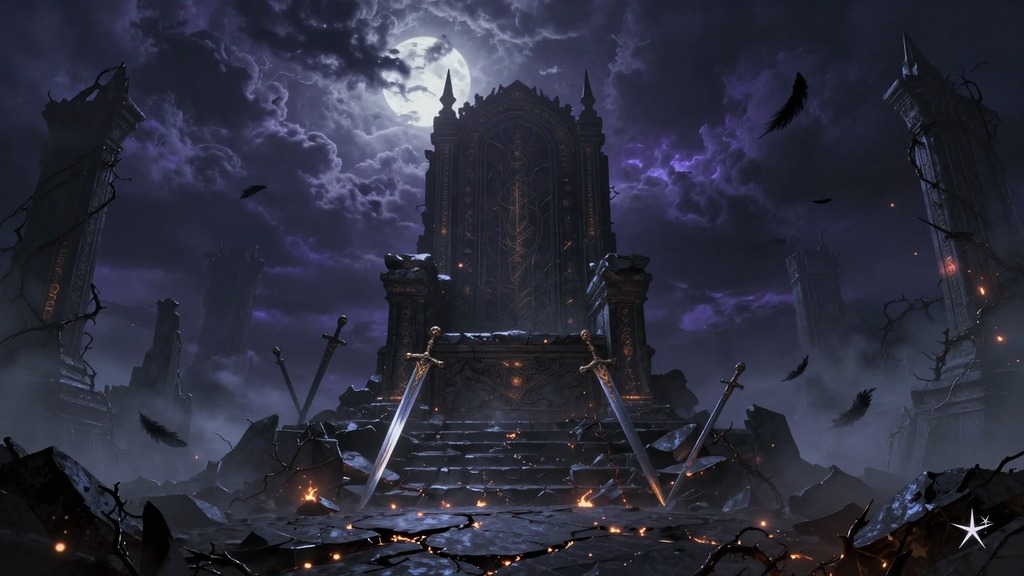
Platinum End at a Glance — A Complete 14-Volume Dark Fantasy
Platinum End (originally published in Japan as プラチナエンド) is a completed dark fantasy manga — a Japanese comic series — spanning 14 volumes (individual collected books), published in English by VIZ Media with a Mature rating. If you’re looking into the Platinum End manga volumes to figure out how many books there are and whether now is a good time to start, the answer is simple: every volume is already out. No waiting for new releases, no wondering if it’ll get cancelled halfway through.
The series comes from a creative team manga fans already know well: Tsugumi Ohba (story) and Takeshi Obata (art), the same duo behind Death Note and Bakuman. If you haven’t read those series, what you need to know is that Ohba and Obata are known for high-concept stories built around psychological tension and morally complex characters — and Platinum End carries that same approach into much darker territory. The series was originally serialized — published chapter by chapter in a magazine — in Jump SQ., a manga magazine by Shueisha in Japan. The final Japanese volume released on February 4, 2021.
The premise is bleak from the very first page. A suicidal teenager named Mirai Kakehashi is saved from death by an angel and thrust into a deadly battle royale — a last-person-standing survival competition. The prize? Becoming the next God. Each candidate receives supernatural abilities — wings for flight, arrows that can manipulate or kill — and must outlast or destroy every other competitor. It’s a setup that blends supernatural horror with deep philosophical despair, and it never lets up on either front.
At 14 volumes, the whole series is compact enough to collect without a huge commitment. You can read the entire story in a couple of focused weekends, which makes it a strong starting point if you want to try something from the Ohba-Obata team or if you’re looking for a complete dark fantasy manga you can read from start to finish.
Story Arcs by Volume — How the Platinum End Manga Volumes Break Down
Platinum End moves through roughly three phases: the angel selection and early survival, the escalating god candidate battles, and the final confrontation that pushes into heavy philosophical territory. Here’s how the volumes break down.
A note before diving in: This series opens with its protagonist on the verge of suicide, and that subject matter is not limited to a single scene — it’s a sustained thematic element throughout the story. If you or someone you’re buying for is sensitive to depictions of suicidal ideation, self-harm, or psychological anguish, be aware that these themes run through the entire series, not just the opening chapter.
The Angel Selection and Early Battles (Volumes 1–5)
The series opens with Mirai at his lowest point — standing on the edge of a building, ready to end his life. He’s rescued by an angel named Nasse, who reveals that he’s been chosen as a god candidate. Thirteen humans have been selected, each paired with an angel of varying rank, and the last one standing after a set period will ascend to become God.
These opening volumes lay out the rules of the death game. Each candidate receives some combination of wings (for flight) and arrows (which come in two types: Red Arrows that force someone to love you for a limited time, and White Arrows that kill instantly). The power set each candidate gets depends on the rank of their angel, which immediately creates an uneven playing field.
The early antagonist who dominates these volumes is Metropoliman, a god candidate who embraces the violence of the competition with terrifying enthusiasm. He’s flashy, ruthless, and willing to murder publicly to draw other candidates out of hiding. His presence forces Mirai — who wants nothing to do with killing — into impossible situations.
These are the tone-setting volumes. Suicide, manipulation, divine indifference, the question of whether life has value when a god can be chosen through bloodshed — it all gets established early and never really lets go.
The Escalating War Among Candidates (Volumes 6–10)
The middle stretch of the series shifts as the surviving candidates begin forming alliances that quickly fracture under pressure. Each candidate brings a different ideology to the table. Some want to rule as God. Some want to use the position to reshape the world. Some reject the idea of godhood entirely. Where the first five volumes gave you a clear villain in Metropoliman, this stretch muddies the lines — candidates who seemed sympathetic start making brutal choices, and those who seemed irredeemable reveal their reasoning.
The strategies get increasingly desperate. Characters are forced into betrayals, and the cost of staying alive keeps rising. The philosophical divide becomes the series’ central tension: is it better to seize divine power and try to do good with it, or is the entire system corrupt beyond redemption?
These volumes are where Platinum End’s identity separates most clearly from Death Note. Where Death Note — if you’re unfamiliar — was a cat-and-mouse intellectual thriller about a genius using a supernatural notebook to kill criminals, Platinum End’s middle act leans into raw ideological conflict. The question here isn’t “who’s smarter?” — it’s “who’s right about the nature of existence?” That shift in focus makes the middle volumes feel heavier and more philosophically demanding than the action-driven opening.
The Endgame — God’s Throne and Its Cost (Volumes 11–14)
The final four volumes bring the remaining candidates into direct confrontation with the fate of all humanity on the line. The story pushes into its most challenging philosophical territory here — questions about nihilism, free will, and what divinity even means if God is just the last person standing in a death game.
Without spoiling the specifics, the conclusion is divisive. To give you enough to make your own call: readers who appreciate endings that commit fully to a story’s bleakest philosophical implications — the kind of conclusion that refuses to offer comfort or easy resolution — tend to find this ending brave and thematically consistent. Readers who were more invested in the characters’ emotional arcs and wanted those arcs to reach a satisfying payoff are more likely to feel let down. The ending follows the ideas rather than the feelings, and how you respond to that will depend on what drew you to the series in the first place.
The final volume wraps everything up with no loose threads. Love it or hate it, the story commits fully to its vision.
What Makes Platinum End Dark Fantasy
If you’re browsing this site, you’re probably wondering where exactly Platinum End fits on the dark fantasy spectrum. It earns its place there several times over.
The supernatural framework is front and center: angels, divine arrows that can enslave or kill with a touch, wings that grant flight — all presented not as gifts but as tools in a cruel celestial game designed by a dying God. There’s nothing whimsical about the supernatural elements here. They exist to facilitate suffering and force impossible choices.
The series opens with its protagonist on the verge of suicide, and that darkness never fully lifts. Even as Mirai gains reasons to live, the world around him keeps demonstrating why he nearly gave up. The other candidates bring their own traumas and broken worldviews, and the angel system treats human life as disposable.
Unlike Death Note’s tightly controlled thriller structure, Platinum End leans into existential horror. The central question isn’t about justice or intellect — it’s about what it means if the highest power in the universe is decided through violence and manipulation. If God is just whoever survives the longest, does divinity have any meaning at all?
The Mature rating from VIZ reflects this honestly. There’s graphic violence, psychological torment, and thematic content — including sustained depictions of suicidal ideation and the psychological manipulation of vulnerable people — that goes to genuinely uncomfortable places. This isn’t a series that pulls its punches to stay accessible. If you’re looking for dark fantasy with real weight behind it — stories that sit with despair instead of quickly resolving it — Platinum End delivers.
It appeals to readers who enjoy dark fantasy survival competitions and fans of morally grey supernatural fiction where there’s no clear hero and no clean answers.
Manga vs. Anime — Where the Adaptation Differs
For those unfamiliar with the relationship: manga is the original Japanese comic format, while anime is the animated TV or film adaptation. It’s common for a popular manga to receive an anime adaptation, though the two versions can differ in quality and pacing. A TV anime adaptation of Platinum End aired beginning in October 2021, and it covers the full manga story through to the ending.
For collectors weighing which version to experience, here are the key differences. First: Takeshi Obata’s artwork. Obata is one of the most technically gifted artists working in manga, and Platinum End gives him room to do some stunning work — the angel designs, the battle sequences, and especially the psychological confrontation scenes all benefit from his meticulous detail and atmospheric page compositions. The way he arranges panels on a page creates rhythm and tension that simply can’t translate one-to-one into animation.
The anime adaptation struggled to consistently match that visual quality. Beyond the art, many readers who came to the manga after watching the anime found that the story’s pacing landed harder in its original format. Scenes that felt rushed or emotionally flat in the anime had more room to breathe on the page, where Obata’s art could carry the weight of a moment without being constrained by episode runtime.
If you watched the anime first and felt lukewarm about it, the manga is worth trying. The source material gives you both the visual detail and the pacing that the adaptation sometimes couldn’t sustain — and since you’re looking at all 14 manga volumes anyway, it’s the complete experience as the creators intended it.
Which Edition to Buy
VIZ Media publishes the complete English edition — all 14 volumes are available in both print and digital formats.
The standard paperback singles are the only English physical edition currently known. As of this writing, no omnibus (multiple volumes collected into one larger book), deluxe, or hardcover editions have been confirmed for this series. If that changes down the line, the standard singles will still give you the complete experience — they’re well-produced and easy to read.
The Mature rating means Platinum End usually isn’t shelved with general manga releases at bookstores. If you’re shopping in person, check the age-rated or mature-content section at your retailer — many stores separate titles with mature ratings from the general manga shelves. If you’re not sure, asking a staff member for the mature-rated manga section will point you in the right direction.
For the final volume specifically, Platinum End, Vol. 14 brings the whole story to its conclusion and is a satisfying pickup whether you’re completing your collection or buying the series for the first time to read digitally alongside physical copies.
Platinum End, Vol. 14 (final volume)
Digital editions are available through VIZ and the usual digital manga platforms, which is a convenient option if you want to read through all 14 volumes without the shelf space commitment.
Frequently Asked Questions
How many volumes is Platinum End?
14 volumes in both the Japanese and English editions. The series is complete — every volume has been published, so you can read the entire story from start to finish right now.
Is Platinum End finished?
Yes, the manga is fully completed. The final Japanese volume released on February 4, 2021, and all 14 English volumes from VIZ Media are available.
Who created Platinum End?
Story by Tsugumi Ohba, art by Takeshi Obata — the same team behind Death Note and Bakuman. Both of those are well-known manga series built around psychological tension and morally complex characters. If you’ve read either, you’ll recognize a similar approach to storytelling in Platinum End, even though the tone and genre are darker. If you haven’t, Platinum End stands on its own — no prior reading required.
Is Platinum End connected to Death Note?
They share the same creators but are completely separate stories with no narrative connection. You don’t need to have read Death Note to understand or enjoy Platinum End. That said, both series explore overlapping themes — questions about justice, the value of human life, and what happens when ordinary people are handed extraordinary power — so if you enjoy one, the other is worth looking into.
Where can I buy Platinum End manga volumes in English?
VIZ Media publishes the English edition. You can find all 14 volumes at major retailers in both print and digital formats. Because of the Mature rating, physical copies may be stocked in a separate age-rated section rather than the general manga shelves — if you’re shopping in a physical store and can’t find it, ask staff for the mature-rated manga area.