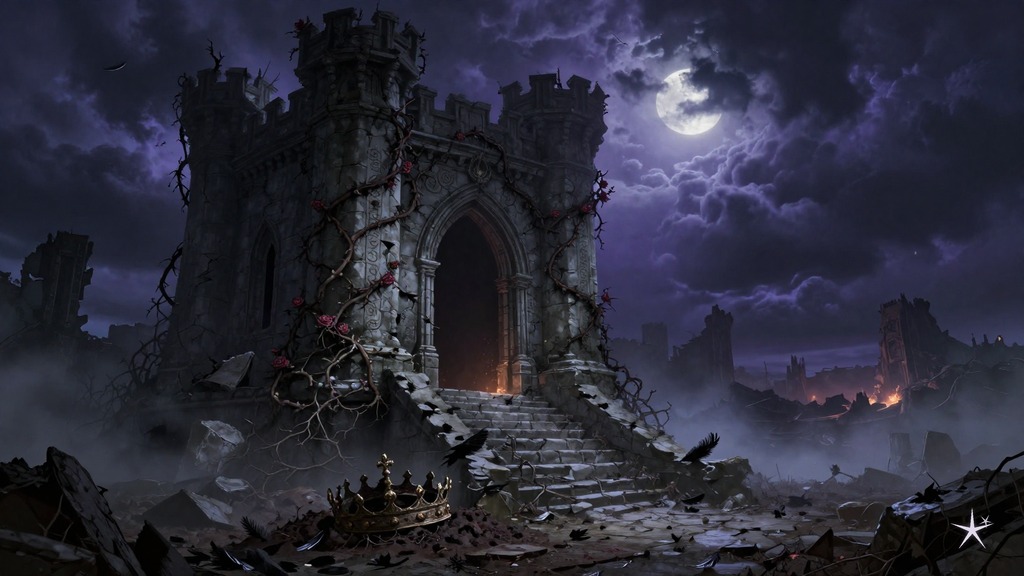
Requiem of the Rose King (薔薇王の葬列) by Aya Kanno (菅野文) is a dark fantasy reimagining of Shakespeare’s Wars of the Roses plays — a series of 15th-century English conflicts between rival noble families fighting for the throne. If you’re here for the manga reading order, the great news is that it’s beautifully simple. The series is complete, there’s nothing extra to track down, and you can start right now.
Here’s how to read it from beginning to end.
Requiem of the Rose King Manga — Complete Reading Order
The short version: Read Volumes 1 through 17 in order. That’s it. One linear story, no spin-offs, no side volumes, no branching paths. The series is complete at 78 chapters across 17 English volumes, all published by VIZ Media (a major North American manga publisher).
For anyone new to manga, a “volume” is a book-length installment — typically around 180–200 pages — that collects several chapters of the story. So 17 volumes means 17 books, read in numbered order.
Now, if you want a sense of what each stretch of the story covers — without spoilers — here’s a grouped breakdown to help you pace yourself or know roughly where you are in the larger narrative.
Group 1: Volumes 1–3 — The Cursed Prince and the English Civil War
This is where you meet Richard, Duke of Gloucester — a young prince born with a body and identity that set them apart in ways their world is violently unwilling to accept. The Wars of the Roses — a bloody civil war between the noble houses of York and Lancaster, each claiming the right to rule England — are erupting, and the supernatural darkness haunting Richard makes itself known immediately. These opening volumes establish the series’ unique blend of Shakespearean drama, historical warfare, and gothic horror.
If you’re wondering whether this series is for you, you’ll know by the end of Volume 1. The tone is set early and it doesn’t waver.
Group 2: Volumes 4–6 — Power Shifts and the Yorkist Rise
The political landscape shifts dramatically as alliances form and fracture. The Yorkist faction rises, but every gain comes at a cost. Richard’s relationships deepen and complicate, and the tension between ambition and personal identity starts to pull tighter. These volumes reward attention — the political maneuvering mirrors the emotional conflicts beautifully.
Group 3: Volumes 7–9 — Betrayal and Deepening Darkness
Betrayal becomes the currency of the court. Characters you’ve grown attached to reveal new sides, and the supernatural elements woven through the story grow more prominent. The weight of the crown — who wears it, who wants it, what it destroys — becomes the central question. This is where the series hits a particularly intense stride.
Group 4: Volumes 10–12 — Richard’s Transformation
Richard’s narrative reaches a critical turning point. The cost of ambition is laid bare across these three volumes, and the line between the historical drama and the dark fantasy blurs further. The artwork becomes especially striking here — Aya Kanno’s visual symbolism is working overtime, and careful readers will notice recurring images and patterns paying off in devastating ways.
Group 5: Volumes 13–15 — The Throne Claimed, Enemies Close In
The throne is within reach — or already seized — but holding power proves even more dangerous than seizing it. Enemies circle from every direction. The pacing tightens considerably as the story begins its approach toward the climax. There’s a sense of inevitability in these volumes that’s almost suffocating, in the best possible way.
Group 6: Volumes 16–17 — The Final Reckoning
The conclusion. Everything the series has built across fifteen volumes comes to a head. Without spoiling anything: the ending recontextualizes the opening chapters in ways that make an immediate reread deeply rewarding. These final two volumes are emotionally devastating and thematically rich — a fitting end to a story that never pulled its punches.
Requiem of the Rose King, Vol. 17 (final volume)
Why This Series Has a Simple Reading Order
One of the nicest things about picking up Requiem of the Rose King as a new reader is that the reading order is completely straightforward. While some supplementary materials do exist in Japan — including two spin-off manga (The Queen and the Rose Knight by Aya Kanno herself, and King of Idol Bara-Ō no Gakuen by Kineko Abekawa), a spin-off novel (Five Interludes by Yō Makusu), and three drama CDs — none of these have been licensed in English. For English-language readers, the 17-volume manga is the only edition available, and it contains the complete main story. There’s nothing in English you need to track down alongside it.
The narrative follows a reimagined version of the Wars of the Roses — drawing primarily from Shakespeare’s Henry VI Part 3 (a play about the civil war’s bloodiest phase) and Richard III (a play about the infamous king’s rise and fall) — in chronological order. There are no timeline jumps that require external reading, no “read this novel between Volumes 8 and 9” situations. You start at Volume 1 and read straight through to Volume 17.
A TV anime adaptation does exist — the anime is a separate animated version of the story, not a continuation of it. It’s supplementary to the manga rather than a replacement. The manga is the complete and definitive version of the story. If you end up loving the series and want to experience the anime afterward, it’s there — but you’ll never need to pause your manga reading to watch it. The manga stands entirely on its own.
This is a refreshingly reader-friendly series in that respect. One story, one reading order, no homework required.
Content Warnings for New Readers
Requiem of the Rose King earns its “dark fantasy” label honestly, and it’s worth knowing what you’re getting into before you start — especially if you’re newer to darker manga.
- Medieval warfare and political violence. This is a story about a civil war, and it doesn’t shy away from depicting that. Battle sequences and politically motivated killings are present throughout the series.
- Themes of persecution tied to gender identity and bodily autonomy. Richard is depicted as intersex — born with a body that doesn’t fit neatly into male or female categories — and their fluid gender identity is central to the story. The persecution Richard faces because of this is depicted seriously and with emotional weight, handled as a genuine source of pain and conflict rather than as shock value or exploitation. Readers who share aspects of this experience may find the portrayal deeply resonant, though some scenes depicting that persecution can be emotionally difficult.
- Supernatural and demonic elements. The historical setting is interwoven with gothic horror. Demonic visions, curses, and supernatural influence are present from the very first chapter and escalate as the series progresses.
- Mature themes throughout. Sexual content, psychological manipulation, and intense emotional violence are part of the fabric of the story.
This series is best suited for mature readers — older teens and adults. It’s not gratuitous, but it is unflinching. If you’re comfortable with dark fantasy manga and appreciate stories that treat heavy subjects with gravity rather than spectacle, you’ll likely find this series compelling rather than off-putting. For a rough comparison: if you’ve read Berserk or Vinland Saga and were okay with those levels of darkness, you’ll be in familiar territory here — though the tone is more Shakespearean tragedy than action-driven epic.
Which Edition Should You Buy
The English edition of Requiem of the Rose King is published by VIZ Media — 17 volumes that match the Japanese release one-to-one. Here’s what’s available:
Standard paperback singles are the primary print format. These are the standard-size manga volumes you’ll find at any major book retailer. They’re well-produced, with solid print quality that does justice to Aya Kanno’s detailed artwork. Individual volumes carry a typical manga retail price — with 17 books total, it’s worth knowing upfront that collecting the full series is a meaningful investment. Starting with Volume 1 to test the waters is a smart approach.
Digital editions are available through VIZ Media’s own manga app, Kindle, and other major e-book platforms. If shelf space is a concern or you prefer reading on a tablet, digital is a perfectly good way to experience the series. Digital pricing is generally lower per volume than print, which can make the full 17-volume set more accessible. The art translates well to screens, though some of the denser two-page artwork spreads benefit from a larger display.
As of the information available, there are no omnibus editions (collected volumes that bundle multiple books into one thicker book) or deluxe editions for the English release. The standard singles are your path — which honestly simplifies the buying decision. Grab Volume 1 and start reading.
Since the series is complete at 17 volumes, you can also plan your purchases knowing exactly how many books you need. No waiting for future releases, no uncertainty about whether the English edition will finish. It’s all out there right now.
Tips for Getting the Most Out of Your First Read
A few things that can enhance the experience — none of these are requirements, just observations that might help you appreciate what the series is doing.
You don’t need to know Shakespeare, but it adds a layer. The manga draws heavily from Shakespeare’s history plays about the Wars of the Roses — stories of feuding royal families, bloody power grabs, and doomed kings. Readers familiar with those plays will catch references, parallels, and deliberate departures that enrich the story. But here’s the important part: the manga is completely self-contained. It tells its own version of events clearly and powerfully. You will never be confused because you haven’t read Shakespeare. Think of it like watching a great film adaptation — knowing the source material adds texture, but the film works on its own terms.
The dark fantasy elements appear immediately. If you’re picking this up expecting a slow-burn historical drama that gradually introduces supernatural elements — adjust your expectations. The gothic and demonic imagery is present from Chapter 1. This is a deliberate creative choice that establishes the series’ identity right away. The “dark fantasy” label isn’t marketing — it’s accurate from page one.
Pay attention to the visual symbolism. Aya Kanno’s artwork is dense with recurring images — roses, thorns, religious iconography, light and shadow. These aren’t just decorative. They carry thematic weight that builds across all 17 volumes. Panels that seem purely atmospheric early on often turn out to be hinting at future events or offering symbolic commentary. If you’re the type of reader who likes to linger on artwork rather than just following dialogue, this series will reward that habit generously.
Consider a reread after finishing. The ending of the series recontextualizes the opening in meaningful ways. Scenes and images from the early volumes take on entirely different emotional weight once you know where the story goes. This is a series that gets richer the second time through — not because it’s confusing on first read, but because Kanno planted seeds early that only bloom in retrospect.
Frequently Asked Questions
Do I need to read Shakespeare before starting?
No. The manga is inspired by Shakespeare’s history plays — primarily Henry VI Part 3 and Richard III, which dramatize the Wars of the Roses and the rise of Richard III — but it’s a fully self-contained story. Everything you need to understand the plot, characters, and themes is in the manga itself. Familiarity with Shakespeare adds an extra layer of appreciation for how Kanno reimagines and subverts the source material, but it’s a bonus, not a prerequisite.
Is the series finished?
Yes. Requiem of the Rose King is a completed series — 78 chapters across 17 volumes. Both the Japanese edition (published by Akita Shoten, a Japanese publisher, in Monthly Princess magazine) and the English edition (published by VIZ Media) are fully released. You can read the entire story right now without waiting for future volumes.
Should I watch the anime first or read the manga first?
Read the manga first. The manga is the original and complete version of the story. The anime adaptation exists as a supplementary way to experience the world, but the manga offers the full narrative as Aya Kanno created it. Starting with the manga ensures you get the complete story with all its visual detail and pacing intact. If you enjoy it, the anime is there as a companion piece afterward — streaming availability varies by region, so check your preferred platform.
How dark is this compared to other dark fantasy manga?
It’s genuinely dark. The series deals with war, political violence, persecution, questions of identity and bodily autonomy, and supernatural horror — all treated with seriousness rather than played for shock. If you’ve read Berserk or Vinland Saga and were comfortable with those levels of intensity, you’ll be in familiar territory here, though the tone is distinctly different — more Shakespearean tragedy than warrior epic. The darkness serves the story and character development rather than existing for its own sake. The setting is 15th-century England during a real period of civil war, which gives the violence and political intrigue a grounded historical weight that sets it apart from more conventional fantasy.
How long does it take to read the full series?
With 17 standard-length manga volumes, most readers can get through the complete series in a few dedicated reading sessions or spread it across a couple of weeks of casual reading. Each volume runs a typical manga length, so you’re looking at a substantial but not overwhelming commitment. It’s a great series to binge over a weekend if the story hooks you — and based on those opening chapters, there’s a very good chance it will.