If you’ve searched for “rokka manga volumes” hoping for a quick, definitive number, here it is: the Rokka: Braves of the Six Flowers manga is four volumes. It’s a short, compact series that adapts only the first story arc — a single self-contained storyline — from the light novels (Japanese illustrated novels, shorter and more text-heavy than manga). All four volumes have been published in English by Yen Press. This guide walks you through what the manga covers, how it relates to the anime and light novels, and how to decide which format is right for you.
Rokka: Braves of the Six Flowers Manga — How Many Volumes and What to Expect
The Rokka: Braves of the Six Flowers manga is a short series based on the light novels by Ishio Yamagata. It adapts the opening arc of the story — the gathering of the six chosen Braves and the tense mystery that follows.
For readers new to manga — Japanese comics read right-to-left, published in collected editions called volumes — Rokka is a manageable entry point precisely because it’s brief. You’re not committing to dozens of books.
The premise is immediately gripping: in a world inspired by Mesoamerican mythology — the ancient civilizations of Mexico and Central America, including the Aztecs — six heroes are chosen by the Goddess of Fate (a deity invented for this story’s world) to defeat the Demon God (the story’s primary antagonist). But when the Braves assemble, there are seven of them instead of six. One is an imposter. The story becomes a paranoid thriller as the heroes — trapped together and unable to trust each other — try to unmask the fake before it’s too late.
The manga doesn’t cover the entire light novel storyline. It focuses on that first major arc, which works as a self-contained mystery even though the larger story continues in the novels. If you’re coming in expecting a long-running series, know upfront that this is a focused adaptation of one arc, and it wraps up accordingly.
Story Arc Breakdown by Volume
Because the manga covers a single major arc from the light novels, the story progresses at a tight pace. Here’s a qualitative look at how the narrative unfolds across the run:
The Gathering
The early portion introduces Adlet Mayer, a young warrior who declares himself the strongest man in the world. He’s one of the six Braves chosen to fight the Demon God, and the opening chapters follow his journey to the meeting point alongside the other chosen heroes. You meet the core cast here — each Brave has a distinct fighting style and personality, and the Mesoamerican-flavored world gets established through their travels.
The Sealed Temple Standoff
This is where Rokka transforms from a dark fantasy adventure into something much more unusual — a locked-room mystery. That’s a type of mystery story where suspects are physically confined to one location and no one can enter or leave, forcing them to solve the crime from within. The Braves arrive at a temple that has been sealed by a magical barrier, trapping them inside a fog-covered region. And then they count heads: seven people, not six. Someone activated the barrier to trap them, and that someone is hiding among the group.
The Investigation and Resolution
The later portions are pure locked-room mystery tension. Alliances form and shatter. Evidence points in contradictory directions. Characters who seemed trustworthy become suspects, and characters who seemed suspicious reveal unexpected depths. The investigation builds to a resolution that answers the central question of this arc — who is the seventh?
The manga reaches a satisfying conclusion to this mystery. But the light novel series continues well beyond this point, introducing new complications and deeper layers to the Braves’ mission. The manga gives you one complete arc, not the whole saga.
What Makes Rokka’s Dark Fantasy World Unique
Most dark fantasy manga draw from European medieval settings — castles, knights, dragons. Rokka goes in a completely different direction, and it’s one of the things that makes the series stand out.
A Mesoamerican-Inspired Setting
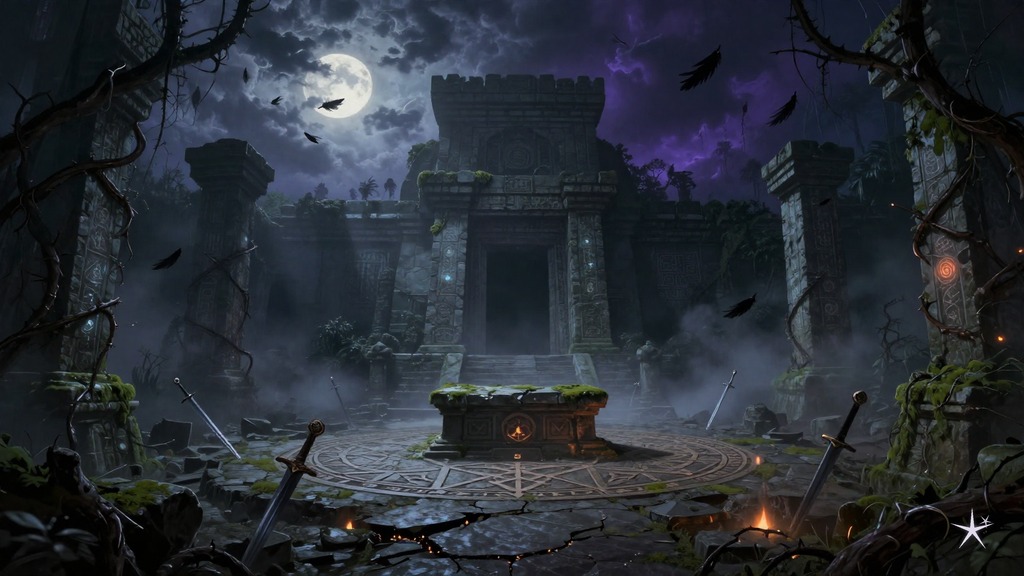
The world of Rokka draws heavily from Aztec and Mesoamerican culture — the ancient civilizations that flourished in what is now Mexico and Central America. The architecture, the mythology, the naming conventions, the visual design — it all feels distinct from the typical fantasy manga landscape. Temples replace castles. The Demon God and its fiends — the monstrous enemies that serve it — are rooted in a mythological framework that feels fresh if you’re used to demon lords sitting on thrones in European-style fortresses.
The Mythology of the Six Braves
The concept of the six chosen heroes is central to the world’s mythology. The Goddess of Fate marks the strongest warriors with a crest — a glowing symbol that appears on the body — designating them as humanity’s champions. It’s a classic “chosen heroes” setup, but the story immediately subverts it by adding a seventh member and turning the heroes against each other.
Mystery Meets Dark Fantasy Survival
What really sets Rokka apart is the genre blend. This isn’t just “heroes fight monsters.” The fiends and the Demon God create genuine danger, but the real threat is psychological. Allies become suspects. Trust becomes a weapon. The locked-room mystery format — trapped in a sealed region, unable to leave until the imposter is found — creates a pressure-cooker atmosphere that’s rare in manga. If you enjoy stories where the tension comes from people rather than just monsters, Rokka delivers something special.
Manga vs Anime — Where Each Adaptation Stops
If you’ve already seen the anime, you might be wondering whether the manga goes further. An adaptation, for those unfamiliar with the term, means the same story has been retold in a different format — so Rokka exists as light novels (the original), a manga, and an anime, each covering portions of the same story. The short answer on coverage: the manga doesn’t go meaningfully further than the anime.
The anime adaptation covered roughly the same portion of the light novel story as the manga — the first major arc, centering on the seven Braves mystery at the temple. Both adaptations end in approximately the same narrative place, resolving the central “who is the seventh?” question without continuing into the later arcs of the novels.
This means:
- If you’ve seen the anime and want to reexperience the story in manga form, the manga offers a different way to absorb the same arc, with the pacing and visual storytelling that comes with reading rather than watching.
- If you haven’t seen the anime, the manga is a perfectly good entry point to the story.
- If you want to know what happens next, neither the manga nor the anime will take you there. The light novels are where the story continues past the first arc, expanding the world and introducing new mysteries.
The light novel series extends well beyond where both adaptations stop, so readers who fall in love with the concept have a path forward — it just means switching to a different format.
Which Edition Should You Buy
For English-Language Readers
Both the Rokka: Braves of the Six Flowers manga and light novels have official English releases from Yen Press, a major publisher specializing in manga and light novel translations for the English-speaking market. All four manga volumes are available in English, and the light novels — which continue the story well beyond the manga’s first-arc coverage — are also published by Yen Press.
Since the manga covers only the first arc, readers who want the complete Rokka story will eventually need the light novels. The product recommendation below is the first light novel volume, the natural starting point if you decide to read the novels.
Physical vs Digital
Digital editions tend to stay in stock permanently, while physical copies of shorter or older series can go in and out of print. If you spot physical copies and want them, it’s worth acting relatively quickly — limited print runs (the number of physical copies a publisher manufactures) for niche series mean stock isn’t always replenished.
Manga vs Light Novel — Which Format Suits You?
This is an important decision for Rokka specifically, because the manga only covers one arc:
- Choose the manga if you want a quick, visual experience of the first arc. It’s a contained read, suited for sampling the world and seeing whether the premise hooks you.
- Choose the light novels if you want the complete story. The novels go far beyond the first arc, and since neither the manga nor the anime continues past that point, the novels are currently the only way to get the full Rokka experience in English.
- Start with the manga, then switch to the light novels — this can work well if you prefer to begin with a visual format. Read the manga for the visual experience of the first arc, then pick up the light novels to continue the story (or restart from Volume 1 of the novels, since they add detail the manga condenses). Just be aware you’ll need to confirm where the manga’s coverage ends relative to the novel volumes.
Rokka: Braves of the Six Flowers, Vol. 1 (light novel) is where Yen Press’s English release of the novel series begins.
Rokka: Braves of the Six Flowers, Vol. 1 (light novel)
Frequently Asked Questions
How many volumes does the Rokka manga have?
The Rokka: Braves of the Six Flowers manga is four volumes. It adapts the first arc of the light novels and does not extend into later story arcs. All four volumes have been published in English by Yen Press, so the complete manga is readily available.
Is the Rokka manga complete?
The manga is not being actively serialized (published chapter-by-chapter in a magazine on an ongoing schedule). It covered the first major arc of the light novel source material and concluded. The arc it tells — the locked-room mystery of the seventh Brave — is fully resolved, so you won’t be left on a cliffhanger for that storyline. However, the larger story of the Braves and their mission against the Demon God continues only in the light novels.
Does the manga cover the entire light novel story?
No. The manga adapts the first arc — the gathering of the Braves and the mystery at the temple. The light novel series goes significantly further, with additional arcs, new characters, and deeper mysteries. If you want the full story, the light novels are where you’ll find it.
Is there an official English release of the manga?
Yes. Yen Press published all four volumes of the Rokka manga in English. The light novels also have an official English release through Yen Press.
Where should I start if I’m new to Rokka?
Any entry point works. The anime, the manga, or the light novels all begin with the same arc. The manga and anime cover roughly the same ground, so pick whichever format you prefer. If you want the complete story from the start, go straight to the light novels — you’ll get more detail and won’t have to switch formats partway through.