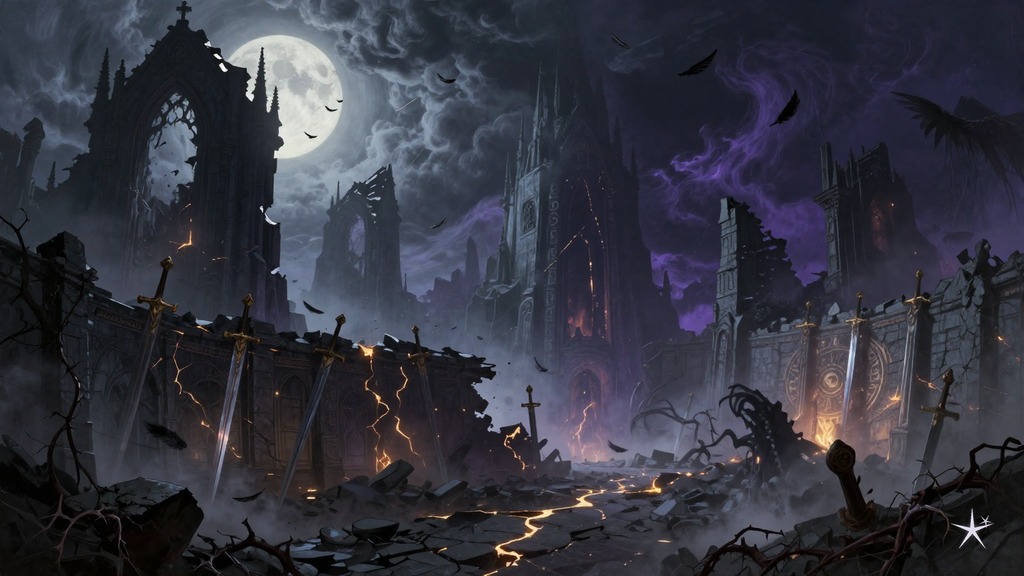
If you’ve been eyeing Blood Blockade Battlefront (血界戦線 — the original Japanese title) and wondering how many manga volumes there are and where to start, here’s the short answer: 10 volumes, and the series is complete. Whether you discovered it through a clip of its fast-moving, high-energy anime or stumbled across it while browsing dark fantasy manga, this is a satisfying pick-up for anyone who wants a full story without chasing an ongoing run.
Let’s break down everything you need to know about the Blood Blockade Battlefront manga volumes — from reading order to edition options.
Blood Blockade Battlefront Manga Volumes at a Glance — A Complete 10-Volume Dark Fantasy Run
Blood Blockade Battlefront is a completed manga spanning 10 Japanese volumes, published by Shueisha (one of Japan’s largest manga publishers) under its Jump Comics imprint. In manga, a “volume” is a collected book — typically around 180–200 pages — that gathers several serialized chapters into one edition you can buy off a shelf or read digitally. The series ran in Japan from January 2010 (when Volume 1 released) through April 2015 (Volume 10).
Genre-wise, it’s a blend of action, science fiction, and urban fantasy — set in a wildly reimagined former New York City overrun by supernatural creatures. Think fast-paced monster battles, oddball humor, and a constant undercurrent of existential dread. It’s stylish, strange, and never boring.
The English edition is published by Dark Horse Comics, the American publisher responsible for translating and releasing the series in English. The English release carries a 12+ rating, making it accessible to a fairly broad audience despite its dark fantasy trappings — though the series has plenty of edge and intensity that will satisfy readers looking for something with real teeth.
And here’s something worth knowing upfront: the franchise doesn’t end at Volume 10. Two sequel manga series — Back 2 Back and Beat 3 Peat — continue the story beyond the original run. So if you fall in love with the world (and there’s a good chance you will), there’s more waiting for you.
Story Arcs Across the Volumes
One of Blood Blockade Battlefront’s distinctive qualities is its storytelling structure. This isn’t a manga where every chapter ends on a cliffhanger that feeds directly into the next one in a single continuous plotline. Instead, it’s episodic with a connected backbone — meaning individual chapters and multi-chapter missions tell their own self-contained stories, while quietly building a larger supernatural war narrative underneath. Think of it like a great TV show where each episode has its own plot, but characters grow and a bigger threat looms across the season.
A story “arc” in manga refers to a stretch of chapters that follow one plotline or conflict from start to finish. Blood Blockade Battlefront has many short arcs rather than one massive one, which means you can enjoy almost any volume as a satisfying chunk of action and world-building. But reading in order rewards you with accumulating character depth and rising stakes.
Here’s a broad breakdown of the 10 volumes to help orient your reading.
Early Volumes — Entering Hellsalem’s Lot (Vols 1–3)
The opening stretch drops you straight into chaos — which is exactly the point. Leonardo Watch, a young man with mysterious eyes called the “All-Seeing Eyes of the Gods,” arrives in the city once known as New York, now called Hellsalem’s Lot after a catastrophic event tore open the boundary between the human world and a supernatural dimension, merging the two together.
Leo stumbles into Libra, a secret organization of superpowered operatives working to keep the city’s fragile peace from collapsing entirely. These early volumes are all about world-building: introducing the insane cast, the rules (or lack thereof) governing this supernatural ecosystem, and the dark humor that gives the series its personality.
The tone gets set hard here — grotesque supernatural threats crash into moments of genuine warmth and absurd comedy. If the first three volumes click with you, the rest of the series absolutely will too.
Middle Volumes — Libra’s Deepening Conflicts (Vols 4–7)
This is where the series finds its full stride. The threats from the Beyond escalate in both scale and personal stakes. The Beyond is the otherworldly dimension that bled into Hellsalem’s Lot during the city’s transformation — a place of alien horrors that keeps pushing against the barrier separating it from the human world. You get deeper backstories for Libra’s members, and the series starts making you care about these characters in ways the early fun only hinted at.
Blood Blockade Battlefront has this signature move where it’ll be running at full speed through a frantic, beautifully choreographed fight sequence, and then suddenly drop an emotional gut-punch that catches you completely off guard. Volumes 4 through 7 are where that quality really shines. The barrier keeping reality intact feels increasingly fragile, and every mission carries more weight.
Final Volumes — Climax and Resolution (Vols 8–10)
The concluding volumes pull together the threads that have been weaving through the series. Ongoing storylines reach their culmination, and the manga delivers on the tension it’s been building.
What’s especially satisfying is how the ending works on two levels: it provides real resolution for the main storyline while leaving the door open for the sequel series. The world of Hellsalem’s Lot is too vast and alive to be neatly wrapped up in a bow, and the manga is smart enough to know that. It gives you closure without pretending the story is truly “over” — which, given that Back 2 Back and Beat 3 Peat exist, it isn’t.
Volume 10 is the final volume of the original series, and it’s a strong finish.
Hellsalem’s Lot — What Makes This Dark Fantasy World Tick
The setting is half the appeal of these manga volumes, so it’s worth spending a moment on what makes it work.
The premise: New York City suffered a catastrophic event that tore open a rift between dimensions, fusing the city with a supernatural realm — a dark otherworld full of creatures and forces that defy human understanding. Three years later, the city is renamed Hellsalem’s Lot — a sealed-off urban zone where humans, vampires, psychic-powered beings, nightmarish creatures, and every conceivable supernatural entity coexist in a state of fragile, volatile tension.
The city didn’t die. It adapted. People still commute to work, eat at restaurants, and complain about traffic — they just do it alongside creatures that could end reality as we know it. That juxtaposition is the heart of the series’ dark fantasy appeal. There’s a sense of constant existential dread running beneath a stylish surface. The barrier separating Hellsalem’s Lot from the rest of the world could fail at any moment, and the secret organization Libra exists to make sure it doesn’t.
What makes the world feel genuinely alive rather than just strange for the sake of being strange is how grounded the human element stays. Leo isn’t a chosen hero or a powerhouse — he’s a regular guy with unusual eyes, trying to survive and help people in a city that could swallow him whole. That ordinary human perspective anchoring all the supernatural chaos is what gives Blood Blockade Battlefront its emotional core.
The supernatural ecosystem itself is creative and varied. You’re not getting the same five monster types recycled across ten volumes. The threats range from reality-warping vampires to alien-scale incursions from the Beyond, and the manga’s art sells the scale and strangeness beautifully.
Manga vs. Anime — What the Two TV Series Cover
Blood Blockade Battlefront has two anime TV series: the first titled simply Blood Blockade Battlefront, and the second Blood Blockade Battlefront & Beyond. An anime adaptation means someone took the manga’s story and turned it into an animated TV show — but in this case, the adaptation made some significant creative choices of its own.
If you’re coming from the anime, here’s the key thing to know: the anime adapts the manga selectively. It pulls self-contained stories from the manga but also includes anime-original storylines and characters — particularly in the first season, which built an original narrative thread through its run that doesn’t exist in the manga at all.
If you’ve never seen the anime and are wondering whether to watch it first, you don’t need to — the manga stands entirely on its own and is the original version of the story. That said, the anime is a strong companion piece with gorgeous animation and a fantastic soundtrack, so it’s worth watching alongside or after reading. Just know that the two versions tell the story differently in places.
This means the anime and manga offer genuinely different experiences rather than one being a strict retelling of the other. The manga provides material, tonal depth, and character moments that the anime restructures or skips entirely. Conversely, the anime brings its own creative energy to the table with its original content.
For readers wondering “should I bother with the manga if I’ve seen the anime?” — absolutely. You’ll encounter plenty of material the anime never touched, and the manga’s pacing and art style create a reading experience that stands on its own. Think of them as complementary rather than redundant.
Which Edition Should You Buy?
Dark Horse Comics — the American publisher that handles the English translation and release — gives you a few format options to consider.
Single-Volume Paperbacks
The original English releases are individual paperback volumes, each corresponding to one Japanese volume. There are 10 in total for the original series. These have been available for years and are the format most readers are familiar with.
If you like collecting individual volumes and building a shelf one book at a time, these are perfectly solid editions. They’re also easier to pick up piecemeal if you want to sample a volume or two before committing to the full run.
Omnibus Editions
Dark Horse has also published an omnibus line for the series — these are larger books that collect multiple volumes into one. Omnibus Volume 1 collects the original Volumes 1 through 3, plus the first chapter of Volume 4, in a single book, with a list price of $29.99, and came out on September 2, 2025. The line is now complete: all three omnibus volumes are out, with the final one released in March 2026. That final book, Omnibus Volume 3, collects Volumes 8–10.
Blood Blockade Battlefront Omnibus Volume 3
Omnibus editions are great if you want fewer, chunkier books on your shelf — and they’re typically a better value per page compared to buying each single separately at list price. If you’re starting fresh and don’t already own the singles, the omnibus is worth considering.
Digital
Dark Horse also offers digital editions, which is the most space-efficient option if you read on a tablet or phone and don’t care about physical copies.
Singles vs. Omnibus — Quick Comparison
| Feature | Singles | Omnibus |
|---|---|---|
| Volumes per book | 1 | About 3 |
| Total books needed | 10 | 3 (omnibus line complete as of March 2026) |
| Portability | Lighter per book | Thicker but fewer books to carry |
| Shelf presence | 10 individual spines in a row | Fewer, thicker spines |
| Best for | Sampling, collectors | New readers, value |
Beyond the Original Series
Once you’ve finished all 10 volumes, the reading order continues into the sequel series Back 2 Back, followed by Beat 3 Peat. Keep an eye on Dark Horse’s catalog for English availability of these continuation titles — release schedules for sequel series can shift, so check current listings when you’re ready to continue.
Frequently Asked Questions
How many Blood Blockade Battlefront manga volumes are there?
The original Blood Blockade Battlefront manga has 10 volumes. The series is complete — no waiting for new releases.
Is Blood Blockade Battlefront finished?
Yes. The original manga wrapped up with Volume 10, which released in Japan in April 2015. The story continues in two sequel series — Back 2 Back and Beat 3 Peat — but the original run has a definitive ending.
Who created Blood Blockade Battlefront?
Blood Blockade Battlefront was created by Yasuhiro Nightow (内藤泰弘), the manga creator also known for Trigun. If you’ve read or watched Trigun, you’ll recognize a shared sensibility — stylish action, wild character designs, and surprising emotional depth woven into genre storytelling. If you haven’t, just know that Nightow is a creator with a strong track record for blending intense action with genuine heart.
What order should I read the Blood Blockade Battlefront manga?
Manga volumes are numbered and meant to be read in sequence — each picks up where the last one left off. The sequel series are separate sets of books that continue the story after the original ends. Here’s the full order:
- Blood Blockade Battlefront — Volumes 1 through 10 (the original series)
- Blood Blockade Battlefront: Back 2 Back (sequel series)
- Blood Blockade Battlefront: Beat 3 Peat (second sequel series)
Start with Volume 1 and go in order. The sequel series pick up where the original leaves off.
Is there an anime adaptation?
Yes — two TV anime series have aired. The first is Blood Blockade Battlefront and the second is Blood Blockade Battlefront & Beyond. Both are worth watching, but the manga contains material the anime doesn’t cover, and the anime includes original storylines not found in the manga. They complement each other well. You don’t need to watch the anime before reading the manga — either order works fine.
Is Blood Blockade Battlefront appropriate for younger readers?
The English edition is rated 12+. The series features supernatural violence, dark humor, and some intense imagery consistent with its urban fantasy setting. It’s a solid fit for teens and up. For older readers specifically seeking dark fantasy with bite, the series delivers — the setting is genuinely threatening, the stakes feel real, and the darker moments hit hard even if the gore isn’t gratuitous. It strikes a balance between accessibility and intensity.