How many Shadows House manga volumes are out right now? As of early 2026, there are 21 volumes in Japanese and 11 volumes in English — and the series is still going. Whether you’re jumping in fresh or picking up where the anime left off, this guide covers everything you need to start collecting and reading with confidence.
Picture a sprawling Victorian mansion where faceless shadow nobles command living dolls who literally serve as their faces. That’s the hook of Shadows House, and it only gets stranger — and darker — from there. Below you’ll find a full breakdown of the volumes, what they cover, how the manga compares to the anime, and which edition to buy.
Shadows House Manga Volumes at a Glance — A Gothic Dark Fantasy Still Unfolding
Shadows House (シャドーハウス) is an ongoing dark fantasy manga by Somato (ソウマトウ). It’s serialized in Weekly Young Jump, a weekly manga anthology magazine in Japan, with chapters released on an ongoing schedule, and collected into bound volumes by Shueisha (one of Japan’s largest manga publishers). The English-language edition is released by Yen Press, a North American publisher that specializes in translating manga and light novels.
Serialization began in September 2018, and the series is still running — it entered its final arc in July 2024, though no specific end date has been set. For readers, this means you may eventually catch up to the latest volume and need to wait for new ones to release, which is a common experience with ongoing manga.
Here’s the volume count as of early 2026:
| Edition | Volumes Available | Publisher |
|---|---|---|
| Japanese | 21 | Shueisha |
| English | 11 | Yen Press |
Each volume collects multiple chapters from the weekly magazine serialization into a single book — typically around eight to ten chapters per volume. The gap between the Japanese and English releases is significant — more than double the volumes are available in Japan — so English readers have a lot of story still coming their way. Volume 11 in English was released on June 23, 2026 and is now available from Yen Press and major retailers.
Where to start: Begin with Volume 1 of the English edition from Yen Press. Even if you’ve seen the anime, starting from the beginning is recommended — more on that in the anime comparison section below.
The premise sounds deceptively simple at first. Inside a grand, isolated mansion, shadow-like nobles live alongside humanoid “living dolls” who act as their faces in social settings. Emilico, a cheerful and earnest living doll, serves Kate, a thoughtful and quietly rebellious shadow. Their relationship anchors the entire series as the two slowly uncover just how sinister the House’s systems really are.
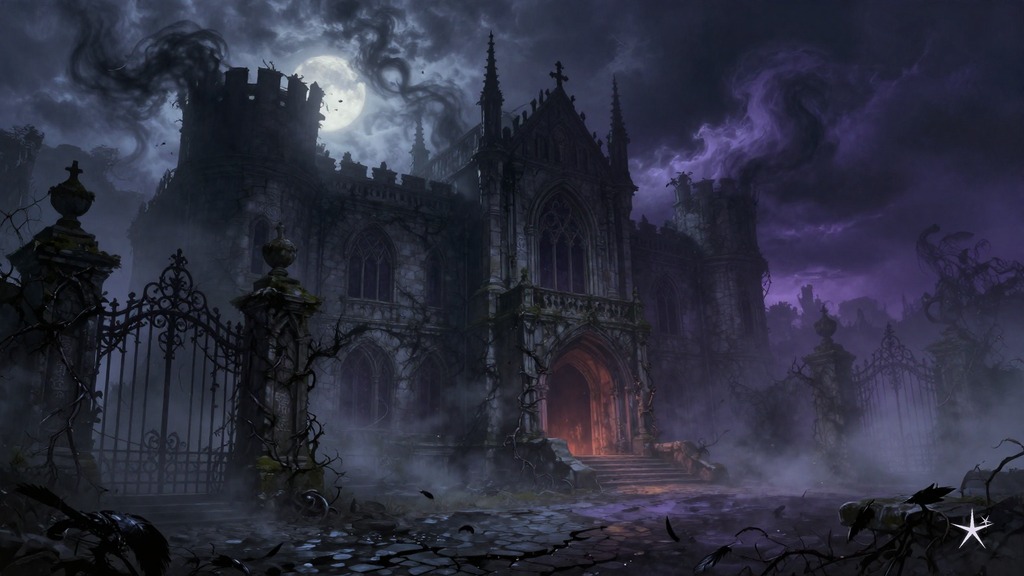
When this guide calls Shadows House “gothic,” that means the series leans into a specific atmosphere — gloomy, ornate settings; secrets lurking behind elegant facades; a sense of decay beneath beauty. It’s a tone and aesthetic tradition that runs through literature from classic novels to modern horror. And what makes Shadows House a genuine dark fantasy — not just a gothic mystery — is the layering of supernatural horror beneath that elegant surface. The shadow nobles aren’t merely eccentric aristocrats. Their very existence is tied to a disturbing supernatural system involving soot, power hierarchies, and the systematic erasure of the dolls’ identities. There’s body horror — a subgenre of horror focused on unsettling transformations or violations of the human body — woven into the premise itself, psychological manipulation at every level of the House’s structure, and a creeping dread that thickens with each volume. The mansion drips with atmosphere in a way that puts it firmly in dark fantasy territory.
How the Story Is Structured — Major Arcs Across the Volumes
One of the things that keeps Shadows House compelling across its run is how deliberately the story peels back layers. Each major arc — a self-contained story phase within the larger narrative, similar to a season of a television show — reveals something new about the House, its rules, and the true nature of the shadows and dolls. The manga doesn’t dump its secrets all at once; it earns its revelations.
Rather than being episodic, the narrative builds in distinct phases, with each arc escalating stakes and shifting the reader’s understanding of what this world actually is. Below is a general breakdown of how the story progresses. Note that specific arc names vary among fan communities, and the volume boundaries between arcs aren’t always razor-sharp — the story flows between them naturally.
The Debut Arc — Entering the House (Roughly Volumes 1–4)
The opening stretch of Shadows House is all about immersion. You meet Emilico and Kate, learn the rules of the House, and settle into the rhythm of daily life inside the mansion. The living dolls clean soot, attend their shadow masters, and participate in the rigid social hierarchy that governs everything.
What makes these early volumes so effective is how the gothic atmosphere does the heavy lifting. Something is deeply wrong with the House, and you feel it before anyone spells it out. The relationship between shadows and dolls is presented as normal — even charming at times — but Somato’s art and storytelling plant seeds of unease on nearly every page. The contrast between Emilico’s warmth and the cold logic of the House creates tension that pulls you forward.
These volumes are essential for establishing the rules of the world. The soot, the hierarchy, the strange customs — they all matter later. If you want to test the waters before committing to the full run, this opening stretch gives you a strong sense of whether the series is for you.
The Unveiling — Secrets of the Shadows (Roughly Volumes 5–10)
The middle portion of the manga is where Shadows House transforms from atmospheric mystery into something much more ambitious. Kate and Emilico begin to push against the boundaries of what they’re told, and the true nature of the shadow-doll bond starts to come into focus.
This is where the series’ themes of identity and autonomy hit hardest. The question isn’t just “what are the shadows?” — it’s “what happens to a doll who discovers what she really is?” The power structure of the House reveals itself to be far more deliberate and cruel than the early volumes suggest, and resistance becomes a central thread.
These are the volumes that tend to hook readers who were initially on the fence. The mystery deepens, the character dynamics grow more complex, and the stakes become personal.
The Deeper Conspiracy — Beyond the Mansion (Roughly Volumes 11 Onward)
The later volumes push the story beyond the mansion’s walls, which is a significant shift for a series that initially felt so contained. Broader conspiracies emerge, alliances shift, and the scope of what the House represents expands dramatically.
Without spoiling specifics, this phase of the story is where Shadows House grows genuinely dark and complex. The rebellion that’s been brewing since the early arcs takes on real weight, and the consequences of defiance become severe. The manga earns its dark fantasy label many times over in these chapters.
With 21 Japanese volumes published and the manga in its final arc, there’s still significant story ahead. The story has been building toward something large, and readers who’ve kept up with the Japanese releases describe the recent arcs as some of the most intense yet. Note that these later volumes are currently only available in Japanese — English readers will reach this material as Yen Press continues its release schedule.
The Gothic World That Makes Shadows House Tick
A big part of what elevates Shadows House above its premise is the worldbuilding. The mansion isn’t just a setting — it functions almost as a character in its own right. Its architecture, its rules, its social strata all serve the story’s themes of control and conformity. Understanding the world also helps you appreciate why the volume count keeps climbing — there’s always another layer to peel back.
The soot and shadow mechanics form the supernatural backbone of the series. The shadow nobles produce soot — a dark, pervasive substance that’s tied to their emotions and power. When a shadow feels strongly, they emit more soot, and this substance is collected, used, and controlled by the House in ways that reinforce the power hierarchy. It’s woven into the House’s economy of control, and understanding how it works is key to understanding why the House operates the way it does.
The hierarchy within the House is rigid and enforced. Living dolls exist to serve. Shadows exist to be served. Questioning this arrangement is dangerous. What makes the worldbuilding so effective is that the system feels internally consistent — every strange rule has a reason, even if that reason is horrifying once you learn it.
Thematically, identity erasure sits at the center of everything. The dolls are given names, personalities, and purposes by their shadow masters. The question of whether a doll has a self beyond what her shadow allows is one of the manga’s most powerful recurring threads. It’s the kind of theme that feels relevant far beyond the gothic fantasy setting.
Somato’s visual storytelling deserves special mention. The art uses the contrast between the stark, featureless black of the shadows and the detailed, expressive faces of the dolls to reinforce the horror of the premise. You can feel the power imbalance in every panel where a shadow looms over their doll. The mansion’s interiors are rendered with a level of detail that rewards close reading — architectural elements, decorative motifs, and environmental cues all carry meaning.
Manga vs. Anime — Where the CloverWorks Adaptation Stops
Shadows House received a TV anime adaptation produced by CloverWorks (the animation studio behind it), which introduced a huge wave of new fans to the series. The anime is well-produced, with strong Japanese voice acting and atmospheric direction that suits the source material.
However, the anime covers only the early portion of the manga — roughly the equivalent of the first several volumes. If you’ve watched the anime and enjoyed it, there is a substantial amount of story waiting for you in the volumes. The manga is far ahead, especially the Japanese edition with 21 volumes compared to what the anime has adapted.
There are meaningful differences worth knowing about. The manga’s pacing gives more room for worldbuilding and character psychology that the anime necessarily condenses. Certain details and narrative hints planted early on are manga-exclusive, which means anime-only viewers miss some of the threads that pay off in later arcs.
The recommendation you’ll see consistently — and one that’s worth taking seriously — is to start the manga from volume 1 even if you’ve seen the anime. The experience of reading Somato’s art and absorbing the story at your own pace adds a lot, and the early volumes are a quick, engrossing read. You won’t feel like you’re retreading old ground for long before the manga pulls ahead of what the anime covered.
Shadows House Manga Volumes: Which Edition Should You Buy
You’ve got two main paths depending on your language and patience level.
English edition (Yen Press): Currently at 11 volumes, with more on the way. These are standard manga-sized paperbacks with solid translation quality. Yen Press has been releasing volumes on a regular schedule, so the English edition is steadily closing the gap with Japan — though it still has a ways to go. Both physical and digital editions are available.
Japanese edition (Shueisha, Young Jump Comics imprint): All 21 volumes are available, with the latest (Volume 21) released on January 9, 2026. If you read Japanese or want to get ahead of the English release, this is the complete-to-date option.
Digital vs. Physical: Digital is great for catching up quickly and saving shelf space. Physical volumes are the way to go if you’re a collector — Somato’s art looks gorgeous on the page, and the covers are consistently striking. Both formats are readily available from major retailers including Amazon, Barnes & Noble, and the Crunchyroll Store (formerly RightStuf).
Want to sample before buying? Shueisha’s Manga Plus app and website sometimes offer free chapters of their serialized titles. It’s worth checking there to read a chapter or two before committing to a purchase — though availability for specific series can change over time.
Since the English release is ongoing and trailing the Japanese edition by a substantial margin, budgeting for continued purchases makes sense. If you’re starting fresh, the 11 English volumes give you a substantial reading experience that covers the early and middle arcs of the story.
For picking up the latest English volume, Yen Press’s release of Shadows House is available through major retailers.
Shadows House, Vol. 11
Frequently Asked Questions
How many Shadows House manga volumes are there?
As of early 2026, there are 21 volumes in Japanese and 11 volumes in English. The series is ongoing, so both counts will continue to grow.
Is Shadows House finished?
No. The manga is still being serialized in Weekly Young Jump. There’s no announced end date, and the story is clearly still building toward major developments. This means if you catch up to the latest volume, you’ll need to wait for new releases — a normal experience with ongoing manga.
Who publishes Shadows House in English?
Yen Press handles the English-language release.
Who created Shadows House?
The manga is by Somato (ソウマトウ), who handles both writing and art.
Should I read the manga if I watched the anime?
Absolutely — and starting from volume 1 is recommended. The manga is far ahead of the anime and includes details, narrative groundwork, and character depth that the adaptation condensed or omitted. Even the early volumes feel fresh when you experience them in Somato’s art style.
How often do new English volumes come out?
Yen Press releases volumes on a regular ongoing schedule. The exact cadence between releases can vary, so keeping an eye on Yen Press announcements or retailer listings is the best way to stay current on upcoming release dates.
Is Shadows House appropriate for younger readers?
The series runs in Weekly Young Jump, which targets a seinen demographic — a category of manga aimed primarily at young adult readers, typically ages 18 and up. While the label describes the intended audience rather than strict content restrictions, it’s a useful signal. Shadows House isn’t gratuitously violent, but it deals with themes of psychological manipulation, identity erasure, body horror undertones, and systemic cruelty. Parents and younger readers should be aware of these elements. The series has a broad readership that includes people of all genders, but the content is generally best appreciated by older teens and adults.
Can I read the Japanese volumes digitally if I don’t read Japanese?
You can purchase them, but there’s no official built-in translation. Some readers buy the Japanese digital volumes to support the creator while reading unofficial fan-made translations (translations produced by fans rather than a licensed publisher — these exist in a legal grey area). Purchasing the official English volumes from Yen Press as they release is the most straightforward way to read legally in English and directly support the series’ continued localization.
When does English Volume 11 come out?
Volume 11 was released on June 23, 2026 and is now available from Yen Press and major retailers.