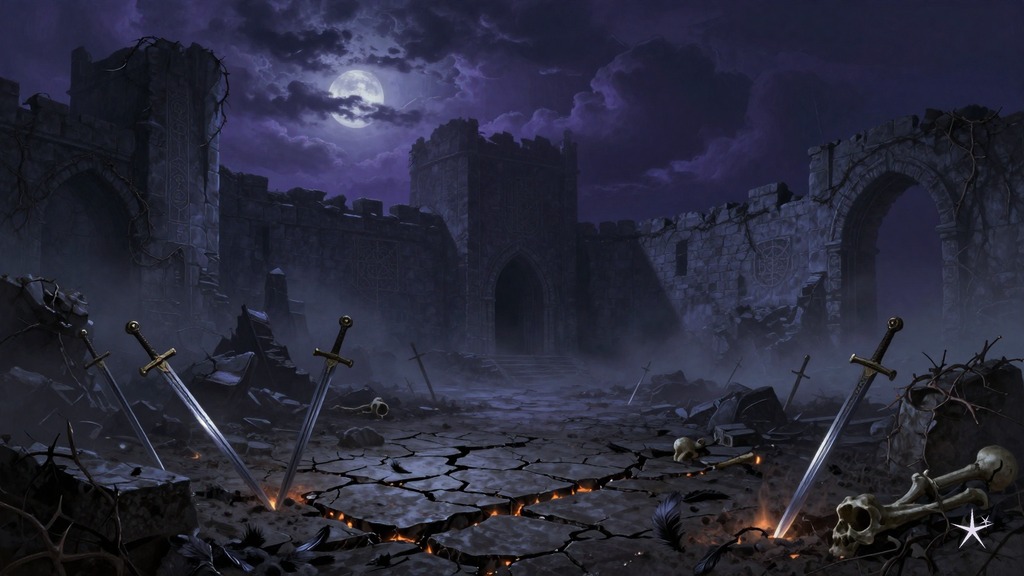
How many Goblin Slayer manga volumes are there right now? The short answer: 17 volumes in Japan and 16 in English. If you’re here for that number, there it is. But if you also want to know what each stretch of the story covers, which editions to buy, and how to start reading, that’s exactly what this guide breaks down.
Let’s get into it.
All Goblin Slayer Manga Volumes at a Glance
Here’s the full snapshot:
- Total volumes in Japan: 17
- Total volumes in English: 16 (published by Yen Press, the company that translates and releases the series for English-speaking readers)
- Status: Ongoing — no end has been announced
- Original creator: Kumo Kagyu (蝸牛くも) — author of the light novel (a short, illustrated Japanese novel format that often serves as source material for manga and anime adaptations)
- Manga artist: Kousuke Kurose (黒瀬浩介)
- Serialized in: Monthly Big Gangan (a monthly manga magazine published by Square Enix) since May 2016 — meaning new chapters appear monthly in that magazine before being collected into volumes
- Genre: Dark fantasy, seinen (manga aimed at an adult audience, typically featuring more complex themes and mature content than shonen titles aimed at teens)
The manga adapts Kumo Kagyu’s light novel series, and artist Kousuke Kurose brings the story to life with detailed, visceral artwork that leans hard into the dark, morally bleak tone. If you’ve only seen the anime, the manga hits noticeably harder on the page — scenes that the anime softened through camera angles or lighting are rendered with more unflinching detail in the manga’s artwork. The art amplifies everything the source material puts on the table.
One important note before we go further: this guide covers the main Goblin Slayer manga only. There are spin-off manga series (more on those in the buying guide section below), but they have their own volume numbering and their own storylines.
With 16 English volumes available right now and Japan sitting at 17, this is a mid-length series that’s easy enough to catch up on without needing to clear your entire weekend. But it’s also long enough that the story has room to breathe, build its world, and develop its cast well beyond the brutal opening chapters that put it on the map.
Story Arcs by Volume — What Each Part of the Series Covers
Rather than walking through all 16+ volumes one by one, let’s break the series down by narrative arc — meaning the larger storylines that span multiple volumes, each with its own beginning, middle, and resolution. This gives you a much better sense of the story’s shape.
The Brutal Introduction (Volumes 1–2)
Volume 1 is the one that made Goblin Slayer infamous. The story opens with a group of rookie adventurers heading into a goblin cave, expecting easy pickings. They’re wrong. The manga doesn’t flinch from showing how badly things go — this world treats goblins as a genuine, horrifying threat, not the throwaway low-level enemies you’d find in a typical RPG.
Out of the carnage steps the man himself: Goblin Slayer, a silver-ranked adventurer — one of the higher tiers in the guild’s ranking system, meaning he’s recognized as highly capable — who has devoted his entire existence to one thing: killing goblins. He rescues the lone survivor, a young Priestess, and the tone for the entire series is set in those opening chapters. This world is dangerous, the monsters are cruel, and the man who hunts them is defined by trauma and obsession.
Volume 2 shifts from solo horror into something more dynamic. Goblin Slayer forms a proper adventuring party: Priestess, High Elf Archer, Dwarf Shaman, and Lizard Priest. Each brings a different perspective and skillset, and the group dynamic adds warmth and even humor to a story that could easily become relentlessly bleak without it. The scope expands from lone-wolf dungeon clearing to coordinated party tactics, and you start to see the tabletop-RPG influence that runs through the entire series. (Tabletop RPGs are games like Dungeons & Dragons, played in person with dice, character sheets, and a human game master guiding the story — and Goblin Slayer’s world is explicitly built on that framework.)
If you’re testing the waters with Goblin Slayer, volumes 1 and 2 together give you a complete picture of what the manga is. If you’re on board after those two, you’re on board.
Expanding the World (Volumes 3–5)
This stretch is where Goblin Slayer goes from “intense monster-hunting story” to something with real depth in how its world is constructed and fleshed out.
The party takes on larger, more complex goblin threats. The Water Town arc is a standout — it moves the action beyond simple cave raids into a setting with political and religious dimensions layered underneath the dungeon-exploration core. You start to see that goblins aren’t just a local pest problem; they’re a systemic threat that the wider world consistently underestimates.
These volumes also develop the supporting cast in meaningful ways. High Elf Archer’s frustration with Goblin Slayer’s single-track mind becomes a recurring source of both comedy and genuine character tension. Priestess continues to grow from a sheltered novice into someone who can hold her own when things go sideways. The party isn’t just a gameplay mechanic — it’s a group of unlikely allies becoming something like family under pressure.
For readers who found volume 1’s opening intensity to be a lot, volumes 3–5 represent the series finding its cruising altitude. The darkness is still there, but it’s balanced with camaraderie, strategy, and a world that feels increasingly lived-in.
The Farm Siege and Beyond (Volume 6 Onward)
Volume 6 is a turning point. The Farm defense arc brings the wider adventurer community into the story in a way that feels earned — Goblin Slayer, who has spent most of the series as a loner operating on the margins, has to ask for help. The fact that other adventurers answer that call is one of the most satisfying moments in the series, and it marks a shift in both the story’s scale and Goblin Slayer’s character.
From volume 7 onward, the series continues into new arcs with escalating threats. The goblin enemies grow more organized and dangerous, and the narrative pushes into territory that tests the party’s limits. The manga is still ongoing in Japan with no announced endpoint, so there’s more story ahead.
Without getting into heavy spoilers, the later volumes reward readers who’ve been paying attention to the world and its details. Plot threads planted earlier start connecting, and the tabletop-RPG framework of the setting — with gods literally rolling dice to determine fate — takes on deeper significance.
What Makes Goblin Slayer Manga Volumes Worth Collecting
There’s a lot of dark fantasy manga out there, so what makes this one stand apart across its 16 English volumes? A few things.
The tabletop-RPG setting is more than window dressing. The world of Goblin Slayer is explicitly structured like a tabletop game — there’s an adventurer’s guild where warriors sign up, take jobs from a quest board, and earn rank based on their accomplishments. Dice-rolling gods treat mortal lives as pieces in a cosmic game. But the genius move is how the story uses that familiar framework to mask genuine horror. You know the tropes: goblins are the weakest enemy, the tutorial encounter, the thing you fight at level one. Goblin Slayer takes that assumption and tears it apart. In this world, goblins are an existential threat to rural communities precisely because the adventuring establishment considers them beneath notice.
The violence has consequences. This isn’t a series that uses gore for shock value and then moves on. When people get hurt in Goblin Slayer, it matters. Injuries linger, trauma shapes characters, and the world doesn’t offer clean resets. The manga’s artwork by Kousuke Kurose is particularly effective here — the way panels are arranged and paced gives weight to violent encounters without turning them into spectacle for its own sake. The series contains depictions of sexual violence and other mature themes; these are presented as part of the world’s cruelty rather than being gratuitous, but readers should be aware going in.
Character-driven darkness. Goblin Slayer himself is fascinating because he’s not a character who exists to make the reader feel powerful by proxy. He’s a deeply damaged person whose coping mechanism happens to be useful to society. His obsession with goblins isn’t portrayed as cool or aspirational — it’s the result of childhood trauma, and the series treats it with complexity. Priestess’s parallel arc, from someone who barely survived her first quest to a battle-hardened healer who chooses to stay by his side, gives the story its emotional backbone.
The combination of familiar RPG trappings, unflinching consequences, and genuine character depth is what keeps people reading — and collecting volumes — well past the initial shock factor.
Manga vs. Anime — What the Adaptation Changes
Goblin Slayer has received two anime TV seasons (each roughly 12 episodes) and a theatrical anime film adaptation, so if you’re coming from the anime, here’s what you need to know.
The manga hits harder. The anime adaptation — particularly the first season — made headlines for its intense opening episode, but the manga consistently goes further in depicting the brutality of its world. Kousuke Kurose’s art conveys a level of visceral detail that the anime often tones down or obscures through camera angles and lighting. Key scenes that were controversial in the anime are even more intense on the page. If you watched the anime and thought “that was dark,” the manga has more room to commit to that darkness.
The anime covers less than you’d think. Two seasons of anime don’t get through the full manga. The series extends well beyond where the second anime season ends, meaning there’s substantial story waiting for fans who’ve only watched the anime and want to continue. Picking up the manga after finishing the anime is one of the most common reasons people search for volume information, and the good news is that there’s plenty of material ahead.
Reading from the beginning is worth it. Even if you’ve watched both anime seasons, going back to volume 1 of the manga is genuinely worthwhile. The art adds a dimension the anime can’t fully replicate, and smaller character moments and details about the world that get compressed or cut in animation are given proper space on the page.
If you’re trying to decide between formats, the manga is the definitive dark fantasy version of Goblin Slayer. The anime is a solid adaptation and a fine entry point, but the manga is where the story lives most fully.
Which Edition Should You Buy?
Let’s talk about actually getting these volumes in your hands.
English volumes are published by Yen Press. There are currently 16 volumes available in English, with Japan one volume ahead at 17. Yen Press has been releasing the series steadily, so the gap between Japanese and English publication stays relatively small.
Physical vs. digital: Both are readily available through major retailers and digital storefronts such as Kindle, BookWalker, and Kobo. The physical single volumes have solid print quality and look great on a shelf. Digital editions are convenient if you want to start reading immediately or save space. There are no omnibus editions (collected multi-volume bundles, like a three-in-one) for this series — it’s single volumes only.
Approximate cost: Each volume carries a typical retail price in line with standard manga single volumes. If you’re planning to collect the full English run of 16 volumes, it’s worth budgeting accordingly — check current retail prices at your preferred bookstore or digital storefront, since prices can vary by format and retailer.
No skip-ahead entry point exists. Goblin Slayer is a sequential story with character development and world detail that accumulate over time. Start with Volume 1 and read in order. Jumping in at a random later volume won’t make much sense and will spoil earlier arcs.
Volume 16 is the latest English release as of this writing, and it’s a great pickup if you’ve been following along or if you’re building your collection after a binge read.
Goblin Slayer, Vol. 16 (manga)
A Note on Spin-Off Manga
You’ll see other Goblin Slayer manga series on shelves — most notably Goblin Slayer Side Story: Year One and Goblin Slayer: Brand New Day. These are separate series with their own volume numbering. Year One is a prequel covering Goblin Slayer’s early days as an adventurer, and Brand New Day is a two-volume completed series that adapts the fourth volume of the light novel, following the story through the perspective of the many surrounding characters.
Neither spin-off is required to understand or enjoy the main series. They’re nice supplements if you love the world and want more, but they’re completely optional. If you’re just starting out, stick with the main manga and branch out later if you’re hungry for more.
Frequently Asked Questions
How many Goblin Slayer manga volumes are there?
As of the latest verified data, there are 17 volumes in Japan and 16 volumes in English (published by Yen Press). The series is ongoing, so more volumes will continue to release.
Is the Goblin Slayer manga finished?
No. The manga is still ongoing with no announced end date. It’s been serialized in Monthly Big Gangan since May 2016, and new chapters continue to be published.
What is the difference between the manga and the light novel?
The manga is an adaptation of Kumo Kagyu’s light novel series. Light novels are short, illustrated Japanese novels — typically around 200–300 pages — that are a popular source format for manga and anime. The core story is the same in both, but the manga adds Kousuke Kurose’s detailed artwork, which gives the dark fantasy elements a visual intensity that prose can’t replicate. The light novel is further ahead in the story, so manga readers who catch up and want more can continue with the novels. The manga follows the source material faithfully — it’s not a loose adaptation.
Is Goblin Slayer too dark for newer manga readers?
That depends on your comfort level, and it’s worth being direct about what the series contains. Volume 1 in particular includes depictions of graphic violence and sexual violence that are significantly more intense than most mainstream manga. The series maintains a dark tone throughout, though it does balance the grimness with humor, camaraderie, and moments of genuine warmth as the party grows closer.
If you’re new to manga and sensitive to graphic violence, sexual violence, or other mature themes, Goblin Slayer might not be the best starting point. But if you’re drawn to dark fantasy and you’re okay with fiction that doesn’t pull its punches, this series is one of the genre’s strongest entries. You’ll know within the first volume whether it’s for you.
Should I read the manga or watch the anime first?
Either works as an entry point. The anime is more accessible if you want to ease into the story, since the adaptation tones down some of the manga’s most intense moments. The manga is the fuller experience. Many fans watch the anime first and then read the manga from the beginning to get the complete picture — that’s a perfectly solid approach.
—
Goblin Slayer is a series that earns its reputation. It’s dark, it’s intense, and it takes familiar fantasy RPG elements and twists them into something that feels genuinely dangerous. With 16 English volumes available and more on the way, there’s never been a better time to start reading — grab Volume 1 and see for yourself.