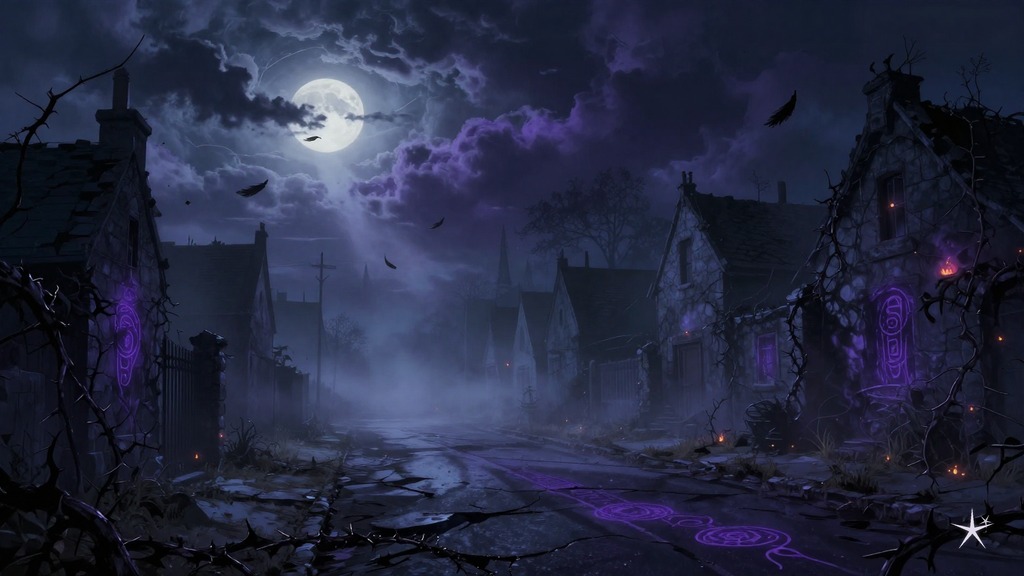
Diamond Is Unbreakable is where JoJo’s Bizarre Adventure gets weird in the best possible way. Instead of globe-trotting adventures, creator Hirohiko Araki drops you into the quiet town of Morioh — and slowly peels back the skin to reveal something rotten underneath. Supernatural serial killers, grotesque powers called Stands (supernatural abilities that manifest as spirit-like entities unique to each user), and a suburban horror atmosphere that feels like surrealist filmmaking crossed with a shonen manga (a style of Japanese comics traditionally aimed at younger male readers, though widely enjoyed by all ages). If you’re looking for the complete JoJo’s Bizarre Adventure Part 4 Diamond Is Unbreakable manga reading order, you’re in the right place.
The series is complete — all 9 English hardcover volumes are published, currently in print, and readily available for purchase. You can read the whole thing without waiting for a single release. Let’s break it down.
JoJo’s Bizarre Adventure Part 4: Diamond Is Unbreakable Manga Reading Order at a Glance
Here’s the short version. Part 4 is straightforward — read volume 1 through volume 9 in order. No branching paths, no alternate editions to worry about. All 9 volumes are in print and widely stocked at the time of writing.
| Step | What to Read | Format |
|---|---|---|
| Pre-reading | Parts 1–3 of JoJo’s Bizarre Adventure | Hardcover editions available |
| Vol. 1 | Diamond Is Unbreakable, Vol. 1 | English hardcover |
| Vol. 2 | Diamond Is Unbreakable, Vol. 2 | English hardcover |
| Vol. 3 | Diamond Is Unbreakable, Vol. 3 | English hardcover |
| Vol. 4 | Diamond Is Unbreakable, Vol. 4 | English hardcover |
| Vol. 5 | Diamond Is Unbreakable, Vol. 5 | English hardcover |
| Vol. 6 | Diamond Is Unbreakable, Vol. 6 | English hardcover |
| Vol. 7 | Diamond Is Unbreakable, Vol. 7 | English hardcover |
| Vol. 8 | Diamond Is Unbreakable, Vol. 8 | English hardcover |
| Vol. 9 | Diamond Is Unbreakable, Vol. 9 | English hardcover |
| Optional | Thus Spoke Rohan Kishibe (spin-off) | After finishing Part 4 |
One thing to know about numbering: The English hardcover edition labels these volumes 1 through 9 — nice and clean. But if you ever see references to “volumes 29–47,” that’s the original Japanese collected edition numbering, which counts across the entire JoJo’s Bizarre Adventure series. The Japanese edition of Part 4 alone spans 19 volumes in that format. The English hardcovers condense the material into 9 thicker books. Same story, different packaging.
The series was originally serialized chapter by chapter in Weekly Shonen Jump, a popular Japanese manga anthology magazine published by Shueisha. Those individual chapters were later collected into bound volumes — the English hardcover editions gather the complete Part 4 story into 9 books. Nothing is missing or abridged.
What to Read Before Part 4
Can you start JoJo’s Bizarre Adventure at Part 4? Technically, yes. Araki designed each Part to introduce a new protagonist in a new setting, so Diamond Is Unbreakable does establish its own cast and conflict from page one. But here’s why that’s not the best idea.
Part 3: Stardust Crusaders Is Essential
Jotaro Kujo, the protagonist of Part 3, shows up in Diamond Is Unbreakable as a major character. He’s not a cameo — he’s central to the early plot and remains important throughout. If you haven’t read Stardust Crusaders, you won’t understand why Jotaro matters, what his Stand (Star Platinum) can do, or why his presence in Morioh carries weight.
More importantly, the entire Stand power system originates in Part 3. A Stand is a supernatural ability that takes a visible form — often a humanoid figure or creature — and each one has unique powers tied to its user. Diamond Is Unbreakable assumes you already know what Stands are, how they work, and why they’re dangerous. Araki doesn’t re-explain the basics.
The Bow and Arrow — the artifact responsible for creating new Stand users in Morioh — ties directly into supernatural mythology established in earlier Parts. This artifact awakens latent Stand abilities in people it strikes, and without that earlier context, a significant subplot loses its tension.
Parts 1 and 2 Build the Foundation
Parts 1 (Phantom Blood) and 2 (Battle Tendency) introduce the Joestar family bloodline — a lineage of protagonists connected across generations, each inheriting a legacy of supernatural conflict. These Parts also establish the Speedwagon Foundation, a wealthy organization founded by an ally of the original Joestar that supports the family’s fight against supernatural threats across the decades. The Speedwagon Foundation plays a supporting role in Part 4, and its significance lands better if you’ve seen its origins.
Parts 1 and 2 are also relatively short — they move fast and set up the generational saga that makes JoJo’s feel so distinct from other manga.
The Recommended Path
Read Parts 1 through 3 first, then come to Part 4. You’ll appreciate Josuke’s story far more when you understand the family he belongs to and the legacy he’s inheriting. If you’re truly impatient, Part 3 alone covers the most critical context — but the full journey from Part 1 is worth it.
Volume-by-Volume Breakdown — Key Story Sections and Dark Fantasy Highlights
Rather than summarizing each volume individually (which would spoil half the fun), let’s group the 9 English hardcover volumes into three clusters. This gives you a sense of pacing and tone without ruining surprises. The groupings are approximate because story threads don’t always break cleanly at volume boundaries — a plotline introduced in volume 3 might carry into volume 4, for instance.
Early Volumes (Approx. Vols. 1–3): Welcome to Morioh
The story opens with Josuke Higashikata, a high schooler living in the small Japanese town of Morioh. Jotaro Kujo arrives to inform Josuke of his Joestar heritage — meaning Josuke is part of the Joestar bloodline, connected to the protagonists of every previous Part — and to investigate reports of dangerous Stand users appearing in the area.
These early volumes establish Morioh itself as almost a character. Araki builds a small-town horror atmosphere that’s unlike anything in previous JoJo Parts. Instead of ancient vampires or globe-spanning journeys, the threat is local and hidden. Your neighbor could be a Stand user. The guy at the convenience store might have a power that could kill you. That suburban unease is what makes Part 4 special.
Josuke’s Stand, Shining Diamond (known as Crazy Diamond in the original Japanese and most English-language sources — the VIZ manga edition localizes it as Shining Diamond to avoid a music trademark issue), has the ability to restore broken objects and heal injuries — a creative contrast to the more combat-focused Stands of Part 3. Early encounters introduce a cast of Stand users who range from genuinely dangerous to hilariously eccentric, and Araki uses these smaller one-off confrontations to flesh out Morioh’s geography and community.
The dark fantasy elements are here from the start: cursed objects, body-altering Stand abilities, and an undercurrent of menace beneath the sunny small-town exterior.
Middle Volumes (Approx. Vols. 4–6): The Mystery Deepens
This is where Diamond Is Unbreakable shifts from standalone encounters into something more sinister. The cast expands significantly, and a central mystery begins to take shape: someone in Morioh is a serial killer, and they’re using supernatural abilities to hide in plain sight.
Rohan Kishibe enters the story here — a manga artist with an unsettling Stand and an even more unsettling personality. Rohan becomes one of the most memorable characters in all of JoJo’s, and his presence adds a layer of dark comedy and creative menace to the middle stretch.
The Stand battles in these volumes get increasingly inventive. Araki’s creativity peaks when he’s working within constraints, and the “ordinary town hiding extraordinary horrors” premise forces him to design encounters around everyday locations — restaurants, houses, streets you’d walk down without a second thought. The horror comes from the collision of the mundane and the grotesque.
The slow-burn mystery structure is important to understand going in. Part 4 is not a nonstop action series. It builds tension through accumulation — strange events, missing persons, unanswered questions — until the full picture of what’s wrong with Morioh becomes horrifyingly clear.
Later Volumes (Approx. Vols. 7–9): Yoshikage Kira
This is Part 4’s darkest stretch, and arguably some of the darkest material in JoJo’s Bizarre Adventure as a whole.
Yoshikage Kira is the villain at the heart of everything. He’s a serial killer who has been murdering women in Morioh for years, using his Stand ability to erase all evidence. What makes Kira terrifying isn’t raw power — it’s how normal he is. He’s a white-collar office worker who wants a quiet life. He collects his victims’ hands. He’s been your neighbor this whole time.
The final stretch involves psychological horror, body-warping Stand abilities, and a desperate hunt through Morioh’s streets as Josuke and his allies try to corner a man who can literally make people disappear. Kira’s Stand evolves in ways that raise the stakes dramatically, and Araki handles themes of identity, obsession, and how evil can wear an utterly ordinary face — all with a deftness that elevates Part 4 above a simple action story.
The confrontation that closes out the series is tense, emotionally resonant, and deeply satisfying. Without spoiling how it ends — Part 4’s conclusion earns every page of buildup that preceded it.
The final English hardcover volume brings Diamond Is Unbreakable to its complete conclusion.
JoJo's Bizarre Adventure: Part 4–Diamond is Unbreakable, Vol. 9 (final volume)
Where to Buy the English Edition
Diamond Is Unbreakable is available as a complete 9-volume English hardcover edition. Each hardcover collects roughly two volumes’ worth of the original Japanese release into a single book, running several hundred pages per volume. The entire Part 4 story is contained within these 9 books, so once you own all of them, you have the full experience.
Physical Copies
The English hardcover editions are widely stocked at major bookstore chains, independent comic shops, and online retailers. Because the series is complete and all volumes are in print, you shouldn’t have trouble finding any individual volume.
For the original Japanese edition, Part 4 spans 19 volumes — a significantly different breakdown from the English hardcovers. Japanese import shops and specialty retailers carry these, though they’re obviously in Japanese.
Digital Options
Digital editions are available through various manga reading platforms if you prefer reading on a tablet or phone. The convenience is hard to beat, especially for a 9-volume series — no shelf space required.
Budgeting Tips
Nine hardcover volumes is a real commitment for your wallet. Each volume carries a retail price listed on the back cover — for the set, expect to spend a meaningful amount at full list price. A few thoughts on managing that:
- Start with volume 1. If the tone and art style click with you, keep going. No need to buy all 9 at once.
- Check your local library. Many library systems carry JoJo’s hardcover editions, and interlibrary loan (a service where libraries borrow books from each other on your behalf) can fill gaps. Reading first, buying the ones you love — that’s a perfectly good approach.
- Use the listed retail price on the back cover as your baseline when comparing options across different sellers.
Common Mistakes New Readers Make
Mixing Up Volume Numbering
This trips people up constantly. The original Japanese collected editions number Part 4 as volumes 29–47 of the overall JoJo’s Bizarre Adventure series. The English hardcovers reset to volumes 1–9 specifically for Part 4. If someone online says “read volume 33,” they’re probably referencing the Japanese numbering — that content would fall within one of the early English hardcover volumes.
When in doubt, look for the Part 4 subtitle “Diamond Is Unbreakable” on the cover and the volume number printed on the spine. If it says Vol. 1–9 with the Diamond Is Unbreakable subtitle, you’re in the right place.
Skipping Straight to Part 4
We covered this above, but it bears repeating because it’s the single most common mistake. People watch a clip of Josuke or Kira online, get excited, and jump straight to Part 4. Then they’re confused about who Jotaro is, why Stands exist, and what the Speedwagon Foundation does. The reading order exists for a reason — earlier Parts are shorter than you think, and they make Part 4 land much harder.
Expecting Nonstop Action
If you’re coming from Part 3 (Stardust Crusaders), which is essentially a long journey structured around a chain of Stand battles, Part 4’s pacing will feel very different. Diamond Is Unbreakable is a slow-burn supernatural mystery with horror elements. There are stretches focused on daily life in Morioh, character comedy, and atmospheric buildup. The action is there — and it’s incredible when it arrives — but the tension between fights is where Part 4 does its best work.
Give it time. The payoff is enormous.
Overlooking Thus Spoke Rohan Kishibe
After finishing Part 4, many readers don’t realize there’s a spin-off series — a separate set of stories set in the same world — starring Rohan Kishibe, one of Part 4’s standout characters. Thus Spoke Rohan Kishibe is a collection of standalone supernatural stories featuring Rohan encountering bizarre phenomena. It’s available in English and currently spans multiple volumes. It’s not required reading, but if you finish Diamond Is Unbreakable and want more of that Morioh atmosphere, it’s a fantastic companion piece.
Read it after finishing Part 4 — it assumes familiarity with Rohan’s character and abilities.
Frequently Asked Questions
Do I need to read Parts 1–3 before Diamond Is Unbreakable?
Strongly recommended. Part 3 (Stardust Crusaders) is borderline mandatory — Jotaro Kujo is a major character in Part 4, and the Stand power system originates there. Parts 1 and 2 add valuable context for the Joestar family history and the supernatural mythology that Part 4 draws on. You can start at Part 4, but you’ll miss a lot.
How many volumes is Part 4 in English?
9 hardcover volumes. These collect the complete Diamond Is Unbreakable story. The original Japanese edition spans 19 volumes, but the English hardcovers combine material into thicker books — same content, fewer spines on your shelf.
Is Diamond Is Unbreakable finished?
Yes, completely finished. The manga is a completed work by Hirohiko Araki. All 9 English hardcover volumes are published and available. No cliffhangers, no waiting for future releases — you can read the entire story right now.
Should I read Thus Spoke Rohan Kishibe during or after Part 4?
After. Thus Spoke Rohan Kishibe is a spin-off that expands on a key Part 4 character (Rohan Kishibe), and it works best when you already know who Rohan is and what his Stand does. Finishing Diamond Is Unbreakable first gives you the full context to appreciate the spin-off stories.
What’s the deal with the different volume numbering?
The original Japanese collected edition numbers Part 4 as volumes 29–47 of the entire JoJo’s Bizarre Adventure series. The English hardcover edition uses Part-specific numbering: volumes 1–9 of “Diamond Is Unbreakable.” Both cover the same story. When buying the English hardcovers, look for the Part 4 subtitle and the 1–9 numbering.
Is Part 4 dark fantasy?
Absolutely. While it’s set in a contemporary small town rather than a medieval fantasy world, Diamond Is Unbreakable is steeped in supernatural horror. A serial killer with otherworldly powers hiding among ordinary citizens, Stands that warp bodies in disturbing ways, cursed artifacts creating new threats — the dark fantasy DNA is strong here. Morioh’s cheerful exterior makes the horror underneath hit that much harder. That collision of the everyday and the supernatural is precisely what defines the dark fantasy genre at its best.
How long does it take to read all 9 volumes?
Each hardcover runs several hundred pages. Most readers will spend a few hours per volume, so setting aside a weekend or spreading the series across a couple of weeks is a realistic pace. The middle and later volumes tend to go faster as the mystery picks up momentum and becomes difficult to put down.
That covers everything you need to start the JoJo’s Bizarre Adventure Part 4: Diamond Is Unbreakable manga reading order. Nine volumes, one unforgettable small town, and a story that rewards every page of patience with one of the most satisfying payoffs in dark fantasy manga.