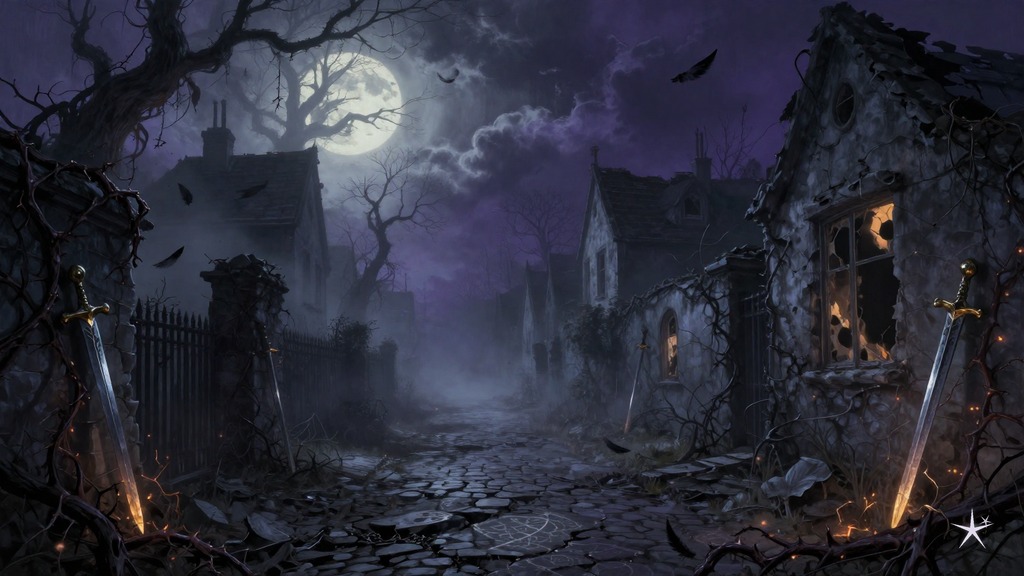
Most JoJo’s Bizarre Adventure Parts send their heroes globe-trotting to fight ancient evil. Part 4 does something far more unsettling — it traps you in a sleepy Japanese suburb and whispers that the monster lives next door. If you’re curious about Diamond Is Unbreakable’s manga volumes, how the story breaks down, and which edition to grab, this guide walks you through everything you need.
For readers who want the short version up front: Diamond Is Unbreakable is a completed story arc spanning 174 chapters. The English edition from Viz Media collects the arc across 9 deluxe hardcover volumes, all currently available. You can read the whole thing start to finish with no waiting for new releases. A heads-up before you dive in — Part 4 contains graphic violence, body horror, and a serial-killer storyline. If those elements concern you, the content warnings in the FAQ section below have more detail.
Diamond Is Unbreakable Manga Volumes at a Glance — Part 4’s Place in JoJo’s Dark Fantasy Legacy
JoJo’s Bizarre Adventure is a long-running Japanese manga series — a style of comic originating in Japan, read from right to left — created by Hirohiko Araki. The series is a sprawling dark fantasy epic that follows different members of the Joestar family across generations, with each major section (called a “Part”) telling its own self-contained story. Diamond Is Unbreakable is the fourth Part.
Part 4 was originally serialized — published chapter by chapter over time — in Japan’s Weekly Shōnen Jump, a major manga magazine aimed at a teen-and-up audience (shōnen refers to this younger demographic, though Part 4’s content often reads closer to seinen, which targets older teens and adults). The arc ran for 174 chapters total. In English, Viz Media has released Part 4 as 9 deluxe hardcover volumes, which are the standard way English-speaking readers collect this arc.
Where Part 4 fits in the larger saga: Each Part follows a different member of the Joestar bloodline, and while connective threads run through them all, each Part tells a self-contained story. Part 4’s protagonist is Josuke Higashikata, a teenager living in the small town of Morioh. Josuke is a previously unknown relative of the Joestar family — specifically, the illegitimate son of Joseph Joestar, the elderly patriarch who appeared in earlier Parts. Jotaro Kujo, the hero of Part 3, arrives in Morioh at the start of Part 4 to inform Josuke of his family connection. Jotaro then stays on in a supporting role, giving returning readers a familiar anchor. If you haven’t read Part 3, Jotaro functions perfectly well as “experienced mentor figure” — no prior knowledge required.
The tonal shift is the real headline here. Parts 1 through 3 escalate from Gothic horror to globe-spanning supernatural battles. Part 4 takes a sharp turn in a completely different direction. The setting shrinks to a single fictional town — Morioh — and the stakes become intensely local. Instead of fighting an immortal evil threatening the world, Josuke and his friends are dealing with Stand users hiding among ordinary townsfolk.
A quick definition, since this is central to everything in JoJo: a Stand is a supernatural power that manifests as a visible entity or force linked to its user. Think of it as a psychic guardian with a unique ability — some Stands punch with incredible strength, others manipulate objects, create illusions, or warp reality in bizarre ways. Each Stand has a name (usually a music reference) and a distinct set of rules governing what it can do. Stand battles in JoJo are less about raw power and more about figuring out the enemy’s ability and finding a creative counter. If you’ve never encountered the concept before, don’t worry — the manga introduces it gradually.
Some of Morioh’s Stand users are dangerous. Some are weird. One of them is a serial killer who just wants a quiet life.
That shift from epic adventure to small-town supernatural horror is what makes Diamond Is Unbreakable land so hard for dark fantasy readers. The evil isn’t dramatic or bombastic — it’s banal, domestic, and hidden behind smiling faces. Araki trades the desert and ocean backdrops of Part 3 for convenience stores, suburban houses, and school hallways, and somehow makes them more menacing than any ancient ruin.
Story Arcs by Volume — A Guided Walkthrough of Morioh’s Nightmare
Diamond Is Unbreakable follows a loose three-act structure across its 9 English volumes. Rather than one linear quest, it builds Morioh piece by piece — introducing new Stand users, deepening the town’s mythology, and slowly revealing the threat lurking underneath the surface-level calm. Here’s how the story flows.
Note: Exact volume-to-arc boundaries can shift slightly depending on how you define each arc’s start and end, but this breakdown follows the major narrative movements across the 9 volumes.
The Arrival in Morioh — Josuke and the First Stand Users (Early Volumes)
The story opens with Jotaro Kujo arriving in the quiet town of Morioh to find Josuke Higashikata, a teenager with a powerful Stand called Crazy Diamond. Crazy Diamond’s ability — to restore broken objects and heal injuries (but never bring back the dead) — immediately sets a different tone from Jotaro’s destructive Star Platinum. Josuke is a healer first and a fighter second, and that distinction colors every battle in Part 4.
Early chapters establish that Morioh has an unusual concentration of Stand users, many of them created by a mysterious bow and arrow circulating through the town. Josuke and Jotaro begin tracking down these users — some become allies, others become dangerous enemies.
The first major antagonist is Angelo, a convicted murderer who gains a water-based Stand and uses it to terrorize Morioh from hiding. The fight is grotesque and inventive, and it sets the template for Part 4’s horror: the monster is already in your house, in your tap water, in the rain falling on your head. Suburban normalcy becomes a thin skin stretched over something awful.
Other early encounters introduce Okuyasu Nijimura (a brash classmate whose Stand, The Hand, can erase anything it touches) and the Nijimura brothers story arc — a self-contained story segment within the larger narrative — which reveals the bow and arrow’s origin and provides the first real emotional gut-punch. The brothers’ father has been transformed into a monstrous creature — body horror rooted in family tragedy. It’s dark, weird, and unmistakably Araki.
The Hunt Intensifies — New Allies and Darker Threats (Middle Volumes)
The middle stretch of Diamond Is Unbreakable broadens the cast and deepens the horror. Two characters become central:
Koichi Hirose — a timid classmate of Josuke’s who develops a Stand called Echoes. Koichi’s growth from frightened bystander to capable fighter is one of Part 4’s most satisfying character arcs. His encounters tend toward psychological horror: he’s stalked by Yukako Yamagishi, a classmate whose obsessive love manifests through her Stand, Love Deluxe, which controls hair. The Yukako arc is genuinely unsettling — a story about romantic obsession taken to supernatural extremes, played as horror rather than comedy.
Rohan Kishibe — a manga artist with a Stand called Heaven’s Door that can read people like books and write commands into their pages. Rohan is arrogant, brilliant, and one of the most memorable characters in the entire JoJo franchise. His introduction is a creepy masterpiece: he lures Koichi into his studio and literally turns him into source material. Rohan operates in a gray zone between ally and threat for much of Part 4, and his scenes consistently deliver the arc’s best horror setpieces.
The mid-story encounters lean heavily into supernatural-horror-of-the-week territory. Stands in Part 4 are weirder and more unsettling than in previous Parts — they parasitize their hosts, create pocket dimensions in ordinary objects, and manifest as invisible terrors that only Stand users can perceive. One memorable encounter involves a Stand that hides inside electrical towers. Another turns a simple game of dice into a life-or-death gamble. Araki plays with genre constantly: slasher horror, ghost stories, body horror, psychological thriller.
Through it all, Morioh itself functions as a character. The town has its own rhythms and landmarks, and the story returns to them repeatedly. You start to feel like you live there — which makes the creeping realization that a serial killer has been operating undetected for years hit that much harder.
Yoshikage Kira — The Serial Killer Arc (Later Volumes)
This is where Diamond Is Unbreakable becomes something special.
Yoshikage Kira is a businessman in his early thirties. He’s handsome, polite, unremarkable. He wants nothing more than a quiet, stress-free life. He also murders women and keeps their severed hands as “girlfriends,” and he’s been doing it for years without anyone noticing.
Kira’s Stand, Deadly Queen, can turn anything it touches into a bomb. Its secondary ability, Heart Attack, is an autonomous heat-seeking explosive. Later, Kira gains a third ability — Bites the Dust — that creates a time loop to protect his identity. Each power escalation makes Kira harder to catch and raises the horror stakes. The logic of Stands in JoJo is that they evolve and develop new sub-abilities under extreme pressure, and Kira’s desperation to remain hidden drives his Stand to become increasingly nightmarish.
What makes Kira one of manga’s most terrifying villains isn’t his Stand — it’s his normalcy. He doesn’t want world domination. He doesn’t crave power. He just wants to keep killing in peace and go home to his quiet routine. Araki modeled him on real-world serial killers who hide in plain sight, and the effect is genuinely chilling. When Kira assumes a dead man’s identity and inserts himself into an unsuspecting family, the story becomes a domestic horror thriller unlike anything else in battle manga — a broad label for manga centered on combat and supernatural confrontations.
The final act of Part 4 is a town-wide hunt. Josuke, Jotaro, Koichi, Rohan, and the rest of the cast all converge to find Kira before he can kill again. The climax is tense, violent, and deeply satisfying — Araki earns every beat of it.
The resolution ties Morioh’s story together with a sense of hard-won peace. The town remains standing, scarred but surviving. It’s a quieter ending than most JoJo Parts, and it fits perfectly.
What Makes Diamond Is Unbreakable Tick as Dark Fantasy
Part 4’s horror works because Araki inverts the usual dark fantasy formula. Instead of sending heroes into a terrifying world, he plants terror into an ordinary one.
The quiet hometown as a horror setting. Morioh looks like any mid-sized Japanese town. There are shopping districts, residential neighborhoods, schools. The horror comes from the gap between that surface and what’s underneath — Stand users hiding among regular people, a serial killer walking the same streets as everyone else, supernatural threats embedded in everyday objects. The message is clear: evil doesn’t announce itself. It blends in.
Stand designs rooted in body horror and psychological dread. Part 4’s Stands are less “cool battle powers” and more “deeply unsettling manifestations of personality.” Deadly Queen is a cat-skull-faced humanoid that turns matter into explosives. Heaven’s Door peels people’s faces open like book pages. Cheap Trap is a parasitic Stand that latches onto someone’s back and kills them if anyone sees it. These designs aren’t just creative — they’re disturbing in ways that stick with you.
Yoshikage Kira as dark fantasy villainy at its peak. The best dark fantasy villains aren’t the most powerful — they’re the most human. Kira’s mundane desires (quiet mornings, a good night’s sleep, clean fingernails) make his monstrous compulsion infinitely more frightening than any demon lord. He’s a horror villain filtered through Araki’s supernatural lens, and the combination is extraordinary.
Slasher-film tension meets supernatural battle manga. Part 4’s best sequences read like horror movies. The Yukako arc is a stalker thriller. The Kira identity-swap arc is body-horror suspense. The Bites the Dust arc is a time-loop nightmare. Araki takes these horror-genre frameworks and layers Stand battles on top of them, creating something that doesn’t quite exist anywhere else in manga.
Intimate horror vs. epic horror. Compared to other JoJo Parts — Part 1’s Gothic vampire saga, Part 2’s ancient superbeings, Part 3’s transcontinental Stand battles — Part 4 scales everything down. The stakes are smaller (one town, not the world), the villain is weaker in raw power (Kira runs from fights), and the tone is more psychological than action-driven. For dark fantasy readers who prefer dread over spectacle, this is the JoJo Part that delivers.
Manga vs. Anime — Where the Adaptation Diverges
Diamond Is Unbreakable received an anime adaptation (anime being Japanese animation, often adapted from manga) from David Production, the studio that has handled all of JoJo’s Bizarre Adventure TV anime series since 2012. David Production has earned a strong reputation among JoJo fans for closely following Araki’s source material, and the Part 4 anime is generally faithful to the manga.
That said, there are real differences worth knowing about if you’re deciding between the two (or considering both).
Visual style. Araki’s artwork in Part 4 is dense, detailed, and often grotesque in ways that animation struggles to replicate. His use of hatching, exaggerated anatomy, and surreal panel compositions creates a reading experience that’s uniquely unsettling. The anime adopts a brighter, more saturated color palette than earlier JoJo seasons, which works well for Morioh’s sunny-suburb-hiding-darkness contrast but smooths over some of the manga’s rawer horror imagery. For example, certain body-horror sequences involving Stands physically invading or distorting their victims’ bodies are rendered with less graphic detail in the anime than in Araki’s original ink work.
Pacing. The anime moves at a steady clip and handles most arcs well, but some of the manga’s slower, more atmospheric moments get compressed. Part 4’s strength lies partly in the way it lets Morioh breathe — you spend time in the town, get to know its rhythms, before the horror intrudes. The manga gives you more room to sit in that unease.
Grotesque detail. Araki draws violence and body horror with meticulous, loving detail. Some of the more graphic imagery in the manga is toned down or reframed in the anime. If you’re reading Part 4 specifically for its dark fantasy horror content, the manga is the fuller experience.
Content the anime trimmed. A handful of shorter encounters and character moments from the manga don’t appear in the anime or receive abbreviated treatment. None are essential to the main plot, but they contribute to the world-building that makes Morioh feel alive.
The recommendation for dark fantasy readers: the manga delivers the complete horror experience as Araki intended it. The anime is a great companion — excellent voice acting, a fantastic soundtrack, and David Production’s signature style — but for the full impact of Part 4’s dread and grotesquerie, the manga is where you want to be.
Diamond Is Unbreakable Manga Volumes — Which Edition Should You Buy
The standard English release of Diamond Is Unbreakable is published by Viz Media as 9 individual deluxe hardcover volumes. These are widely available at major retailers both physically and digitally.
Viz Media deluxe hardcover editions (9 volumes total) — This is the primary way to collect Part 4 in English. The volumes feature updated translations, right-to-left reading format, color pages, and clean print quality. If you’ve never read manga before, right-to-left means you open the book from what would be the “back” cover of a Western book, and read panels from right to left across each page — it feels natural after a few pages, and the first volume typically includes a guide showing you the reading order. The Viz singles are the most readily available option and the easiest starting point for new readers.
If you want to start collecting, grabbing the first volume is a low-commitment way to see if Part 4’s tone clicks for you. The opening chapters do a solid job establishing Morioh’s atmosphere and Josuke’s character. You can find Volume 1 at major book retailers, online storefronts, and Viz Media’s own website.
JoJo's Bizarre Adventure: Part 4-Diamond Is Unbreakable, Vol. 1
Digital vs. physical. Digital editions are available through Viz’s own platform and other major digital manga storefronts. The advantages are immediate access and no shelf space required. The disadvantages: Araki’s artwork really benefits from physical page dimensions, and some of his more intricate double-page spreads — artwork that spans two facing pages for maximum visual impact — lose their effect on smaller screens. If you have a tablet, digital works well. On a phone, you’ll miss details.
Physical copies reward you with the full artistic experience. Araki’s art is meant to be held in your hands — the page turns, the panel layouts, the way his compositions fill physical space. Part 4 has some of the most creative visual storytelling in the entire JoJo franchise, and print does it justice.
Buying guidance for beginners. If you’re entering Part 4 cold — meaning you haven’t read Parts 1 through 3 — you can still follow the story. Part 4 has its own self-contained plot and cast. That said, you’ll get more out of Jotaro’s appearances and some callbacks if you’ve read Part 3: Stardust Crusaders first. It’s not required, though. Josuke’s story stands on its own.
Start with Volume 1. If Morioh hooks you (and it probably will), keep going across all 9 volumes. The investment pays its way through increasingly wild Stand battles and one of the best villain arcs in all of manga.
Frequently Asked Questions
How many volumes is Diamond Is Unbreakable in English?
The Viz Media English edition of Diamond Is Unbreakable consists of 9 deluxe hardcover volumes, collecting all 174 chapters of Part 4. All 9 volumes are currently available, so you can buy and read the complete story right now.
Do I need to read Parts 1–3 first?
Not strictly, no. Part 4 has a new protagonist, a new setting, and a self-contained plot. Jotaro Kujo from Part 3 appears as a supporting character, and there are references to earlier events, but the story provides enough context that you won’t be lost. Reading the earlier Parts enriches the experience — you’ll appreciate certain callbacks and character dynamics more — but skipping straight to Part 4 is completely viable, especially if the small-town horror premise appeals to you more than the globe-trotting adventure tone of earlier arcs.
Is Part 4 the darkest JoJo Part?
It depends on what you mean by “dark.” Part 1 has Gothic horror roots. Part 2 has ancient apocalyptic threats. Part 3 has intense violence. But Part 4’s darkness is more psychological and intimate. The serial-killer storyline, the body horror, the paranoia of not knowing which neighbor might be a threat — it’s a different flavor of dark. Many fans consider it the most unsettling Part precisely because the horror is so grounded in everyday life. Later Parts (especially Part 6: Stone Ocean and Part 7: Steel Ball Run, which continue the saga with different protagonists and settings) also explore very dark territory, so “darkest” is ultimately subjective.
Is the manga finished?
Yes. Diamond Is Unbreakable is a completed story — 174 chapters across 9 English volumes. You can read the entire arc from first chapter to last without waiting for new releases. The JoJo franchise itself continues with later Parts, but Part 4 is fully wrapped up.
What content warnings apply?
Part 4 contains graphic violence, body horror, depictions of murder (including a serial killer who targets women), psychological horror, and some disturbing Stand-related imagery. There are scenes involving stalking and obsessive behavior played as horror. Araki’s art style renders violence in detailed, sometimes grotesque fashion. The content is intense enough that it reads as a mature experience even though it was originally serialized in a magazine targeting a younger demographic. Readers sensitive to depictions of serial violence or body horror should be aware going in.
Can I start with the anime instead?
Absolutely. The anime adaptation is faithful and well-produced. Some readers prefer to watch the anime first and then read the manga for the deeper experience. Others go manga-first. There’s no wrong order. For dark fantasy readers specifically, the manga offers more horror detail, but the anime is an excellent entry point if you’re unsure about committing to the full 9-volume run.
Where does Part 4 rank among JoJo Parts for newcomers?
It’s one of the most popular entry points alongside Part 3. Part 4’s self-contained story, strong villain, and approachable cast make it welcoming for new readers. The shift to a smaller-scale setting also means there’s less continuity baggage to worry about. If the premise of “supernatural horror in a quiet town” sounds appealing, Part 4 is a fantastic place to start your JoJo journey.