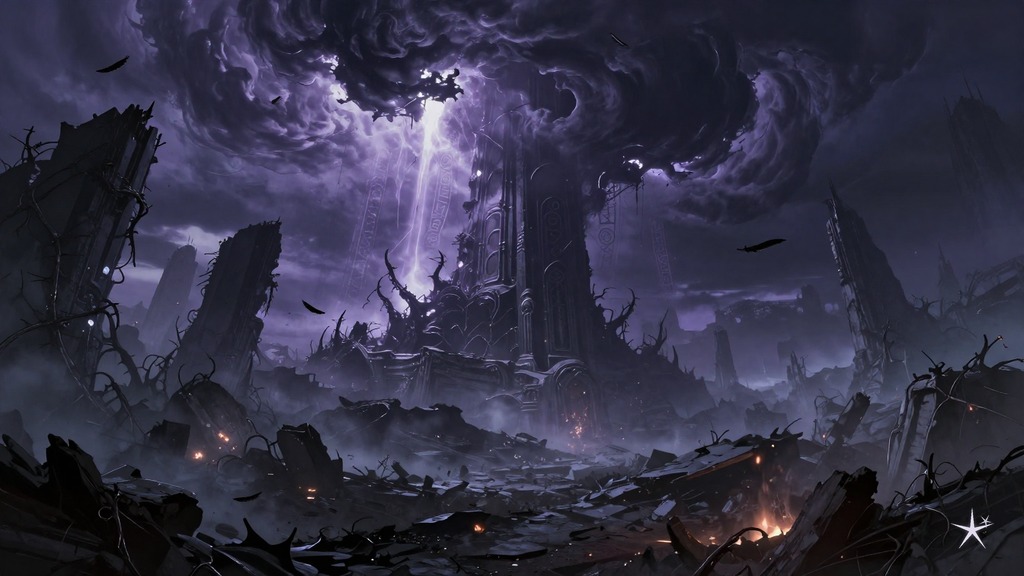
Saikano — full Japanese title 最終兵器彼女 (“She, The Ultimate Weapon”) — is one of those manga that people don’t just read, they survive. Across just 7 saikano manga volumes and 72 chapters, it tells the story of a teenage couple trying to hold their relationship together while the world literally ends around them.
A note before you read further: This guide is written for people deciding whether to buy and how to collect the series. Saikano deals with war, body horror, loss of bodily autonomy, and mass death in ways that go well beyond typical dark manga. If you’re new to the genre, be aware that this is genuinely heavy material — not “dark” in a casual or stylized sense.
If you’re here wondering how many volumes Saikano has, whether it’s finished, and how to actually get your hands on it, this guide covers everything you need.
How Many Volumes Does Saikano Have?
Saikano is a completed manga consisting of 7 volumes and 72 chapters. That’s it for the main story — no sequel series, no “Part 2,” and no English-licensed spinoffs. (A Japanese-only gaiden collecting Takahashi’s one-shot chapters was released in 2006, but it has not been translated into English.) It’s a fully self-contained story from start to devastating finish.
For readers new to manga, here’s how those numbers relate: chapters are individual installments originally published in a magazine, while volumes are the collected books that gather multiple chapters into one physical (or digital) edition. So 72 chapters across 7 volumes means roughly 10 chapters per book.
The series was serialized — meaning its chapters were published on an ongoing schedule — in Weekly Big Comic Spirits, a Japanese manga anthology magazine in the seinen category (manga aimed at adult men) published by Shogakukan. The Japanese volumes were released between July 2000 and February 2002. The entire run took less than two years to complete, which is almost unheard of for a manga that hits this hard emotionally.
The English edition, published by VIZ Media, also consists of 7 volumes — each English volume contains the same chapters as the equivalent Japanese volume, with no restructuring or reordering.
What’s worth noting here is just how tight and deliberate the series is. Seven volumes with nothing wasted — every chapter pushes the story forward, every volume escalates the stakes. For readers used to manga that run hundreds of chapters, Saikano is a reminder that devastating emotional impact doesn’t require length — it requires precision.
If you’re looking for a dark manga you can read in a weekend that will leave you emotionally wrecked for the rest of the week, this is the one.
Saikano’s Story Arcs by Volume
The series follows a clear three-act emotional trajectory. An “arc” here simply means a stretch of the story with its own focus and momentum — and Saikano’s arcs map neatly onto its volumes. It starts as an awkward high school romance and systematically tears everything apart. Here’s how that journey breaks down across the seven volumes.
Spoiler note: The summaries below describe the general shape and themes of each section. The final volumes section discusses the story’s conclusion in broad emotional terms without revealing specific plot points, but if you prefer to go in completely blind, skip ahead to the edition and buying sections.
The Beginning — Volumes 1–2
The first two volumes establish what feels, at first, like a familiar teen romance. Shuji is an ordinary high school boy in Hokkaido. Chise is his shy, clumsy girlfriend. Their relationship is fragile and uncertain in the way that first relationships always are — full of misunderstandings, small kindnesses, and the painful effort of two people learning how to be close to each other.
Then the series drops its bomb — almost literally. Chise is revealed to be a weapon, transformed by the military into a living instrument of war. Wings of metal sprout from her back. Her body is no longer entirely her own.
What makes these opening volumes so effective is how author Shin Takahashi (written in Japanese as 高橋しん) handles the sudden shift in the story’s mood. The awkwardness of young love doesn’t disappear when the war arrives. Instead, the two coexist in a way that feels deeply wrong — which is exactly the point. You’re watching two teenagers try to maintain something normal while something monstrous unfolds around and within them.
By the end of volume 2, the creeping dread has firmly taken hold. The war is escalating. Chise is being called away to fight. And Shuji is beginning to realize that he cannot protect her — or even understand what she’s becoming.
Escalation — Volumes 3–5
The middle stretch of Saikano is where the series earns its reputation for being genuinely harrowing. The war intensifies with each chapter, and Chise loses more of her humanity every time she’s deployed. This isn’t a gradual background detail — it’s visceral and central. Her body changes. Her memories blur. The person Shuji fell in love with is being overwritten by the weapon she was made into.
This is where the body horror — horror rooted in the involuntary transformation and loss of one’s own physical form — becomes most prominent. Chise’s human body increasingly gives way to weaponized machinery, and the series treats each stage of that change as a loss, not a power-up.
Meanwhile, Shuji himself begins to collapse morally. His helplessness curdles into selfishness, infidelity, and emotional cruelty. He’s not a heroic boyfriend standing by his transformed partner — he’s a scared teenager making terrible decisions because the world around him offers no good ones. It’s uncomfortable to read, and it’s supposed to be.
Secondary characters don’t fare any better. Friends, teachers, civilians — the war chews through them. Death in Saikano isn’t dramatic or glorious. It’s sudden, arbitrary, and permanent.
These three volumes are the emotional core of the series. They force you to sit with the reality that love — even sincere, desperate love — is not a shield against destruction.
The End of Everything — Volumes 6–7
The final two volumes bring the story to its conclusion. The war reaches a scale that stops being something the characters — or the reader — can fully comprehend.
The series does not flinch from consequences. The world Saikano has built is not spared, and the question the story has been building toward comes to its conclusion: what happens when the person you love becomes something you can no longer recognize?
The ending is deliberate in its ambiguity. It offers a conclusion that readers have debated for over two decades, and that sustained conversation is the sign of a story that earned its final pages. If you want to know how it ends, the manga will tell you — and it’s worth experiencing firsthand rather than having it described here.
What Makes Saikano a Dark Fantasy Classic
On the surface, Saikano might look like a romance manga with some sci-fi elements. Don’t let that framing fool you. This is one of the bleakest manga ever published, and its darkness is inseparable from its emotional power.
Apocalyptic war as the backdrop. The conflict in Saikano is never fully explained — who’s fighting whom, why it started, what the strategic stakes are. That deliberate vagueness is thematic. The war exists as an unstoppable, incomprehensible force that destroys everything it touches. It doesn’t matter who started it. It only matters that it can’t be stopped.
Body horror through Chise’s transformation. This is where the “dark fantasy” label most clearly applies. Chise’s body is gradually, irreversibly converted from human to living weapon. Wings of metal. Internal weaponry. The loss of sensation, memory, and eventually identity. It’s horror rooted in the loss of bodily autonomy and the erosion of selfhood.
Civilian devastation played straight. Saikano does not soften or stylize the realities of war. Ordinary people — students, shopkeepers, families — are killed in bombings, caught in crossfire, displaced and broken. The manga treats every death as a weight on the story, not spectacle.
Love as both salvation and failure. This is the thematic core. Shuji and Chise’s love is real and sincere, but it cannot save either of them. The series asks what love means when it can’t prevent suffering, can’t undo transformation, can’t stop annihilation. The answer it arrives at is complicated, painful, and honest.
Saikano stands alongside other essential dark manga not despite its romance framing but because of it. The intimacy of the central relationship makes the apocalypse personal. You’re not watching a civilization fall — you’re watching two people try to hold hands while the ground gives way beneath them.
Manga vs. Anime — Where the Adaptation Diverges
A TV anime adaptation of Saikano aired in 2002, and an OVA (Original Video Animation — a short anime released directly to home video rather than broadcast on TV) titled “Another Love Song” also exists. Both are worth knowing about, though neither fully replaces the manga.
The anime covers the main story in a compressed format, and that compression is where most of the problems arise. Emotional beats that the manga develops across multiple chapters get squeezed into single episodes or cut entirely. The pacing of the manga — slow, deliberate, giving you time to sit with each escalation — is one of its greatest strengths, and the anime loses much of that rhythm by necessity.
Character development suffers most from the compression. Secondary characters who receive meaningful arcs in the manga become more peripheral in the anime. Shuji’s moral deterioration, which the manga traces with uncomfortable patience, feels more abrupt on screen. And Chise’s transformation, which gains its horror from accumulation — each volume another irreversible step — loses some of its weight when condensed.
The ending execution also differs between the two versions. Without spoiling either, the manga’s conclusion has a specificity and emotional precision that the anime struggles to replicate. The ambiguity that makes the manga’s ending so powerful becomes murkier in adaptation.
The OVA, “Another Love Song,” offers a side story that expands on certain elements of the world. It’s a supplementary release rather than a replacement or continuation.
The recommendation here is straightforward: read the manga first. The anime isn’t bad — it captures the general tone and emotional thrust of the story — but the manga is the complete experience. If you watch the anime and it resonates with you, the manga will give you the deeper, more devastating version of everything you responded to.
Which Edition of Saikano Should You Buy?
The English edition of Saikano consists of 7 volumes published by VIZ Media. This is the standard — and as far as available information indicates, the only — English-language edition. There are no known deluxe editions, omnibus releases (single books that combine multiple volumes into one), or collector’s editions for the English market. (The Japanese market received a four-volume aizoban collector’s edition re-release in 2019, but it has not been licensed in English.)
Each volume follows the original Japanese release structure, so you’re getting the story exactly as it was published. No reordering, no combining, no bonus content reshuffling.
Physical availability is something to be aware of. Saikano’s English release is not recent, and physical copies will likely require some hunting. Secondhand marketplaces like eBay, used bookstores, and manga-focused retailers are your best options. The Crunchyroll Store, which absorbed Right Stuf’s inventory in 2023, is moving to a members-only model in August 2026, so check access requirements before relying on it for tracking down physical volumes. Prices for used copies can vary significantly depending on condition and demand, so patience in searching can pay off.
Digital availability is worth checking as an alternative, particularly if tracking down all seven physical volumes proves difficult. Platforms like ComiXology (now integrated into Amazon’s Kindle store) and other digital manga retailers may carry the series, which eliminates the out-of-print availability problem entirely.
If you’re able to find a complete set in good condition at a reasonable price, that’s the way to go — having all seven volumes on your shelf makes it easy to read straight through, which is genuinely the best way to experience this series. It’s the kind of manga you want to read in as few sittings as possible, letting the emotional momentum build without interruption.
For readers looking to start with the first volume to see if the series clicks before committing to hunting down all seven, that’s a perfectly reasonable approach.
Saikano, Vol. 1
Frequently Asked Questions
How many volumes is Saikano?
7 volumes, containing 72 chapters total. The series is complete — no ongoing publication, no hiatuses to worry about.
Is Saikano finished?
Yes. The manga was completed in 2002. The story has a definitive ending. You can read the entire series knowing it reaches a full conclusion.
Who is the author of Saikano?
The manga was created by Shin Takahashi (高橋しん). The series was published in Shogakukan’s Weekly Big Comic Spirits magazine.
Is there an English translation?
Yes. VIZ Media published all 7 volumes in English. Physical copies may require secondhand sourcing depending on current availability, but the complete English edition exists. Digital editions may also be available through major manga platforms.
Is Saikano really dark fantasy?
Absolutely. The “romance manga” label can be misleading. Saikano features apocalyptic supernatural warfare, body horror through Chise’s transformation into a living weapon, mass civilian death, and a tragic ending. The romance is genuine, but it exists within a framework of escalating horror and annihilation. If you’re looking for dark manga that also happens to be emotionally devastating, this fits squarely.
Should I watch the anime or read the manga first?
Read the manga first. The anime adaptation compresses the story in ways that reduce its emotional impact, and the manga’s pacing is the superior experience. The anime is a decent supplement afterward, but the manga is the definitive version of the story.
How long does it take to read all 7 volumes?
At a comfortable pace, you can read the entire series in a day or two. Each volume is roughly standard manga length, and the series flows quickly once it builds momentum. It’s common for readers to finish in a single extended sitting — partly because it’s compelling, and partly because once the emotional escalation starts, it’s very hard to stop.