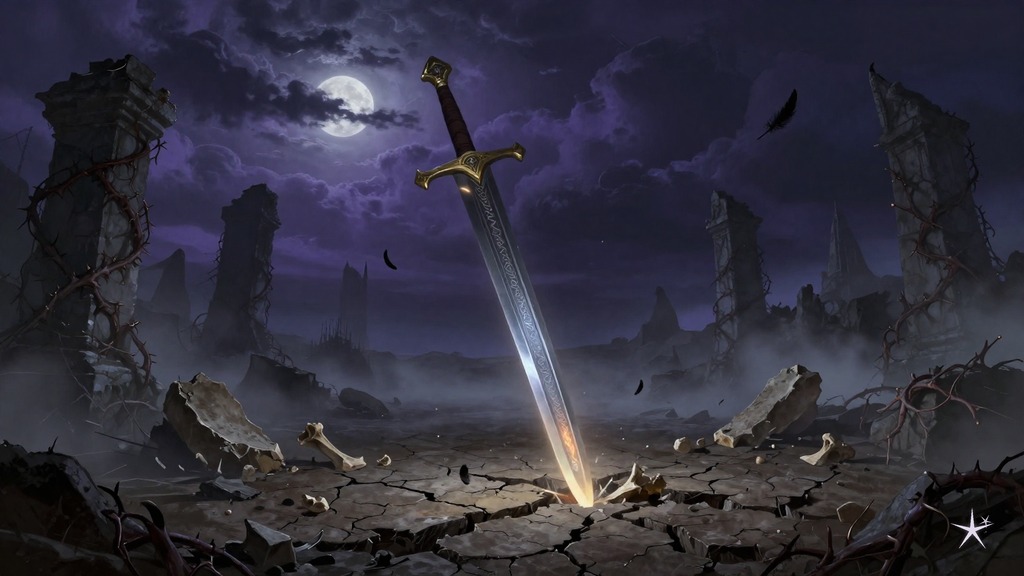
Claymore is a dark fantasy manga set in a medieval world where half-human female warriors hunt shape-shifting monsters — and people keep recommending it for years after finishing it. If you’ve landed here looking for the Claymore manga reading order, the good news is that it’s about as straightforward as it gets. No branching timelines, no spin-off series you need to track down, no “which version do I read first?” confusion.
Here’s how to read Claymore from start to finish.
Claymore Manga Reading Order — The Short Answer
Read Volumes 1 through 27 in order. That’s it.
Claymore is a single, completed manga series written and illustrated by Norihiro Yagi. Serialization began in 2001, with the first collected volume released in January 2002 and the final volume in December 2014, totaling 27 volumes and 160 chapters (155 main chapters plus 5 side stories). The entire series has been published in English by VIZ Media.
There are no prequels. No sequel series. No alternate-universe spin-offs. No “read this light novel before Volume 12” requirements. Claymore is one continuous story from beginning to end.
The only wrinkle worth mentioning is the anime adaptation, which diverges from the manga and creates its own ending. That’s explained in detail below. But the manga itself? Straight line, Volume 1 to Volume 27, and you’re done.
If that’s all you needed, go grab Volume 1 and enjoy. If you want an arc-by-arc breakdown so you can pace yourself — or if you’re coming from the anime and want to know where to pick up — keep reading.
Claymore
Arc-by-Arc Breakdown — What Each Part Covers
One of Claymore’s strengths is how well it escalates. The early volumes establish a relatively contained dark fantasy world — warriors hunting monsters in medieval villages — and then the scope just keeps expanding. Knowing what each stretch of volumes covers can help you pace your reading and understand where you are in the larger story.
An “arc” just means a major story section — a group of volumes that focus on one central conflict or set of events before the story moves to its next phase. Everything below is kept spoiler-free. You’ll get a sense of tone and scope without having anything ruined.
The Beginning — Clare’s Origin and Early Hunts (Volumes 1–5)
This is where Claymore lays its foundation. You’re introduced to a world plagued by shape-shifting monsters called Yoma, and the only force capable of fighting them: half-human, half-Yoma female warriors known as Claymores (named after the massive swords they carry). The story follows Clare, a warrior ranked near the bottom of the power hierarchy, and Raki, the young human boy who becomes her traveling companion.
The warriors are controlled by a shadowy group referred to as the Organization — the entity that creates and commands the Claymores and assigns them to missions. Volumes 1 through 5 establish the rules of this world — how the warrior ranking system works, what happens when a Claymore pushes her powers too far, and the grim cost of fighting monsters with a monster’s own power. Clare’s backstory unfolds across these early volumes, and it’s one of the most effective tragic origin stories in dark fantasy manga.
The tone here is brutal and atmospheric. Expect disturbing physical transformations, visceral monster hunts, and a pervasive sense of dread. If you’re reading Claymore because someone told you it’s a great dark fantasy, these volumes are where you’ll know whether the series clicks for you.
Pacing tip: Some readers find the first couple of volumes feel like self-contained individual hunts rather than one ongoing storyline. That’s intentional — Yagi is building the world and Clare’s character. The ongoing plot kicks into higher gear around Volumes 5 and 6, so give it at least that long before deciding whether to continue.
The Northern Campaign (Volumes 6–11)
This is where Claymore shifts gears dramatically. The stakes jump from individual hunts to large-scale military operations, and you start to see just how deep the world-building goes. The Northern War arc is a major turning point for the series — it brings together a large cast of warriors, introduces the most dangerous enemies seen so far, and raises the personal stakes for Clare and the people she cares about.
Volumes 6 through 11 are where many readers go from “this is pretty good” to “I can’t put this down.” The fight sequences get more complex, the power dynamics between warriors become central to the plot, and Yagi starts revealing that the Organization controlling the Claymores may not be what it seems.
If you liked the dark fantasy tone of the early volumes but wanted more depth, this stretch delivers. The character writing sharpens considerably — several supporting warriors go from background fighters to fully realized characters with their own motivations and story paths.
The Seven-Year Time Skip and Its Aftermath (Volumes 12–17)
Without spoiling the specifics, a significant event at the end of the Northern Campaign arc leads to a seven-year jump forward in the story’s timeline. When the narrative picks back up, the status quo has changed in fundamental ways. Old alliances are gone. New power structures have emerged. And the truth about the Organization — why it exists, what its real goals are — starts coming into focus.
Volumes 12 through 17 blend political intrigue with the series’ signature dark fantasy action. The world expands beyond what the early volumes suggested was possible, and the revelations about the Organization’s true nature recontextualize much of what came before.
This is also where Claymore’s long-game storytelling really pays off. Plot threads planted back in Volume 2 or 3 start bearing fruit. Characters who seemed minor turn out to be critical. If you’ve been reading attentively, this stretch is deeply rewarding.
The Final War (Volumes 18–27)
The last ten volumes bring everything to a head. Every major conflict — Clare’s personal quest, the warriors’ struggle against the Organization, the threat of the most powerful enemies in the series — converges into a final extended confrontation.
Claymore is a completed series, and it reads like one. Norihiro Yagi wraps up all the major plot threads and gives Clare’s story a definitive conclusion. Without getting into specifics, the ending is widely regarded by fans as satisfying and earned — this isn’t a series that got canceled or rushed to a close.
Volumes 18 through 27 are action-heavy but never lose sight of the character developments that drive the story. The final battles carry emotional weight because the preceding seventeen volumes built genuine attachment to these characters and their world.
Where the Anime Fits In — And Where It Diverges
Claymore received an anime adaptation that covers the early portion of the manga. However — and this is important for anyone who watched the anime first — the anime creates its own original ending that diverges significantly from the manga’s story.
The anime adapts material roughly corresponding to the first eleven or so volumes of the manga, but its conclusion is anime-original. The manga continues far beyond the point where the anime ends, with major arcs, revelations, and an entirely different resolution to the story.
If you haven’t watched the anime: Just read the manga. You’ll get the complete, official version of the story as the creator intended. The anime works fine as a companion piece to the early arcs if you want to see them animated later, but it’s not necessary.
If you watched the anime and want to continue the story: The safest recommendation is to start from Volume 1. The anime changes enough details along the way — character interactions, pacing, and scene order — that jumping in mid-series can feel disorienting. Starting fresh also means you’ll catch early hints and plot setup that the anime cut or rearranged.
That said, if you really don’t want to re-read material you’ve already seen animated, you can pick up from around Volume 11 or 12 — roughly where the anime’s story starts to go its own way — and read forward from there. Just be aware you may encounter references to manga-only scenes or character details the anime skipped.
The manga is the definitive way to experience Claymore’s full story. The anime’s original ending, while it provides closure of a sort, doesn’t reflect the actual direction Yagi took the narrative — and the manga’s version is widely considered the stronger one.
Where to Buy the Claymore Manga in English
All 27 volumes of Claymore are published in English by VIZ Media and are available as standard paperback singles. Each volume collects several chapters of the original Japanese serialization, and the translation quality is solid throughout the run.
Here’s what you need to know about formats:
- Single volumes (paperback): This is the standard way to collect Claymore in English. All 27 volumes are readily available through major retailers. At full retail price, collecting the full series this way adds up — twenty-seven individual volumes is a commitment — but you can spread purchases out over time.
- Digital editions: Claymore volumes are available digitally through platforms like Kindle, Kobo, and the VIZ Manga app, which can be a more affordable way to read the series if you prefer screens to shelves.
- Box sets and omnibus editions: Format availability beyond individual singles and digital can vary. Check current listings at major retailers to see what’s in stock — manga publishers occasionally release collected editions or box sets, but availability changes over time.
For a completed series like Claymore, buying used copies in good condition is also a reasonable option. Since the series finished in 2014, secondhand copies are often available.
A note on reading order for purchases: Since Claymore is a straight sequential read, you can safely buy in batches. Volumes 1 through 5 will tell you whether you want to continue. If you’re hooked after that, Volumes 6 through 11 cover the next major arc. This way you’re not committing to all 27 volumes before you know if the series is for you.
Common Mistakes New Readers Make
A few pitfalls come up regularly when people start Claymore for the first time. None of these are catastrophic, but knowing about them upfront saves some frustration.
- Assuming the anime tells the whole story. This is the biggest one. The anime covers a portion of the manga and then goes in its own direction. If you only watched the anime, you’ve experienced maybe a third of Claymore’s actual story — and a different ending than the one Yagi wrote. The manga is the complete version.
- Dropping the series before it escalates. The first few volumes are deliberately paced — they’re establishing the world and Clare’s character through relatively self-contained missions. The story becomes significantly more complex and compelling around Volumes 5 and 6 when the larger plot kicks in. If you find the early volumes a bit episodic, that’s by design, and it changes.
- Trying to skip volumes. Claymore is tightly plotted from start to finish. Events in Volume 3 directly set up payoffs in Volume 15. Characters introduced as apparent one-offs return with major significance later. Skipping ahead — even if you think you know what happens from the anime or wiki summaries — means missing the setup and context that makes the later arcs land as hard as they do.
- Mixing up chapter numbers from unofficial sources with official volume numbers. If you’ve read chapters online through unofficial translations before switching to official volumes, the chapter numbering may not line up cleanly with VIZ’s volume divisions. When someone says “start at Chapter 78,” that can be harder to locate in the official paperbacks than “start at Volume 15.” Stick with volume numbers when discussing the series or planning purchases — they’re consistent and unambiguous.
Frequently Asked Questions
Should I read the manga or watch the anime first?
The manga is the recommended starting point. It contains the complete story as the creator intended, runs significantly longer than the anime adaptation, and reaches a different (and widely preferred) conclusion. The anime is worth watching if you enjoy the early arcs and want to see them animated, but it’s a supplement to the manga rather than a replacement for it.
How long does it take to read all of Claymore?
Claymore runs 27 volumes and 160 total chapters (155 main chapters plus 5 side stories). Reading pace varies from person to person, but as a rough guide: each volume takes most people 20 to 40 minutes to read. At that pace, you’re looking at somewhere between 9 and 18 hours for the complete series. It’s very much a bingeable manga — the arc structure and cliffhangers make it hard to stop at just one volume per sitting.
Is Claymore finished?
Yes. Claymore is a completed series. The final volume was published in Japan and subsequently released in English by VIZ Media. The story has a definitive ending — all major plotlines are resolved. You can start reading now without worrying about an incomplete story or a hiatus.
Do I need to read the side stories?
The 5 side stories included in the series are short extras that supplement the main narrative. They’re not essential to understanding the plot, but they add texture and background to the world and characters. Most are included in the regular volume releases, so you’ll encounter them naturally as you read through the series.
Is there a sequel to Claymore?
There is no sequel manga to Claymore. The story is self-contained across its 27 volumes. Norihiro Yagi has worked on other projects, but Claymore’s narrative is complete as published. This is honestly one of its strengths — it tells its full story and ends on its own terms, without being stretched into a franchise.