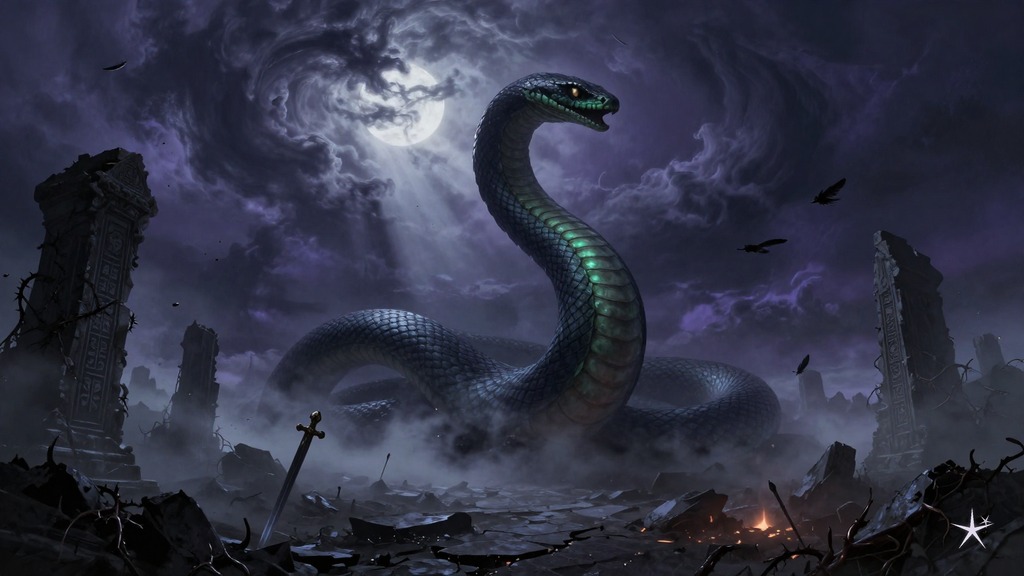
The Jormungand manga reading order is as straightforward as it gets: read Volumes 1 through 11, in order, and you’re done. No spin-offs, no side stories, no flowcharts required.
Keitaro Takahashi’s Jormungand is one of those series that flies under the radar — and that’s a shame, because it’s a tight, completed military thriller with a morally complex cast and an ending that actually lands. Originally published chapter by chapter in Monthly Sunday GX, a manga magazine from Japanese publisher Shogakukan, the series ran from December 2006 to April 2012. It spans 70 chapters collected across 11 volumes (roughly six to seven chapters per volume). The English-language edition is published by VIZ Media.
If you want to know what you’re getting into volume by volume, which edition to grab, and how the anime fits in, this guide covers all of it.
Jormungand Manga Reading Order at a Glance
Here’s the short version: read Volumes 1 through 11 in order. That’s it.
Jormungand is a single, continuous story. There are no spin-offs, no side stories, no companion volumes, and no alternate timelines to worry about. The English edition matches the Japanese volume numbering exactly — 11 volumes in Japan, 11 volumes in English. No gaps, no reshuffling.
Your starting point is Volume 1. There are zero prerequisites. You don’t need to have watched the anime first, you don’t need to read any supplementary material, and you don’t need to look up a wiki beforehand. Takahashi wrote this as a linear narrative, and the best way to experience it is front to back.
If you’ve been burned by manga series that require flowcharts to figure out the reading order, Jormungand is a breath of fresh air. Pick up Volume 1, start reading, and let the series pull you through.
Which Edition Should You Buy?
Standard English Volumes
The primary English print edition of Jormungand, published by VIZ Media, consists of 11 individual volumes. These are standard manga-sized paperbacks — the same compact format you’ll find for most manga on bookstore shelves, typically around 200 pages each. The covers match the original Japanese art, and the translation reads cleanly.
Volume 1 is the place to begin, and it does a solid job of establishing both the world and the core cast without feeling like a slow prologue.
Jormungand, Vol. 1
Digital Availability
Jormungand is available digitally through common manga platforms. If you prefer reading on a tablet or phone, digital is a reliable way to access the full run without worrying about print availability.
This matters more than usual for Jormungand because earlier volumes in the print run may be harder to track down. The series has been complete for over a decade now, and print runs for completed titles aimed at older teen and adult audiences don’t always stay consistently stocked. If you’re having trouble finding a specific volume in print at a reasonable price, digital is a practical alternative that gets you the same content.
No Special Editions
As of now, there are no known collected editions (multiple volumes bundled into one larger book), deluxe hardcovers, or collector’s editions for Jormungand in English. The standard 11-volume set is the definitive English release. If you’re hoping for a big fancy box set — it doesn’t exist for this series. The standard volumes are what you’re working with, and they get the job done.
Volume-by-Volume Reading Order
The Arms Dealer’s World — Volumes 1–3
The series opens by throwing you into the world of Koko Hekmatyar, a young arms dealer who conducts business across war zones with a tight-knit squad of former soldiers. Alongside her crew is Jonah, a child soldier who hates weapons but finds himself working for one of the world’s most prolific arms dealers. That contradiction — a kid who despises the tools of war serving someone who profits from selling them — is the engine that drives the entire series.
Volumes 1 through 3 operate through short, self-contained mission storylines, each one introducing new members of Koko’s team while establishing the morally black world of international weapons trade. These early volumes set the tone clearly: this is a series where nobody is clean, deals are struck over bodies, and the line between “good guys” and “bad guys” doesn’t really exist.
Don’t expect a slow burn. Takahashi drops you into the action early and fills in character details through the missions themselves rather than through long blocks of backstory delivered all at once. By the end of Volume 3, you’ll have a strong sense of the full ensemble cast and the kind of story Jormungand wants to tell.
Escalation and Enemies — Volumes 4–6
The middle stretch of Jormungand ratchets up the pressure. Rival arms dealers, hired assassins, and intelligence agencies from multiple nations start closing in on Koko’s operations. The world she operates in gets smaller and more dangerous with every volume.
This is also where Takahashi starts peeling back the layers on individual squad members. Character backstories reveal how each person ended up in Koko’s orbit, and nearly all of those histories are dark. These aren’t tragic backstories played for sympathy — they’re matter-of-fact accounts of how violence shapes people who live inside it.
The moral complexity deepens here too. Koko’s operations grow more ambitious, and the consequences of arms dealing ripple outward in ways the early volumes only hinted at. If Volumes 1–3 got you curious, Volumes 4–6 are where the series sinks its hooks in.
Jormungand Plan — Volumes 7–9
The title of the series starts to pay off in this stretch. The overarching Jormungand plan — named after the Norse world serpent that encircles the earth — begins to surface, and Koko’s true ambitions turn out to be far larger than running guns.
Without spoiling the specifics, Koko has been working toward a world-altering endgame from the very beginning. The arms dealing, the network of contacts, the carefully cultivated relationships with militaries and governments — all of it feeds into something much bigger than profit.
Jonah’s internal conflict reaches a breaking point during these volumes. His loyalty to Koko and his hatred of what she represents collide head-on, and Takahashi doesn’t offer easy answers. This is the emotional core of the series, and it’s built on everything the previous volumes established.
The Serpent’s Conclusion — Volumes 10–11
The final two volumes deliver the full scope of the Jormungand plan and force every character to reckon with it. The confrontation here isn’t just physical — it’s ideological. Koko’s vision for the world is radical, and the series treats it seriously enough to let the reader sit with the implications rather than rushing to a neat resolution.
The relationship between Jonah and Koko reaches its conclusion here, and the series’ central moral question — whether terrible means can serve a greater end — gets its answer. Or at least, Takahashi’s answer. You might disagree with it. That’s part of what makes the ending work.
Critically, Jormungand has a definitive ending. No cliffhangers, no sequel bait, no “go read a different format to find out what really happened.” The story wraps up in Volume 11, and it wraps up completely. For a manga aimed at adult readers, that’s worth celebrating.
Anime Watch Order and How It Maps to the Manga
Jormungand received two anime seasons, both airing in 2012:
| Season | Title | Coverage |
|---|---|---|
| Season 1 | Jormungand | Roughly the first half of the manga |
| Season 2 | Jormungand: Perfect Order | Adapts through the manga’s ending |
The anime is a faithful adaptation. It follows the manga’s story structure closely and doesn’t introduce anime-original storylines or significantly rearrange events. If you’ve watched the anime and want to read the manga (or vice versa), you won’t run into contradictions or major differences in the story’s direction.
That said, the manga has more room to breathe. Takahashi includes characters’ unspoken thoughts and inner reactions — especially Jonah’s — in ways that the anime compresses by nature of the medium. You get more time inside the heads of squad members during key decisions, and the pacing lets certain reveals land with more weight because you can sit with them longer. The manga also gives more detailed treatment to some of the geopolitical maneuvering behind Koko’s deals, which adds context that the anime streamlines.
Recommendation for anime-first readers: If you loved the anime and you’re wondering whether 11 volumes of manga are worth it when you already know the story, the answer is yes — the added character depth and slower pacing make it feel like revisiting the story with a new lens rather than just re-watching what you’ve already seen. The manga is also the original version, so small details and character moments that didn’t make it into the anime are here.
Overall: Read the manga first or alongside the anime. But if you’ve already watched the anime and want to revisit the story in manga form, it works perfectly well in that order too. There’s no wrong sequence here — both versions tell the same story, and neither one spoils the other in a way that ruins the experience.
Tips for New Readers
Know what you’re getting into. Jormungand is a dark military thriller. It depicts graphic violence, morally gray characters on every side, and a world where arms dealing is just another business. There are no clear heroes. The story is told partly through the eyes of Jonah, a child soldier navigating a world of adult violence — his age and his situation are central to the series’ tone and moral weight. If you’re looking for a series with a traditional good-versus-evil framework, this isn’t it — and that’s the point.
The large cast can feel overwhelming at first. Koko’s squad has a lot of members, and the early volumes introduce them through short mission storylines rather than giving each one a dedicated spotlight. Trust the structure. By the time you’re a few volumes in, you’ll have a handle on who everyone is and what makes them tick. Takahashi is deliberate about how he builds his ensemble.
The title is a mythology reference. Jormungand is the Norse world serpent — a creature so vast it encircles the entire earth. The series uses this as a metaphor for its apocalyptic endgame. You don’t need to know Norse mythology to follow the story, but knowing where the name comes from adds a nice layer to the later volumes.
Looking for similar series? If Jormungand clicks with you, consider:
- Black Lagoon — Similar tone, similar world of criminals and mercenaries operating outside the law. If you like Koko’s crew, you’ll like the cast of Black Lagoon. Note that Black Lagoon is an ongoing series with irregular releases, so it doesn’t have the same clean, completed feel as Jormungand.
- Vinland Saga — A very different setting (Viking-age Europe instead of modern war zones), but it shares Jormungand’s interest in what happens when characters built for violence start questioning whether violence can lead to something better. Vinland Saga is a longer series and is completed at 29 volumes.
The Best Way to Start Jormungand Today
Pick up Volume 1 in digital or print and read straight through to Volume 11. That’s the Jormungand manga reading order. That’s the whole plan.
No alternative reading orders exist because none are needed. No spin-offs. No prerequisites. No “skip this storyline” advice. Jormungand is a completed series of 11 volumes and 70 chapters by Keitaro Takahashi, published in English by VIZ Media, that delivers a single, self-contained dark story from its first page to its last.
It’s a series that respects your time — tight pacing, a clear endpoint, and a story that knows exactly what it wants to say. For a military thriller in manga form, that’s hard to beat.