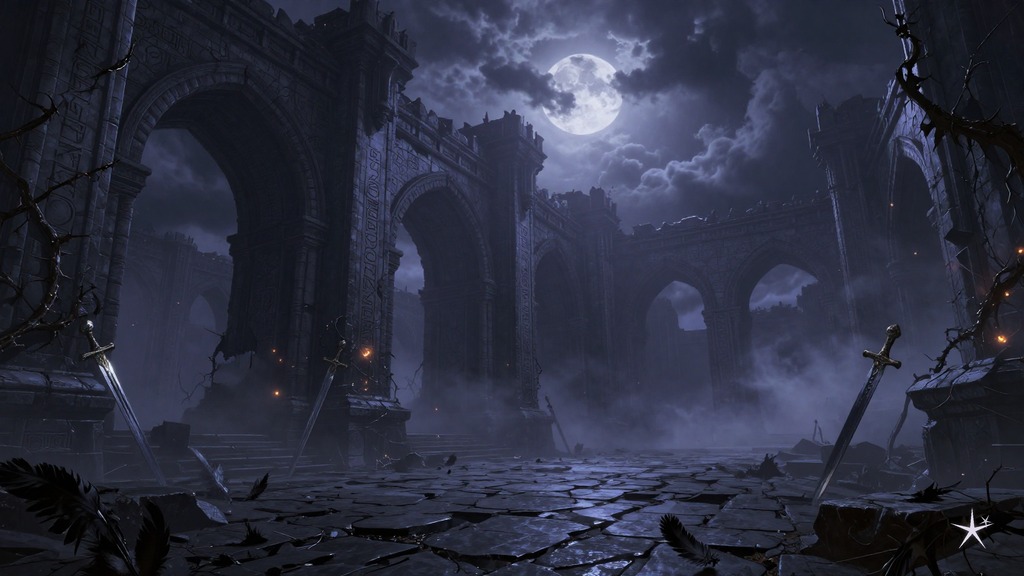
If you’re searching for the BLAME! manga reading order, here’s the short version: start with the main 10-volume series, then move to the prequel NOiSE, then tackle the side works. Everything else builds on the main story.
BLAME! is one of the most visually striking manga ever created — a sprawling, almost wordless trek through an impossibly vast megastructure where humanity has lost control of the world it built. Created by Tsutomu Nihei and serialized in Kodansha’s Monthly Afternoon (a long-running Japanese manga magazine), this completed 10-volume series has earned a dedicated following among fans of dark sci-fi and atmospheric horror driven by architectural imagery.
But BLAME! didn’t stop at the main series. There are a prequel, sequel one-shots, and a comedic parody spin-off — all part of the broader BLAME! universe. If you’re trying to figure out where to start and what order to tackle everything in, this guide has you covered.
Below you’ll find the full recommended BLAME! manga reading order, an explanation of why that order matters for a series this unusual, help picking the right edition, and some pointers for getting the most out of your first read. The whole main series is roughly 2,400 pages — most readers finish it across a few focused sittings or spread it over about a week.
BLAME! Manga Reading Order — The Complete List
Here’s the straightforward recommended reading order for BLAME! and all its related works:
1. BLAME! (Main Series) — 10 Volumes
This is the core. The main BLAME! series follows Killy, a lone figure wandering through an endlessly expanding megastructure in search of a human who carries the Net Terminal Gene — the key to regaining control of the chaotic, self-replicating city. Across 10 volumes (each volume being one numbered book in the series), the story unfolds through vast architectural vistas, brief but intense encounters, and a creeping sense of scale that’s unlike anything else in manga.
Start here. Everything else in the BLAME! universe assumes you’ve read this.
The main series is available in English as the Master Edition — 6 oversized omnibus volumes (collected editions that bundle multiple original volumes into one larger book) that contain all 10 original Japanese volumes. More on that edition below.
BLAME! 1 (Master Edition)
2. NOiSE — Prequel
NOiSE is set before the events of the main series and explores an earlier period of the megastructure’s history. It provides backstory on the world’s collapse and the origins of some of the forces Killy encounters.
Here’s the important thing: even though NOiSE is a prequel in terms of timeline, it was created while the main series was still running (serialized 2000–2001, midway through BLAME!’s 1997–2003 run). It’s designed for readers who already understand the world of BLAME! and want to see more of its history. Reading it before the main series will likely just confuse you, since it references concepts and structures that only make sense once you’ve experienced how the main story uses its art to tell the story without words.
Read this after finishing all 10 volumes of the main series.
NOiSE has been published in English, though availability can vary. Check major retailers for current stock.
3. BLAME! and So On — Companion Artbook
This is a companion artbook containing artwork, sketches, and supplementary material related to the BLAME! universe. It rewards readers who are already invested in the setting. Think of it as bonus material — not required, but a treat if you want more time in the megastructure.
Read after the main series.
Note: this artbook does not appear to have been released in English. It is currently available only in Japanese, making it inaccessible to most readers of this guide.
4. BLAME! Academy and So On — Parody + Two Sequel One-Shots (Optional)
This volume bundles three distinct works. The main portion, BLAME! Academy, is a sharp departure in tone — it reimagines the BLAME! cast in a school comedy setting. It’s a parody spin-off with no connection to the main storyline; the characters are recognizable, but the mood is completely different from the bleak, atmospheric main series.
The same volume also collects two sequel one-shots: NSE: NetSphere Engineer, set long after the events of BLAME! and following a different protagonist in the megastructure, and BLAME!², a full-color 16-page one-shot following a character named Pcell in the distant future after the main series. Neither is sold as a separate book — if you want to read them, this collected volume is where they live.
If you love the characters and want a lighthearted detour (plus the NSE epilogue-of-sorts), this can be fun. If you’re reading BLAME! purely for its dark atmosphere, you can safely skip it.
Optional. Read last if at all.
Quick Reference Table
| Order | Title | Type | Required? |
|---|---|---|---|
| 1 | BLAME! (10 volumes) | Main series | Yes — start here |
| 2 | NOiSE | Prequel | Recommended after main series |
| 3 | BLAME! and So On | Companion artbook | Optional |
| 4 | BLAME! Academy and So On | School parody + NSE sequel one-shot + BLAME!² sequel one-shot (collected together) | Optional — read last |
Why This Manga Reading Order Matters for BLAME!
With most manga, reading order is about avoiding spoilers. BLAME! is different. Reading order matters here because of how the story communicates.
The Art Tells the Story — And That Takes Getting Used To
BLAME! uses minimal dialogue. Entire chapters can pass with barely a word spoken. The story is told through architecture, through the scale of empty corridors and impossible structures, through the body language of characters dwarfed by their environment. In other words, the art itself carries the narrative instead of relying on words — and that way of storytelling isn’t something you pick up instantly. It builds across the early volumes of the main series.
If you start with NOiSE or one of the side works, you’re dropped into that approach without the gradual ramp-up that the main series provides. Volume 1 of BLAME! introduces you to the megastructure and teaches you how to read it. The side works assume you already know.
NOiSE Is a Prequel, Not a Starting Point
This trips people up. “It’s a prequel, so shouldn’t I read it first?” In terms of internal chronology, sure, NOiSE takes place earlier. But Tsutomu Nihei aimed it at readers who already know the world of BLAME! and want to understand more about its past. The prequel references concepts — the Net Terminal Gene, the Safeguard (a defense system within the megastructure), the nature of the megastructure’s growth — that are introduced and explored across the main series. Without that context, NOiSE reads as disconnected fragments rather than meaningful backstory.
The Manga Is Deliberately Disorienting at First
BLAME! is deliberately disorienting in its early chapters. You don’t get a narrator explaining the world. You don’t get a scene where someone sits you down and explains everything at once. You get Killy walking through impossibly huge spaces, encountering strange beings, and occasionally saying a few words. The confusion you feel is intentional — Nihei wants you to experience the megastructure the way Killy does, as something vast and only partially comprehensible.
This is why starting with the main series matters so much. If you start with a side work and feel lost, you might think you’re missing something or reading in the wrong order. If you start with Volume 1 of BLAME! and feel lost, that’s the story working exactly as intended — and the reading order here is designed to give you that experience properly.
Which Edition Should You Buy?
For English readers, there are two editions of the main BLAME! series to be aware of — though realistically, only one is a practical option for most people.
The Master Edition (Recommended)
The English Master Edition collects all 10 original Japanese volumes into 6 oversized omnibus books — meaning each Master Edition volume contains roughly two of the original books in a single, larger-format package. These are bigger than standard manga, and for BLAME! specifically, that format matters enormously.
BLAME!’s art is built around architectural scale. Nihei (the series creator) draws impossibly detailed structures — columns stretching into darkness, bridges spanning chasms that seem to go on forever, mechanical nightmares emerging from walls of circuitry. On a standard manga page, some of that detail gets compressed. On the larger Master Edition pages, you can actually see what Nihei drew. Fine details in the background, the texture of surfaces, the true scale of spaces — the oversized format lets all of it breathe.
For new readers, the Master Edition is the clear choice. It’s currently in print, widely available at major retailers, and presents the art the way it deserves to be seen.
Original Single-Volume Editions
The original English single-volume editions do exist, published as 10 individual books matching the Japanese release. However, these are largely out of print — meaning the publisher has stopped producing new copies, so remaining stock comes mainly from secondhand sellers, often at higher prices. Unless you’re a collector specifically seeking them, the Master Edition is the more practical and visually rewarding option.
A Note on Format and This Specific Series
With most manga, format is a preference — some people like collected editions, some prefer single volumes. With BLAME!, the format genuinely affects the reading experience. So much of the storytelling happens in full-page and double-page spreads (images that stretch across two facing pages) of architectural detail that the larger Master Edition pages aren’t just nice to have — they change how effectively the art communicates. If you’re going to read BLAME! once, read it big.
Pointers for First-Time BLAME! Readers
BLAME! reads differently from most other manga — and if this is your first manga, it reads differently from most other comics and graphic novels too. Here are some things that will help you get the most out of it, whether you’re a longtime manga reader or picking up your very first volume.
Slow Down
This is the single most important thing. BLAME! is not a series you speed-read. Many pages have no dialogue at all, and it’s tempting to flip through them quickly. Don’t. Every panel is doing work — establishing scale, showing environmental changes, building atmosphere. A page that looks like “just a hallway” might be telling you something crucial about where Killy is and what’s changed since the last chapter.
Give each page the time it’s asking for. Look at the backgrounds. Notice the details. BLAME! rewards patience more than almost any other manga.
The Megastructure Is a Character
The endlessly expanding city isn’t just a setting — it’s arguably the most important character in the story. Pay attention to how spaces change. Notice when architecture shifts from organic to mechanical, when corridors narrow or open up, when gravity seems to work differently. The megastructure communicates the story’s themes of uncontrolled growth, lost humanity, and technological chaos more effectively than any dialogue could.
Expect Minimal Dialogue
If you’re used to stories driven by conversation — whether in manga, novels, or anything else — the silence in BLAME! can feel jarring at first. Killy doesn’t narrate his thoughts. Characters don’t explain what’s happening. Conversations, when they happen, tend to be brief and functional.
This isn’t a flaw — it’s a deliberate choice. The silence reinforces the isolation and scale of the world. You’re experiencing the megastructure the way its inhabitants do: alone, surrounded by incomprehensible vastness, with very little information about what’s really going on.
Feeling Lost Is Normal
You will probably feel confused during the first few volumes. You’ll encounter characters and groups without clear introductions. You’ll see technology that isn’t explained. You’ll sometimes be unsure whether you just jumped a huge distance in space or time.
Lean into it. BLAME! is atmosphere-first storytelling. The feeling of being a tiny, lost figure in an impossibly vast structure is the point. Understanding will come gradually, in fragments, the same way it comes to the characters in the story. And some things will remain mysterious — that’s part of what makes the world feel genuinely alien and vast.
The Tone Is Bleak — And That’s the Appeal
BLAME! is not a story about triumph or hope in any conventional sense. The world is hostile. The megastructure is indifferent to human life. Violence is sudden and brutal. If you’re expecting the characters to rally and save the world, you’ll be waiting a long time.
Instead, BLAME! offers something rarer: a vision of a world so far beyond human control that simply surviving and moving forward becomes meaningful. The bleakness isn’t nihilistic — there’s a quiet determination in Killy’s endless walk that gives the story its emotional core. But don’t come to BLAME! expecting warmth. Come for the awe, the dread, and the sheer visual spectacle of a world gone incomprehensibly wrong.
Frequently Asked Questions
Is BLAME! good for manga beginners?
That depends on what draws you in. If you want a story with clear plot structure and lots of dialogue for your first read, BLAME! will be a challenging starting point — but challenging doesn’t mean wrong. If you’re drawn to visual storytelling, atmospheric world-building, and dark sci-fi, BLAME! is incredibly rewarding even as your very first manga. The reading order above is designed to give you the smoothest possible path into the series. Just know going in that it reads differently from most stories you’ve encountered — and that’s exactly what makes it special.
Do I need to read NOiSE before BLAME!?
No. Despite being a prequel in timeline, NOiSE was written during the main series’ run and is meant for readers already familiar with the BLAME! universe. Start with the main BLAME! series — Volume 1 through 10 (or Master Edition volumes 1 through 6) — and save NOiSE for afterward.
Is BLAME! Academy part of the main story?
No. BLAME! Academy and So On is a companion volume featuring the comedic parody BLAME! Academy, which reimagines the cast in a school setting. None of the bundled works — the parody, the NSE one-shot, or the BLAME!² one-shot — is part of the main narrative. You can safely skip the entire volume if you’re only interested in the core story and its world-building.
How many volumes is BLAME!?
The original Japanese release is 10 volumes. In English, the series is available as the Master Edition, which collects those 10 volumes into 6 oversized omnibus books. The content is the same — the Master Edition just packages it in fewer, larger books.
Is BLAME! finished?
Yes. BLAME! is a completed series. You can read the entire story from beginning to end without waiting for new volumes. The main story wraps up in Volume 10 (Master Edition Volume 6).
Is there a BLAME! anime?
There is a BLAME! animated film (made using computer-generated imagery) that was released on Netflix. It tells an original story set in the manga’s universe rather than directly adapting specific manga chapters. If you discovered BLAME! through that film, the manga is a natural next step — it offers a far deeper journey through that universe than the film’s standalone story, and delivers Nihei’s art in its original form. The film and manga are quite different experiences, and both have their strengths. The manga’s atmospheric, dialogue-sparse storytelling creates a sense of immersion that works uniquely on the page.
There was also an earlier six-part original net animation (ONA) produced back in 2003 by Group TAC, though the 2017 Netflix film is the adaptation most new readers encounter first.