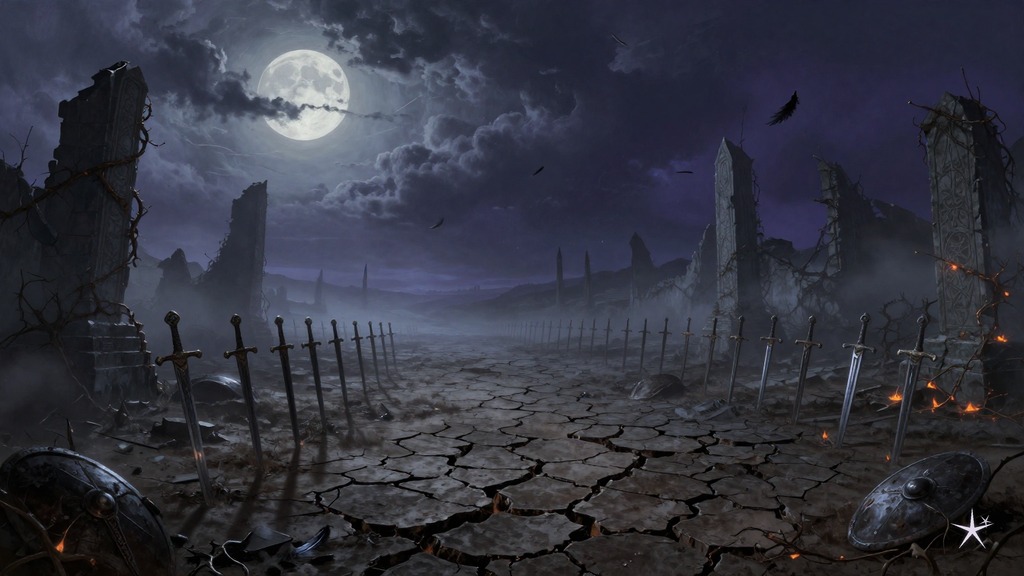
If you’ve ever wanted an isekai — a story where characters get transported to another world — that actually hurts, where death is cheap but the trauma isn’t, I’m Standing on a Million Lives (100-man no Inochi no Ue ni Ore wa Tatteiru) is one of the most underrated dark fantasy manga out there. It looks like a game-world adventure on the surface, but underneath it’s a bleak, morally tangled series that has more in common with survival horror than your typical power-fantasy isekai.
This guide covers the manga’s available volumes, breaks down the story arcs (the major story phases that make up the series), compares the manga to the anime adaptation, and helps you figure out the best way to buy and read the series. If you’re here after watching the anime and want to know where to pick up the manga, jump straight to the Manga vs. Anime section below.
I’m Standing on a Million Lives Manga Volumes — At a Glance
Created by: Naoki Yamakawa (story) and Akinari Nao (art)
Originally serialized in: Bessatsu Shōnen Magazine (a manga anthology published by Kodansha in Japan, where chapters were released before being collected into book form)
English publisher: Kodansha USA
Volumes released: 18 in English / 24 in Japanese (as of this writing)
Status: Ongoing — the Japanese edition is still releasing new volumes, and the English translation is in progress
Format: Available in both print and digital
Genre: Dark fantasy, isekai, death game (a genre where characters are forced into life-or-death scenarios with strict rules)
Here’s the short version: this is an ongoing dark fantasy isekai about a group of junior high school students repeatedly summoned into a brutal fantasy world to complete quests. They die — a lot. They come back — usually. And the psychological weight of that cycle, combined with escalating moral dilemmas and a conspiracy that bridges both worlds, gives the series a genuine edge that most isekai manga never even attempt. The series contains graphic depictions of violence and some mature themes, so readers sensitive to that content — or parents buying for younger teens — should be aware going in.
The structure is quest-based. Each arc sends the party (the group of characters adventuring together) into a new mission with higher stakes, darker choices, and deeper lore. It starts as a survival story and builds toward something much bigger. The first 18 English volumes are available from Kodansha USA in both digital and print editions, with further volumes expected as the Japanese edition continues.
Story Arcs by Volume — How the Quests Unfold
One of the things that makes this series tick is its quest structure. Rather than a single continuous journey, the story is divided into distinct missions — each one dumping the characters into a new scenario in the fantasy world with specific objectives and a ticking clock. Fail, and the consequences are permanent. The quests escalate in scope and darkness as the series progresses, and each arc peels back another layer of the larger mystery.
Let’s walk through the major phases of the story without heavy spoilers.
Early Quests — Forced into a Cruel Game
The series opens with Yotsuya Yuusuke, a detached, misanthropic ninth grader who gets pulled into a fantasy world alongside two classmates. His assigned class — the role the game system gives him, like warrior or mage in a role-playing game — is Farmer. With a hoe and sickle.
This isn’t played for comedy. The early quests are brutal introductions to the series’ core mechanic: when you die in the fantasy world, you revive after a short countdown — but the death itself is fully real. You feel it. You remember it. And the missions don’t pause while you’re dead, so your teammates have to survive without you.
These opening volumes establish the death-and-revival system and, more importantly, the psychological toll it takes. The characters aren’t seasoned adventurers. They’re teenagers who scream, panic, and break down. Trust between party members is built slowly and painfully, because when someone dies covering your escape, that bond gets forged in a very different fire than friendship.
The early arcs also establish Yotsuya as one of the more unusual protagonists in isekai manga. He’s not kind. He’s not particularly brave. He’s calculating and cold in ways that make the people around him uncomfortable — and the reader, too. The series doesn’t frame this as cool or aspirational. It frames it as a survival mechanism that has real costs.
Mid-Series Quests — War, Politics, and Moral Gray Areas
As the quests progress, the scope expands dramatically. What starts as “survive the monsters and complete the objective” shifts into full-scale geopolitical conflict within the fantasy world. The party gets drawn into wars, political betrayals, and situations where there’s no clean moral answer.
This is where the series earns its dark fantasy credentials. Yotsuya’s pragmatism — the same coldness that kept him alive in the early quests — starts creating real ethical problems. He makes decisions that save some people and doom others, not because he’s evil but because the quests are designed to force impossible choices. The series doesn’t let him off the hook for those decisions, either. Other characters push back. Relationships fracture.
The mid-series volumes also introduce rival players and begin pulling back the curtain on the Game Master — the mysterious figure who summons players and designs the quests. This entity controls the rules of the fantasy world and has been orchestrating the quests from the beginning, but its true motives are hidden. The background mythology deepens considerably here, and hints start dropping that the fantasy world and the real world are more connected than anyone realized.
For readers who enjoy morally complex manga where heroes make ugly choices, or stories that mix life-or-death tension with conspiracy reveals, this stretch of the manga is where I’m Standing on a Million Lives really finds its identity.
Later Quests — The Truth Behind the Game
As the series pushes deeper into its second half, the threads connecting the fantasy world to reality start pulling taut. The conspiracy that has been building since the mid-series arcs comes into sharper focus, and the stakes escalate from “survive this quest” to something existential in scale.
Without spoiling the specifics, the later volumes begin addressing the central mysteries head-on — the nature of the Game Master, the true purpose of the quests, and why these specific people were chosen. Yotsuya’s character arc deepens as his pragmatism collides with questions that can’t be solved by cold calculation alone.
The Japanese serialization entered what has been described as its “final decisive battle” phase, but the story has not yet concluded — the series is still ongoing in Japan at 24 volumes, and the English translation currently covers 18 of those. That means English readers are heading into this escalation in real time, with more volumes still to come. The arc is dense with reveals and action, and the pacing tightens considerably compared to some of the mid-series stretches, but how the series ultimately resolves its central mysteries remains to be seen.
What Makes This Dark Fantasy — Not Just Another Isekai
There are a lot of isekai manga out there. Most of them are comfort food — power fantasies where the protagonist arrives in a new world already overpowered and proceeds to collect allies and accolades. I’m Standing on a Million Lives is emphatically not that.
The death-game framing changes everything. Characters die graphically and repeatedly. The revival mechanic means death isn’t permanent, but the series treats it with psychological realism — the pain, the fear, the memory of dying doesn’t go away just because your body regenerates. This creates a constant atmosphere of dread that most isekai manga actively avoid.
Yotsuya is a genuine anti-hero — a protagonist you follow not because he’s admirable, but because his flawed perspective drives the story. He’s cold, pragmatic, and morally ambiguous in ways that make him genuinely uncomfortable to root for at times. He’s not a wish-fulfillment stand-in for the reader. He’s a kid with borderline sociopathic tendencies who happens to be useful in a crisis, and the series interrogates what that means rather than celebrating it.
The fantasy world has real consequences. Civilians die. Political systems collapse. Alliances formed in one quest fall apart in the next. There are no easy heroic resolutions — the party often “wins” a quest only to realize that their victory created new problems for the people living in that world.
If you’re looking for an isekai that doesn’t flinch from its darkest implications, this series belongs on your radar. Fans of manga like Berserk (a dark medieval fantasy known for brutal violence and moral bleakness), Gantz (a death-game series with a nihilistic edge), or Re:Zero (an isekai built on repeated death and psychological suffering) will find familiar tonal territory here. I’m Standing on a Million Lives isn’t as graphically intense as Berserk or as nihilistic as Gantz, but it occupies a similar space — one where the fantasy setting amplifies human ugliness rather than providing escape from it.
Manga vs. Anime — Where the Adaptation Stops
I’m Standing on a Million Lives received an anime adaptation — an animated television version of the story — that covers only a portion of the manga. If you’ve watched the anime and are wondering where to pick up the manga, here’s what you need to know.
The anime’s two seasons adapt approximately the first several volumes of the manga, covering the earlier quest arcs but stopping well before the mid-series political arcs or the conspiracy reveals that come later. The pacing is also condensed — the anime moves through quest arcs faster than the manga, which means some character development and world-building details get trimmed.
If you’ve watched the full anime and want to continue in the manga, start around Volume 6. The anime condenses and rearranges some material from the volumes it covers, so starting a volume or two before where the anime’s final episode corresponds to ensures you catch context and character moments that were cut or compressed in the adaptation. From Volume 6, you’ll have solid footing heading into the material the anime never reached — and the best parts of the manga are still ahead of you.
If you haven’t watched the anime, the manga is the more complete experience by a wide margin. The anime is a reasonable introduction to the premise and characters, but the series’ real strengths — the moral complexity, the conspiracy mythology, the deepening character arcs — only come through across the manga’s full run.
That said, the anime isn’t bad. The animation quality varies, and it doesn’t capture the manga’s bleakest moments with the same impact, but it works as a sampler. If you watched it and thought “this has potential but feels incomplete,” that’s because it is — the manga delivers on the promise the anime only hints at.
Which Edition to Buy — Print, Digital, and Availability
Kodansha USA publishes the English edition of I’m Standing on a Million Lives manga volumes in standard single-volume format (individual books each collecting several chapters). There are no known deluxe editions, omnibus collections (larger books combining multiple volumes into one), or special format releases for this series in English — it’s the standard single-volume releases.
Print vs. Digital: Both are widely available. Digital is convenient for binge-reading and typically available immediately, while print volumes are great for collectors who want the series on their shelf. The print editions use Kodansha’s standard manga size and paper quality.
Availability: Kodansha USA has published 18 English volumes so far, with the Japanese edition further ahead at 24 volumes. New English volumes are expected to continue releasing as the series progresses in Japan. Earlier volumes in long-running series can occasionally go in and out of stock in print, so if you’re building a physical collection, it’s worth grabbing volumes when you see them rather than assuming they’ll always be on the shelf.
For readers who want to jump in and start collecting, the most practical approach is to grab the first few volumes and see if the series clicks for you before committing to the full run. The opening volumes establish the tone and core mechanics quickly, so you’ll know within the first couple of books whether this is your kind of dark fantasy.
I’m Standing on a Million Lives 1
Frequently Asked Questions
How many I’m Standing on a Million Lives manga volumes are there?
As of this writing, 18 volumes are available in English from Kodansha USA, while the Japanese edition has reached 24 volumes. The series is still ongoing, so more English volumes are expected as Kodansha USA continues the translation. That’s already enough for a substantial, multi-arc reading experience — from the opening quests through escalating conspiracy reveals — with more to come.
Is the manga finished?
No. The Japanese serialization in Bessatsu Shōnen Magazine is still ongoing as of this writing, and Kodansha USA continues to publish the English translation. There are currently 18 volumes available in English and 24 in Japanese, with more English volumes expected as the translation progresses. The series is actively releasing new material — you won’t run out of story to read anytime soon, but it hasn’t reached its conclusion yet.
Are all the volumes available in English yet?
Not yet. Kodansha USA has published 18 English volumes so far, but the Japanese edition is further ahead at 24 volumes and still ongoing. New English volumes are expected to continue releasing as the series progresses in Japan. If you start now, you’ll have 18 volumes of material to read — more than enough for a substantial reading experience — with additional volumes on the way.
Should I read the manga or watch the anime first?
The manga is the more complete experience. The anime’s two seasons adapt approximately the first several volumes of the series, and the manga currently has 18 English volumes available — covering far more of the story than the anime reaches. If you’re going to choose one, choose the manga — you’ll get more of the story, deeper character development, and the full impact of the series’ darkest moments.
That said, the anime works fine as a preview. If you watch it and want more, pick up the manga around Volume 6 to catch what the anime trimmed, and then continue through the remaining available volumes. The story goes much, much further than the anime reaches.
Is this series suitable for younger readers?
This is a dark fantasy series with graphic death scenes, psychological horror elements, and morally complex themes. It’s serialized in a shōnen magazine (a publication aimed at teen boys), but the content skews older in tone. Readers who are comfortable with intense action manga that features character death, violence, and moral ambiguity will be fine here, but it’s not a light read. Parents buying for younger teens should be aware of the violent content and consider previewing the first volume.
—
I’m Standing on a Million Lives is one of those series that deserves a bigger audience than it has. It takes the familiar isekai framework and does something genuinely uncomfortable with it — asking what happens when the fantasy world treats human life as expendable and the protagonist starts agreeing. If that sounds like your kind of dark fantasy, grab volume one and see where the series takes you.