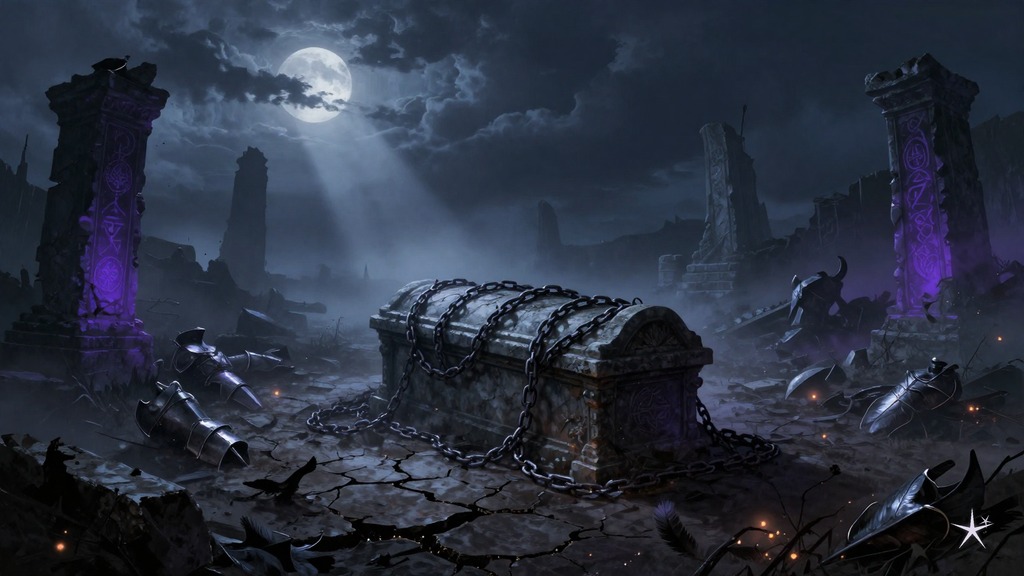
A girl wanders a war-scarred continent with a coffin strapped to her back. Inside isn’t a body — it’s something worse. The coffin is empty, waiting to be filled with the scattered remains of a dead emperor. That’s the premise of Chaika: The Coffin Princess (Hitsugi no Chaika), and it’s one of the grimmest hooks in modern fantasy manga. If you’re searching for how many Chaika manga volumes there are, the series runs for 5 volumes and is a completed series. Below, we’ll cover what the story is about, what each phase of the manga delivers, and how to get your hands on it.
Chaika Manga Volumes: Series Overview and Volume Count
Chaika: The Coffin Princess is a manga adaptation of Ichirou Sakaki’s light novel series of the same name. Light novels are a Japanese publishing format — essentially short, illustrated novels typically serialized in magazines — and Sakaki’s Chaika series was the original source material for this manga. The manga version was illustrated by Shinta Sakayama.
The story follows Chaika Trabant — a mysterious young woman who claims to be the daughter of the fallen Emperor Gaz — as she recruits a pair of down-on-their-luck saboteurs (trained mercenary-fighters in this world’s terminology) named Toru and Akari Acura to help her collect the emperor’s dismembered remains from the war heroes who divided his body among themselves as trophies.
The manga ran for 5 volumes and is a completed series. Volume 5 is the final volume.
Chaika: The Coffin Princess, Vol. 5 (final volume)
It’s worth flagging that the Chaika franchise has multiple media versions — the original light novels, an anime adaptation (anime refers to Japanese animated television and film), and this manga. The manga adaptation covers its own portion of the story and doesn’t necessarily encompass the full scope of the light novels. If you’re coming from the anime and expecting an identical retelling, the manga is a more condensed experience with its own visual style and pacing.
At only five Chaika manga volumes, this is a tight, focused read — the kind of series you can finish in a weekend. For dark fantasy fans who prefer compact stories over sprawling epics, that’s a genuine strength.
Story Arcs by Volume — A Dark Journey to Gather Forbidden Remains
The core plot of Chaika revolves around a single, deeply unsettling quest: retrieve the body parts of a dismembered tyrant-emperor from the heroes who killed him and kept his remains as sources of magical power. Every story arc — meaning each distinct phase of the narrative that builds toward its own climax before feeding into the next — is built around tracking down a different hero and confronting whatever twisted arrangement they’ve made with their “trophy.”
The Opening Hook — Meeting Chaika and the Acura Siblings
The early volumes establish the post-war world and introduce the central trio. Toru Acura is a saboteur — a trained mercenary-assassin in this setting’s terminology — who has been left purposeless now that the great war is over. His sister Akari is equally deadly and equally adrift. When they encounter Chaika in the forest, her broken speech, strange coffin, and dangerous mission give them something they’ve been missing: a reason to fight.
These opening chapters do a lot of heavy lifting. They establish the grim economics of a post-war society where soldiers have no function, the eerie nature of Chaika’s quest, and the moral question that hangs over everything — should they really be helping someone reassemble a dead emperor?
The Escalating Quest — Rival Chaikas and Deepening Mystery
As the group tracks down Emperor Gaz’s remains, the story introduces one of its most disturbing twists: Chaika is not the only Chaika. Other girls, each claiming to be the emperor’s daughter, are on the same quest. Some are friendly. Some are hostile. All of them share fragmentary memories and an obsessive drive to collect the remains.
This “Chaika clone” element pushes the series into territory that could be called identity horror — a type of storytelling where the dread comes not from monsters or violence but from the characters losing certainty about who they are and whether their sense of self is even real. Who is the real Chaika? Are any of them real? Were they created specifically to fuel this mission? The mid-story arcs layer political conspiracy and existential dread onto what initially seems like a straightforward adventure built around collecting a series of quest objects.
The Dark Conclusion — What the Remains Are Really For
The later volumes build toward the revelation of why Emperor Gaz’s body was scattered in the first place, and what will happen if the remains are successfully reunited. Without spoiling the specifics, the truth reframes the entire quest in a much darker light — the heroes who dismembered the emperor may have had far better reasons than simple war-trophy collecting.
Across just five volumes, the manga moves briskly through this material. Certain arcs that received more room to breathe in the light novels are compressed here, but the core emotional beats — the growing bond between Chaika and the Acura siblings, the horror of the Chaika clones, and the moral weight of the quest — come through clearly.
What Makes Chaika’s World a Dark Fantasy
Chaika doesn’t always get mentioned alongside the heaviest dark fantasy manga, but the underlying premise is genuinely grim once you sit with it. Here’s what earns it the label:
A Civilization Built on War, Rotting Without It
The setting isn’t a world at war — it’s a world after war, and that’s almost worse. The great conflict against Emperor Gaz defined an entire generation. Heroes became legends. Soldiers had purpose. Economies ran on military production. Now the war is over, and society is collapsing inward. Former soldiers become bandits. Trained killers like the Acura siblings can’t find work. The heroes who slew the emperor cling to his remains not just as trophies but as sources of immense magical power — and they aren’t eager to give them up.
This post-war decay gives the story a melancholy weight that sets it apart from standard action-fantasy.
The Grisly Core Premise
Let’s be direct about this: the plot revolves around collecting a dismembered corpse. Emperor Gaz’s body was divided among the heroes who killed him, and each piece retains enormous magical energy. The heroes use these remains — a hand here, an eye there — as fuel for their own power. Chaika’s quest to gather them into her coffin is essentially grave-robbing from people who are very much alive and very much unwilling to part with their prizes.
The manga doesn’t shy away from the grotesque implications of this setup, though it handles the imagery with more restraint than some of the harder-edged dark fantasy manga out there.
Moral Ambiguity Baked Into Every Chapter
Toru and Akari know that reassembling the remains of a tyrant is probably a terrible idea. They do it anyway, partly for money, partly because they need purpose, and partly because they’ve come to care about Chaika as a person. The story never lets this tension go slack. Even as you root for the protagonists, the question lingers: are they doing the right thing?
This kind of moral ambiguity — where the story refuses to tell you whether the heroes are actually heroic — is one of the defining features of dark fantasy as a genre. It’s what separates stories like Chaika from more straightforward good-versus-evil adventures.
Identity Horror Through the Chaika Clones
Multiple girls sharing the same name, same appearance, same fragmented memories, same obsessive mission — all potentially manufactured for a purpose none of them understand. The Chaika clone concept turns what could be a simple fantasy quest into something far more unsettling. It asks questions about personhood, manufactured identity, and whether a life has meaning if it was designed from the start to serve someone else’s agenda.
Magic Rooted in Death
The magic system in Chaika’s world draws power from remains and memories. This isn’t a coincidental flavor detail — it’s thematically central. Power in this world is literally extracted from the dead, and the greatest source of power is the dead emperor’s body. The entire conflict is a fight over who gets to profit from death.
Manga vs Anime — Where the Adaptation Diverges
The Chaika anime (the animated television adaptation) covered the story across two seasons and gave the franchise its widest audience. If you watched the anime first, you’re probably wondering whether the manga retreads the same ground or offers something different.
The short answer: the manga is a different experience, but not a contradictory one.
The anime compressed significant material from the light novels, particularly in its second season, which rushed toward a conclusion that left many viewers feeling like key story elements were glossed over. The manga, being its own adaptation of the source material, has different pacing and covers its own selection of events. At five volumes, it’s more compact than the anime’s full run, so don’t expect it to fill in every gap the anime left.
The visual interpretation is the biggest difference. Manga gives you static panels with detailed art, which suits the dark and grotesque elements of the setting differently than animation does. The character designs carry over from the light novel illustrations but have their own flavor on the page.
For dark fantasy fans specifically: if you’re drawn to the premise — the dismembered emperor, the moral ambiguity, the post-war decay — the manga delivers those elements effectively in a tight package. If you want the most complete version of the story, the original light novels are the fullest source, though not all volumes have been officially released in English.
Which should you start with? If you want a quick taste, the manga’s five volumes are the fastest entry point. If you prefer animation, the anime gives you more total story. Neither is wrong — pick the format you enjoy most.
Which Edition to Buy
Here’s where things get practical. The Chaika manga volumes have had English-language publication through Yen Press. Availability can fluctuate depending on print runs and retailer stock.
Physical vs Digital
As with many manga series that ran for a limited number of volumes, you may find that physical copies of Chaika are easier to track down for some volumes than others. Digital editions — available through platforms like Kindle, Kobo, and other major digital manga storefronts — tend to remain available more consistently, so if you want guaranteed access to all five volumes, digital is the safer bet.
If you prefer physical copies, checking major online retailers for current stock is your best approach. Volumes from shorter series sometimes go out of print and then become harder to find at reasonable prices through third-party resellers.
The Final Volume
Volume 5 wraps up the manga’s storyline. If you’ve been collecting and are missing the conclusion, this is the one to prioritize — final volumes of completed series tend to be the ones collectors hunt for.
Light Novel vs Manga — Which Delivers More Dark Fantasy?
The light novels are the original source and contain the most complete version of the story. The manga is an adaptation that covers a portion of that narrative with its own artistic interpretation. If you’re specifically chasing the dark fantasy atmosphere — the grim world-building, the moral complexity, the horror elements — both deliver, but the light novels have more room to explore the setting in depth. Note that not all of the light novel volumes have been officially released in English, so availability is limited compared to the manga.
The manga’s advantage is visual storytelling. Seeing the coffin, the remains, the Chaika clones rendered on the page adds a layer of visceral impact that prose handles differently. Five volumes is also a much smaller time commitment than a full light novel series.
For most readers, the ideal approach is to start with whichever format appeals to you and branch out if you want more.
Frequently Asked Questions
How many Chaika manga volumes are there?
The manga adaptation runs for 5 volumes, with Volume 5 being the final installment.
Is the Chaika manga finished?
Yes. The series is complete at 5 volumes. You can read the entire manga run without worrying about cancellation or an indefinite hiatus (a long pause in publication, which is a common concern with ongoing manga series).
Is Chaika – The Coffin Princess considered dark fantasy?
Absolutely. The premise involves collecting a dismembered emperor’s body parts from the heroes who kept them as trophies, set against a decaying post-war civilization. The story features moral ambiguity, identity horror through the Chaika clone concept, and a magic system literally fueled by death. It’s not as graphically violent as some manga aimed at older adult audiences, but the thematic darkness is consistent and central.
Should I read the manga or watch the anime first?
Either works. The manga is a faster experience at five volumes and gives you a self-contained version of the story. The anime covers more narrative ground across its two seasons but rushes its ending. If you prefer reading, start with the manga. If you prefer watching, start with the anime. The light novels offer the most complete version of the story for readers who want the full picture.
Are there multiple Chaika manga series?
The main manga adaptation is the primary series running five volumes. The Chaika franchise includes the original light novels and the anime adaptation. There have been references to other manga content related to the franchise, but the five-volume series is the main manga run to look for when searching for Chaika manga volumes.
Is the manga appropriate for younger readers?
Chaika deals with war, dismemberment (as a plot element), identity crisis, and morally gray characters. It’s a dark fantasy aimed at an older teen to adult audience. The violence isn’t extremely graphic compared to harder-edged manga series, but the themes are mature. Use your own judgment based on the reader’s comfort with dark subject matter.
—
Chaika: The Coffin Princess packs a remarkably grim premise into a compact five-volume run. A girl, a coffin, a dead emperor in pieces, and a world that doesn’t know whether it wants those pieces reunited or buried forever. If that pitch grabs you, five Chaika manga volumes is all it takes to find out how the story ends.