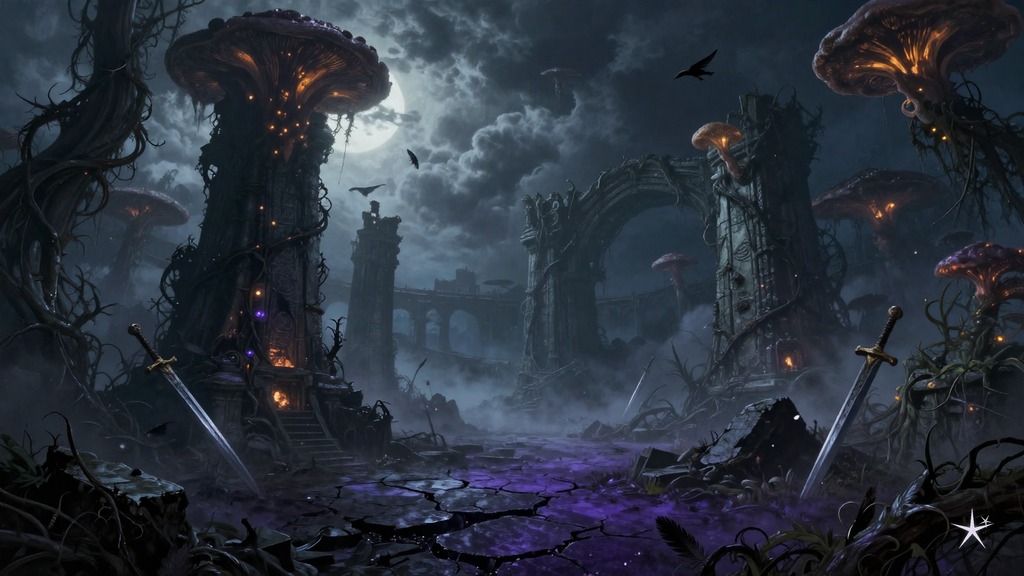
Nausicaä of the Valley of the Wind — A 7-Volume Dark Fantasy Epic
The Nausicaä of the Valley of the Wind manga volumes tell a story far bigger than most readers expect. Written and illustrated by Hayao Miyazaki, this 7-volume, 59-chapter dark fantasy epic (風の谷のナウシカ) is a completed series — no cliffhangers, no unfinished storylines. If you’ve only seen the 1984 animated film — directed by Miyazaki and produced by Topcraft, the studio whose assets later became Studio Ghibli (the renowned animation house behind Spirited Away and My Neighbor Totoro) — you’ve experienced maybe a quarter of this story.
The manga was originally published chapter by chapter in Animage magazine from February 1982 to March 1994 — a twelve-year run. Those individual chapters were then gathered into collected book form by Tokuma Shoten, with the final volume hitting shelves in December 1994.
Cumulative sales have surpassed 17 million copies, which speaks to just how deeply this story has resonated across decades and languages. In English, VIZ Media publishes the complete series as a 2-hardcover box set that collects all seven volumes’ worth of material in 1,104 pages.
What surprises most newcomers is the tone. The film is warm, hopeful, and ultimately optimistic — a Miyazaki classic. The manga? It’s one of the bleakest, most morally complex fantasy works you’ll ever read. It earns the “dark fantasy” label in ways that catch even seasoned manga readers off guard.
How the Nausicaä Manga Volumes Unfold
The manga is set in a post-apocalyptic world choked by the Sea of Corruption — a vast toxic jungle spreading across the earth, filled with colossal insects and deadly spores. Warring human empires fight over the remaining habitable land while ancient bioweapons slumber beneath the surface. Nausicaä, princess of a tiny windswept valley, gets drawn into conflicts that dwarf her small kingdom.
Here’s how the story breaks down across the seven volumes.
Volumes 1–2: The Valley, the Ohmu, and the Tolmekian Invasion
These opening volumes establish the world: the poisoned forests, the giant Ohmu (massive armored insects that swarm the toxic jungle), Nausicaä’s gift for communicating with the natural world, and the Tolmekian Empire’s military invasion that shatters her valley’s peace. The Tolmekians are one of the story’s major fictional nations — an industrial military power hungry for territory. Nausicaä is pulled into the conflict as a hostage and warrior, and the story builds toward the resurrection of a God Warrior — one of the ancient bioweapons that destroyed the old world.
This is roughly where the 1984 film ends. The movie wraps things up on a hopeful, almost triumphant note. The manga keeps going for five more volumes, and the tone shifts dramatically.
Volumes 3–4: The Dorok War
The scope of the story explodes. The Tolmekian Empire’s war against the Dorok Principalities — a theocratic federation on the other side of the continent — engulfs entire regions. Holy wars are waged with engineered plagues and biological weapons. Entire populations are displaced or exterminated. Nausicaä finds herself caught between imperial armies, religious fanatics, and ecological catastrophes that threaten to wipe out what’s left of humanity.
These volumes are where the manga fully separates itself from the film. The moral landscape becomes jagged and uncomfortable. Leaders on every side believe they’re saving their people. Nobody is purely right.
Volumes 5–7: The Crypt of Shuwa and the Truth of the World
The final stretch takes the story into its darkest territory. Nausicaä reaches the Crypt of Shuwa — an ancient sealed vault — that holds the truth about humanity’s collapse and the engineered nature of the world itself. Everything the reader thought they understood about the Sea of Corruption, the insects, and even humanity’s biology gets upended.
Nausicaä is forced to make a devastating choice about humanity’s future. The ending is profound, morally challenging, and nothing like the resolution of the film. It’s the kind of conclusion that stays in your head for weeks.
The escalation across these seven volumes is remarkable. What begins as an ecological adventure becomes a sprawling meditation on war, survival, and whether a broken species deserves another chance.
Nausicaa of the Valley of the Wind, Vol. 7 (final volume)
What Makes Nausicaä a Dark Fantasy Masterpiece
A Post-Apocalyptic World Built on Ruins
The fantasy setting is actually the wreckage of an advanced civilization. The toxic jungles, the giant insects, the crumbling ruins beneath the sand — all of it traces back to humanity’s self-destruction. This isn’t a world where magic is whimsical. It’s a world where the “magic” is the lingering consequence of bioengineering and weapons of mass destruction. The deeper Nausicaä digs, the more horrifying the foundations become.
Moral Complexity Without Easy Answers
There are no true villains here. The Tolmekian princess Kushana wages brutal war, but she’s trying to protect her people from extinction. The Dorok priests unleash biological horrors, but they’re fighting against imperial conquest. Even the God Warriors — towering weapons of apocalypse — are portrayed with something close to tragedy.
Nausicaä herself isn’t exempt. She kills. She makes choices that doom some people to save others. By the final volume, she makes a decision so morally enormous that readers still debate whether she was right. Miyazaki doesn’t hand you a comfortable answer.
Ecological Horror and the Question of Survival
The toxic jungle isn’t just a setting obstacle — it’s a philosophical argument. The Sea of Corruption is slowly purifying the poisoned earth, but the process will take centuries, and humanity can’t survive the spores. The manga asks, with increasing intensity, whether humanity has the right to interfere with a planet that’s trying to heal from what humans did to it.
Holy wars waged with engineered plagues, cycles of violence that repeat across centuries, civilizations that destroy themselves with the same weapons over and over — the themes hit hard.
Art That Grows More Haunting Over Twelve Years
Miyazaki spent over a decade drawing this manga, and his art evolved dramatically across that span. The early volumes have a lighter, more open illustration style that feels approachable — if you’re coming from the film’s aesthetic, you’ll feel at home right away. By the later volumes, the pages are dense with detail — vast battle sequences, intricate toxic jungle landscapes, and moments of visual horror that are genuinely unsettling. The shift is gradual enough that it never feels jarring; you grow into the heavier artwork as the story itself grows heavier. It’s completely hand-drawn, with a level of craft in the environments and mechanical designs that reflects Miyazaki’s obsessive attention to detail.
Manga vs. the 1984 Film — Where the Adaptation Stops
The Nausicaä film, released on March 11, 1984, was made while the manga was still being published. Miyazaki had only completed the early portions of his story, and the film reflects that: it adapts roughly the material from the first two volumes and crafts its own ending.
The film’s conclusion is hopeful and clean. Nausicaä’s connection with the Ohmu resolves the central conflict, the toxic jungle retreats, and the story ends on a note of reconciliation between humanity and nature.
The manga goes somewhere completely different.
Over the remaining five volumes, the story plunges into holy wars between empires, mass biological warfare, and questions about the fundamental nature of humanity’s existence. Characters who appear briefly or not at all in the film — like the Dorok Emperor and the reborn God Warrior — become central to the plot. The toxic jungle’s true purpose is revealed, and it’s far more disturbing than anything the film suggests.
Nausicaä doesn’t save the world in a conventional sense. She makes a choice that some readers see as courageous and others see as monstrous. Miyazaki deliberately leaves the moral weight unresolved.
If you loved the film, the manga isn’t a retread — it’s an expansion into territory that’s darker, stranger, and vastly more challenging. Readers who only know the movie will find what amounts to an entirely different work sharing the same opening act.
Which Edition to Buy
The English Box Set
The primary English edition available is the Nausicaä of the Valley of the Wind Box Set published by VIZ Media. It collects the entire series in two large hardcover volumes totaling 1,104 pages. It was originally released on November 6, 2012 (ISBN: 9781421550640) and is rated Teen — though given the manga’s depiction of war, mass death, and biological horror, the content runs darker than that rating might suggest, so keep that in mind if you’re considering it for a younger reader.
Note that the English box set packages the story into 2 hardcovers rather than mirroring the 7-volume structure of the Japanese edition. You’re getting the complete story — it’s just bound differently.
The hardcovers are oversized, which does justice to Miyazaki’s detailed artwork. The pages reproduce well, and the binding holds up to rereading.
The Japanese Edition
The original Japanese volumes were published by Tokuma Shoten in the Animage Comics Wide Edition, a large-format release across 7 volumes. For collectors or Japanese-language readers, this is the format Miyazaki’s work was originally designed for.
Individual English Volumes
VIZ Media also released individual volumes in English. Volume 7, the final installment that concludes the saga at the Crypt of Shuwa, is the capstone of the series and contains some of the most powerful sequences Miyazaki ever drew. Availability of individual volumes can vary — some may be easier to find than others depending on print runs — so if you’re going this route, check stock at major retailers before committing to the format.
Which Format Should You Pick?
For most readers coming to the series fresh, the 2-hardcover box set is the most practical way in. You get everything in one purchase, the format is solid, and you won’t end up hunting for individual volumes.
If you already own some individual volumes or prefer the feel of single books, picking up the remaining volumes individually works fine too — the story is the same regardless of how it’s bound.
Frequently Asked Questions
How many Nausicaä of the Valley of the Wind manga volumes are there?
Seven volumes in the original Japanese edition, published by Tokuma Shoten. The series contains 59 chapters total — each chapter being an individual installment of the story, with multiple chapters collected into each volume.
Is the manga finished?
Yes. Nausicaä of the Valley of the Wind is a completed series. The final Japanese volume was released in December 1994. There’s no waiting for future installments — the whole story is available right now.
Who created Nausicaä?
Hayao Miyazaki (宮崎駿) wrote and illustrated the entire manga himself. It was published chapter by chapter in Animage magazine from 1982 to 1994. This is the same Miyazaki known for directing films like Spirited Away and Princess Mononoke — but the Nausicaä manga shows a side of his storytelling that’s considerably darker than his filmography suggests.
How can I read Nausicaä in English?
VIZ Media publishes the complete series in English. The most widely available format is the 2-hardcover box set containing all 1,104 pages of the series, stocked at major book retailers.
Is the manga darker than the movie?
Significantly. The film adapts only the earliest portion of the story and ends on an optimistic note. The manga continues for five more volumes into territory involving holy wars, biological weapons, genocide, and a morally challenging conclusion that the film never approaches. If the movie is a gentle fairy tale about nature, the manga is a sprawling, unflinching examination of whether humanity can — or should — survive its own worst impulses.
The tonal difference catches a lot of people off guard, and that’s part of what makes the manga so rewarding. It takes the foundation the film established and builds something much larger and much harder to shake off.