How many Fist of the North Star manga volumes do you need to buy? The short answer: 18 hardcover volumes from VIZ Media, and the series is complete. Kenshiro’s post-apocalyptic saga is one of the most iconic manga ever created — and with a brand new anime that aired its first part in spring 2026 (the second part is set for 2027), there’s never been a better time to pick up the source material. But figuring out which edition to buy and what all those different Japanese printings mean can get confusing fast.
Let’s clear it all up.
How Many Fist of the North Star Manga Volumes Are There?
The answer for English readers: 18 hardcover volumes from VIZ Media, and the series is complete. The final volume (Vol. 18) was released on September 23, 2025, so you can now read the entire story from start to finish without waiting for anything.
The longer answer is that in Japan, the same 245 chapters have been repackaged into multiple editions with different volume counts over the decades. That means you’ll see different numbers floating around online — 18, 27, or 31, depending on the edition — and they’re all technically correct for their respective printings. More on that below.
Fist of the North Star was written by Buronson (story) and illustrated by Tetsuo Hara (art). This split between a dedicated writer and a dedicated artist is common in manga — especially for action-heavy series where the art demands are intense. The series originally ran in Weekly Shōnen Jump, Japan’s most popular weekly manga anthology magazine, and the franchise has sold over 100 million copies worldwide. The VIZ English edition carries a Teen Plus rating, which feels appropriate given the amount of exploding heads involved.
Story Arcs by Volume — A Dark Fantasy Road Map
Before diving in, a quick note for newcomers: in manga, a story arc is a self-contained narrative stretch within a longer series — a chapter of the bigger story with its own villain, theme, and resolution. Fist of the North Star moves through several major arcs across its 18 VIZ volumes.
The world of Fist of the North Star is a scorched wasteland. Civilization has collapsed. Warlords with superhuman martial arts abilities rule through terror, and the weak exist only to be crushed. Into this nightmare walks Kenshiro, successor to the deadly assassination art Hokuto Shinken — a fighting style that destroys enemies from the inside out by striking pressure points on the body.
It’s bleak. It’s brutal. It’s also strangely beautiful, because Kenshiro’s journey is ultimately about protecting the powerless and honoring the bonds of love and brotherhood, even when those bonds shatter him.
Here’s how the story flows across the VIZ hardcover volumes.
The Southern Cross Saga (Volumes 1–4)
The series opens with Kenshiro wandering the wasteland, bearing seven scars on his chest — a wound inflicted by Shin, a rival martial artist who stole Kenshiro’s fiancée Yuria and left him for dead. These opening volumes establish everything the series is about: the desolate post-apocalyptic setting, the explosive violence of pressure-point combat, and the surprising emotional tenderness that runs underneath all the carnage.
Kenshiro’s confrontation with Shin and the Southern Cross arc sets the template. Enemies are grotesque and powerful. Innocents suffer horribly. And Kenshiro, despite being a walking weapon of mass destruction, carries deep grief and compassion. These volumes also introduce a core concept: the Hokuto Shinken succession. By tradition, only one student can inherit Hokuto Shinken — the master chooses a single successor, and the rejected brothers are supposed to renounce their fists forever. This rule drives nearly every major conflict in the series, because the rejected brothers refuse to accept their fate.
The tone-setting here is crucial for dark fantasy fans. Hara’s art depicts body horror through martial arts in ways that were genuinely shocking when originally published and still hit hard today. People don’t just die — they expand, contort, and rupture. It’s visceral in a way that few manga have matched since.
The Nanto Legends and the Tyrant Raoh (Volumes 5–12)
The scope widens dramatically as the series introduces the six sacred fists of Nanto Seiken, a rival martial arts tradition (in manga, a martial arts “school” refers to a lineage or system of techniques, not a physical building) whose masters each embody different aspects of tragedy and power. Characters like Rei, Yuda, and especially Souther bring layers of moral complexity. Souther in particular — a ruthless tyrant who forces children to build his pyramid — gets a backstory so devastating that you almost understand him.
And then there’s Raoh.
Kenshiro’s eldest brother, Raoh, is one of manga’s greatest antagonists. He’s not evil for evil’s sake. He genuinely believes that the only way to save the ruined world is to conquer it completely — to impose order through absolute power. The clash between Kenshiro and Raoh is the emotional centerpiece of the entire series: two brothers who love each other, trapped by a system that demands only one can survive.
The themes here — fate, sacrifice, grief, the cost of strength — are what elevate Fist of the North Star beyond its reputation as “that manga where heads explode.” The heads do explode, yes. But the brotherhood between Kenshiro, Raoh, Toki, and Jagi gives the violence genuine weight.
The Land of Shura and Final Battles (Volumes 13–18)
The final stretch takes Kenshiro across the sea to the Land of Shura, a place even more savage than the wasteland he left behind. Here, the origins of Hokuto Shinken itself are revealed, along with new enemies who push Kenshiro to his limits.
This arc digs into where the Hokuto lineage came from and what it truly means to carry that burden. The Land of Shura is ruled by three powerful warlords who each represent different corruptions of martial arts mastery. For Kenshiro, the journey becomes about more than just fighting — it’s about confronting the violent legacy he was born into and deciding whether the cycle of bloodshed can ever truly end.
The series’ conclusion ties together the themes of loss, duty, and love that have been building across all 245 chapters. It’s a satisfying ending that gives Kenshiro something rare in dark fiction: a measure of peace.
What Makes Fist of the North Star a Dark Fantasy Landmark
You might not immediately think “dark fantasy” when someone mentions Fist of the North Star. It’s usually filed under action or post-apocalyptic. But the DNA is unmistakably dark fantasy, and understanding why helps explain the series’ enormous influence.
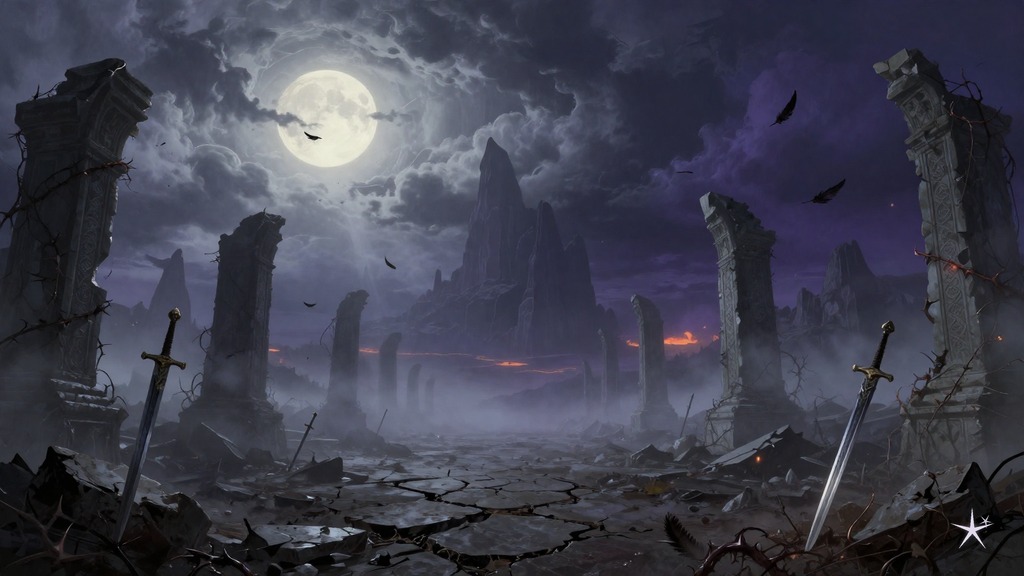
Post-apocalyptic despair as a dark fantasy framework. The wasteland isn’t just a backdrop — it’s a world where civilization is gone, where might makes right in the most literal sense, and where survival means suffering. This is a setting built on hopelessness, where every village Kenshiro visits is one bad day from annihilation. The fantasy element comes from the martial arts themselves: Hokuto Shinken and its rival schools function essentially as magic systems, granting superhuman abilities that reshape the battlefield.
Body horror through combat. Hokuto Shinken kills by targeting the body’s 708 pressure points — a fictional system within the manga’s lore, not a real anatomical concept — causing enemies to swell, burst, and disintegrate from within. Hara illustrates these deaths with gruesome precision. This is among the most visceral violence in manga history, depicted not for shock alone but as the natural consequence of a world where the strongest humans have become walking weapons.
Morally complex warlords. Raoh, Souther, and the other antagonists of Fist of the North Star are rarely simple. They’re tragic figures shaped by the same brutal world as Kenshiro. Each one represents a different response to apocalyptic despair: conquest, cruelty born from trauma, self-sacrifice. This moral gray area is a hallmark of great dark fantasy.
Influence on everything that followed. The template of a lone warrior navigating a nightmarish world, carrying grief and fighting monstrous enemies — this became the foundation for later dark fantasy manga. Series like Berserk and Claymore owe a clear debt to what Buronson and Hara built here. Fist of the North Star proved that manga could be unrelentingly dark and still tell deeply human stories.
Manga vs. Anime — Where the Adaptations Diverge
Fist of the North Star has been adapted to screen multiple times, and the differences matter if you’re deciding where to start.
The original 1984–1987 TV anime ran for 109 episodes, followed by a sequel series, Hokuto no Ken 2 (1987–1988, 43 episodes), which continued the story into the later arcs. These classic anime adaptations added filler — episodes and storylines invented by the animation studio that don’t appear in the original manga — and censored some of the more extreme violence. They’re beloved for their animation style and voice acting, but they’re a looser retelling.
A new TV anime began airing on April 11, 2026 — a fresh adaptation aimed at modern audiences. If you’re discovering the franchise now, this new series is likely what brought you here. Since this adaptation is ongoing — with Part 1 (14 episodes) airing in 2026 and Part 2 announced for 2027 — its full scope isn’t clear yet, so the manga remains the only way to experience the complete story right now.
Multiple films and OVAs (Original Video Animations — standalone anime released directly to home video rather than broadcast on TV) also exist within the franchise, covering various parts of the story from different angles.
For dark fantasy fans specifically, though, the manga remains the definitive version. Tetsuo Hara’s artwork is incredibly detailed — the musculature, the expressions of agony and fury, the vast desolate landscapes — and the uncut violence hits with an impact that no anime adaptation has fully replicated. The manga is where you get the complete, unfiltered vision.
Which Edition Should You Buy?
For English readers, the choice is straightforward: the VIZ Media hardcover edition. It’s 18 Fist of the North Star manga volumes, it’s complete, and it’s available in both hardcover and digital formats. The hardcovers are oversized and include color pages, making them a gorgeous way to experience Hara’s art. This is the current standard English edition and the easiest way to read the full story.
Volume 18 — the final volume — wraps up the entire series.
Fist of the North Star, Vol. 18 (final volume)
If you’re looking for a sample before committing to all 18 books, grabbing Volume 1 in digital format is a lower-commitment way to find out whether the post-apocalyptic ultraviolence is for you. The digital editions are available through major platforms and storefronts.
Japanese Editions at a Glance
If you collect Japanese editions or just want to understand why the volume count varies online, here’s a quick breakdown. In manga publishing, it’s common for a completed series to be re-released in new editions — different trim sizes, different page counts per volume, sometimes with bonus material — which is why the same 245-chapter story can appear as 18 volumes in one edition and 31 in another.
| Edition | Publisher | Volumes | Notes |
|---|---|---|---|
| Original Jump Comics | Shueisha | 27 (commonly cited) | The original serialized release from the 1980s |
| Bunch World Edition | Shinchosha | 31 | 2000s-era reprint |
| Ultimate Edition | Coamix | 18 | Includes color pages and a new episode |
| New Edition (Shinsōban) | Coamix | 18 | Final volume released April 2024 |
The Ultimate Edition and the Shinsōban (New Edition) both come from Coamix and both run 18 volumes, but they’re distinct releases. The Ultimate Edition includes color pages and a bonus new episode. The Shinsōban wrapped up in April 2024, timed around the franchise’s 40th anniversary.
The Bunch World Edition from Shinchosha spreads the same story across 31 volumes in a different format.
The key point: every edition packages the same completed 245-chapter story differently. If you’re shopping for Japanese volumes — especially secondhand — always confirm which edition you’re actually purchasing. The volume numbers won’t match across editions, and accidentally mixing two different printings on your shelf is a frustrating experience.
Frequently Asked Questions
Is the Fist of the North Star manga finished?
Yes. The series is completed in both Japanese and English. The VIZ hardcover edition wrapped up with Volume 18 in September 2025. You can read the entire story without any cliffhangers or waiting.
How many chapters does Fist of the North Star have?
245 numbered chapters across all editions. Regardless of whether you’re reading an 18-volume or 31-volume edition, the underlying story content is the same.
Should I read Souten no Ken (Fist of the Blue Sky) before the main series?
Souten no Ken is a prequel manga set in an earlier era, following a previous Hokuto Shinken successor. While its story takes place before the events of Fist of the North Star chronologically, you should start with the main series. Fist of the North Star was written first, doesn’t require any prequel knowledge, and stands completely on its own. If you enjoy the main series and want more of the Hokuto universe afterward, Souten no Ken is a great follow-up.
What is the age rating for the English manga?
Teen Plus, as rated by VIZ Media. Given the graphic martial-arts violence, themes of death and grief, and the general post-apocalyptic bleakness, that rating feels earned. This isn’t a series for younger readers, but it’s also not gratuitous — the violence serves the story’s themes about power, suffering, and compassion in a broken world.