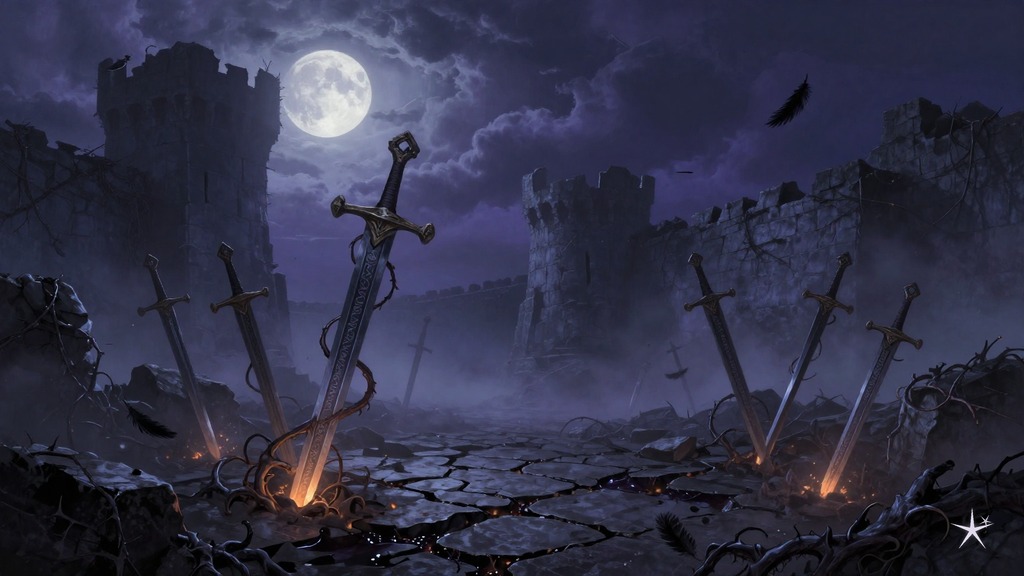
Blade of the Immortal is one of those manga that, once you pick it up, rewires your brain a little. It’s dark, gorgeous, brutal, and surprisingly thoughtful. The complete story spans 30 manga volumes — or 10 omnibus editions in English — and every one of them is available right now. If you’ve been curious about the Blade of the Immortal manga volumes but aren’t sure where to start, how the story breaks down, or which edition to grab, this guide covers all of it.
A quick note before we go further: this is a mature series written for adult readers. It contains intense violence, scenes of torture and human experimentation, and morally complex themes throughout. It’s handled with purpose rather than for shock value, but it’s not a series for younger readers. If that’s a concern, the FAQ at the end has more detail.
Blade of the Immortal Manga — 30 Volumes at a Glance
Blade of the Immortal (無限の住人) is a completed dark fantasy manga created by Hiroaki Samura (沙村広明). It was originally published chapter by chapter — a process called serialization — in Monthly Afternoon (月刊アフタヌーン), a manga magazine for adult male readers (known in Japan as a seinen magazine) published by Kodansha. The series ran from December 1993 to December 2012. In total, it fills 30 volumes in Japanese, and in English, Dark Horse Comics has released the full story across 10 three-in-one omnibus editions — each omnibus collecting three volumes into a single, thick book.
The premise hooks you fast. Manji is a swordsman cursed — or blessed, depending on how you look at it — with immortality. Sacred bloodworms infest his body, knitting him back together after even the most catastrophic wounds. He’s weary, cynical, and has a body count that haunts him. Then a young girl named Rin Asano finds him and asks for his help. Her parents were murdered by the Itto-ryu, a ruthless sword school led by the enigmatic Anotsu Kagehisa, and she wants revenge. Manji agrees to be her bodyguard, and what follows is a long, winding, blood-soaked path across Edo-period Japan — the era when the Tokugawa military government ruled the country, roughly the 1600s through the 1800s.
What makes the series land so hard is how it balances its elements. You get incredible samurai action — some of the best choreographed fight scenes in manga, period — alongside supernatural body horror (think disturbing physical transformation and mutilation played for dread, not action), genuine philosophical weight, and characters on every side of the conflict who feel painfully human. Samura’s artwork uses an ink-wash technique — a painting style that creates fluid, textured brushstrokes instead of the clean black lines most manga is known for — and it’s in a class of its own, raw and atmospheric and unlike anything else in the medium. This isn’t a simple revenge story. It’s a meditation on violence, forgiveness, obsession, and what it means to carry a curse you didn’t choose.
As a completed series, you can read the entire thing from start to finish without waiting for new chapters. That’s a real luxury with a story this dense.
Story Arcs Across the Manga Volumes
Blade of the Immortal’s 30-volume run unfolds across several major narrative arcs — self-contained story sections within the larger narrative, each with its own focus and tension — and each one escalates the stakes and complicates what you think you know about the characters. Here’s how the story moves, grouped by arc with approximate omnibus volume ranges so you know what you’re getting into and can pace your reading (or your purchases).
The Pact — Manji and Rin’s Meeting (Omnibus 1–2)
The series opens with Manji’s backstory — how he became immortal, what it cost him, and why he’s not exactly thrilled about living forever. Then Rin enters the picture. She’s young, untrained, and burning with a desire for vengeance that she’s not entirely equipped to carry out. She recruits Manji as her bodyguard, and they set off to confront the Itto-ryu.
These early volumes establish everything the series is about: the revenge premise, the mechanics of Manji’s bloodworm curse, the terrifying skill of the Itto-ryu swordsmen (the “-ryu” suffix means “school” or “style” — so Itto-ryu is the Itto sword school), and the story’s willingness to be genuinely brutal. You’ll meet Anotsu Kagehisa, the Itto-ryu’s leader, who is far more complex than any simple villain. The tone is set immediately — this is a world where fights have real consequences, and moral clarity is in short supply.
Itto-ryu Conflicts and the Mugai-ryu (Omnibus 3–5)
As Manji and Rin pursue the Itto-ryu, a new faction enters the picture: the Mugai-ryu, a group of assassins backed by the Tokugawa shogunate — the feudal military government — and tasked with destroying the Itto-ryu by any means necessary. On paper, they should be allies to Rin’s cause. In practice, it’s much messier than that.
This stretch of the series is where the moral complications deepen on every side. Every faction — the Itto-ryu, the Mugai-ryu, the shogunate pulling strings in the background — reveals its own darkness and its own twisted logic. Members of the Itto-ryu turn out to have sympathetic motivations. Members of the Mugai-ryu turn out to be capable of shocking cruelty. The duels in these volumes grow increasingly inventive and savage, with Samura designing exotic weapons and fighting styles that keep every encounter feeling fresh.
What’s remarkable is how Samura refuses to let you settle into comfortable allegiances. Characters you want to hate become sympathetic. Characters you trust betray that trust. It’s exhausting in the best possible way.
Imprisonment and the Shogunate’s Experiments (Omnibus 6–8)
This arc is where the series takes its darkest turn — and given what came before, that’s saying something. Manji is captured, and his immortality becomes the subject of horrific experimentation at the hands of the shogunate. They want to understand the bloodworms. They want to replicate immortality. The methods they use are nightmarish.
This is heavy material. It leans hard into body horror and psychological torment, and it’s one of the most harrowing stretches in the entire series. Manji’s immortality, which has been a tactical advantage throughout the story, becomes a source of prolonged suffering — he can’t die, which means there’s no escape from what’s being done to him. Meanwhile, Rin has to navigate the world without her protector, forced to grow in ways the early volumes only hinted at.
If you’re sensitive to depictions of torture and human experimentation, this arc will be the toughest section to get through. But it’s also narratively essential — it forces the story to confront what immortality actually means when it’s stripped of all romance.
The Final Confrontation (Omnibus 9–10)
Everything converges. The Itto-ryu, the Mugai-ryu, the shogunate, Manji, Rin — all the threads of the series pull together for a climax that’s been building across dozens of volumes. Rin’s journey toward or away from vengeance reaches its critical moment. Can she actually go through with it? Should she? And Manji must finally reckon with his immortality — whether the curse can ever end, and whether he even wants it to.
Without spoiling specifics, the ending is earned. This is a series that ran for nearly two decades, and Samura brings it to a resolution that feels true to everything that came before. It’s not tidy. It’s not a fairy tale. But it’s deeply satisfying in the way that only a long, carefully built story can be.
Manga vs. Anime — Where the Adaptations Diverge
Blade of the Immortal has been adapted multiple times, but none of the adaptations fully capture what the manga offers. Here’s how they compare.
The 2008 anime ran for just 13 episodes. It covers only a fraction of the manga’s story and rearranges some of the arcs. If you watched it and felt like the story was incomplete or oddly paced, that’s because it was. Thirteen episodes can’t do justice to 30 volumes of material, and the adaptation makes some structural choices that diverge from Samura’s original vision.
The 2019–2020 anime, titled Blade of the Immortal -IMMORTAL-, is a more ambitious attempt. It ran for 24 episodes and was released on Amazon Prime Video. This version is significantly more faithful to the manga and covers much more of the story — but even 24 episodes requires compressing the full 30-volume narrative, which means some arcs get condensed and some of the quieter character moments get trimmed. If you’ve already watched this version and are wondering whether the manga is worth picking up on top of it, the answer is yes. The anime condenses or skips material throughout, and entire character beats, side conflicts, and thematic layers that exist in the manga simply aren’t present in the adaptation. The manga also gives you Samura’s original artwork, which no animation can replicate. You won’t be retreading the same ground — you’ll be experiencing a significantly richer version of the story.
There’s also a 2017 live-action film, which — as a single feature — necessarily truncates the story even further. It’s an interesting curiosity for fans who’ve already read the manga, but it’s not a substitute for the source material.
The bottom line: the manga is the only way to experience the complete story. Neither anime adaptation covers everything, and neither can replicate Samura’s distinctive ink-wash artwork on the page. The manga is where you get the full character development, the full scope of the plot, and the full impact of the art. If you’ve only seen one of the adaptations and enjoyed it, the manga has so much more waiting for you.
Which Edition Should You Buy
Here’s the good news: getting the complete series in English is straightforward, and the books are widely available through major retailers and bookstores.
Dark Horse Omnibus Editions are the way to go for most readers. Dark Horse Comics released the full series as 10 omnibus volumes, each collecting three volumes into a single book. That means 10 books gets you the entire 30-volume story. They’re thick, satisfying reads, and they’re the most accessible and cost-effective way to own the complete series today. Each omnibus typically carries a retail price in the range of standard manga omnibus editions — checking current listings at any major bookseller will give you the exact number, but the total investment for all 10 is reasonable for a complete series of this length.
One practical note: unlike most modern manga releases, the Dark Horse omnibus editions are formatted to read left-to-right — the same direction as standard Western comics. Hiroaki Samura specifically requested that his artwork not be mirror-flipped, and Dark Horse accommodated this by cutting and rearranging panels so the story reads left-to-right without reversing the art. If you’re new to manga (which is typically published right-to-left in English), this is actually a bonus — these editions read like any other book you’d pick up, with no adjustment needed.
The omnibus format is particularly nice for a series like this because the story’s arcs are long and interconnected — having three volumes’ worth of content in a single sitting lets the pacing breathe. You’re not constantly stopping to grab the next slim volume off the shelf.
The original Dark Horse single volumes — the individual releases that preceded the omnibus editions — are largely out of print at this point. You’ll find them floating around in used bookstores and online marketplaces, sometimes at inflated prices. They’re primarily of interest to collectors. If you’re reading for the story rather than hunting rarities, the omnibus editions are the practical choice.
For anyone starting fresh, Omnibus Volume 10 — the final installment covering the conclusion of the series — was released on November 26, 2019, so the complete English run is available and has been for several years now. You can collect the whole thing without worrying about gaps or waiting for future releases.
The complete series is available now — all ten omnibus volumes, covering the full story from beginning to end. The final omnibus caps the set:
Blade of the Immortal, Vol. 30 (final volume)
Frequently Asked Questions
How many volumes of Blade of the Immortal are there?
The series is 30 volumes in the original Japanese release. In English, Dark Horse Comics has published the complete story across 10 three-in-one omnibus editions, so you need 10 books to own everything.
Is Blade of the Immortal finished?
Yes. The series is fully completed. It was serialized — published chapter by chapter in a manga magazine — from December 1993 to December 2012 in Monthly Afternoon magazine. There’s no waiting for new chapters — the whole story is available right now.
Who created Blade of the Immortal?
Hiroaki Samura (沙村広明) is the creator, handling both writing and art. His ink-wash illustration style — using fluid brushwork and washes of ink rather than the sharp, clean lines typical of most manga — is one of the most distinctive in the medium.
Do the omnibus editions cover the entire story?
Yes. All 10 Dark Horse omnibus editions together contain the full 30-volume series. Nothing is cut or missing — you get the complete story from first chapter to last.
Should I read the manga or watch the anime?
The manga is the definitive version of the story. The 2008 anime (13 episodes) covers only a small portion of the narrative, and the 2019–2020 anime (24 episodes) is more faithful but still compresses a 30-volume story significantly. If you want the full experience — all the character development, all the arcs, and Samura’s extraordinary artwork — the manga is where it lives.
Is this series appropriate for younger readers?
No. Blade of the Immortal is a seinen manga — a category of manga aimed at adult male readers in Japan — and its content reflects that. It contains intense violence, mature themes including torture and human experimentation, and morally complex content throughout. It’s not gratuitous, but it’s unflinching. This is a series for older teens at the earliest and is best suited for adult readers.
What order should I read the omnibus editions in?
Straight through, starting with Omnibus 1 and ending with Omnibus 10. The story is linear — there’s no alternate reading order or side stories to worry about. Just start at the beginning and let it take you to the end.