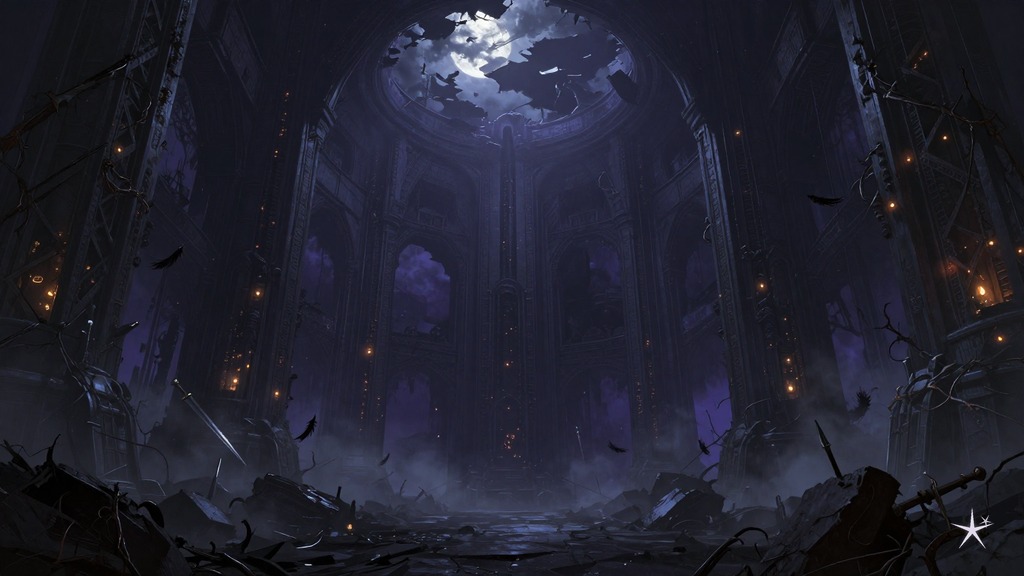
If you searched for “blame manga volumes,” you’re probably wondering exactly how many books this series has and which edition to grab. BLAME! is a completed manga — a Japanese comic series — with 10 original volumes, now collected in 6 oversized Master Edition paperbacks in English. Below, we’ll walk through every volume, compare editions, and help you decide where to start.
BLAME! is one of those series that grabs you by the throat and drags you through miles of silent, crumbling architecture before you even realize what happened. If you want to know what you’re getting into before you buy, you’re in the right place.
Let’s get straight to it.
All 10 BLAME! Manga Volumes — Here’s the Complete Breakdown
BLAME! is a completed dark science fiction manga (Japanese comic) by Tsutomu Nihei. It was originally published chapter by chapter — a process called serialization — in Monthly Afternoon, a manga magazine from the Japanese publisher Kodansha, from 1997 to 2003. The original Japanese run totals 10 volumes.
In English, you have two edition options:
- The original 10-volume singles — each English volume corresponds to exactly one Japanese volume.
- The Master Edition — a set of 6 oversized paperback books, published by Vertical Comics (a Kodansha USA imprint), that collects all 10 original volumes.
The important thing: the story is fully complete. No cliffhangers waiting on a future release, no unfinished storylines, no “will they ever finish this?” stress. You can read the entire journey from start to finish right now.
The Master Edition is the primary way most English readers buy BLAME! manga volumes today, and it’s the edition we’ll focus on below. If you want the whole series in one clean purchase path, this is it.
Not sure if BLAME! is for you? Volume 1 of the Master Edition works well as a standalone test. Pick it up, see if the art style and atmosphere click, and decide from there whether to continue. You don’t need to commit to all six books upfront.
Every BLAME! Manga Volume at a Glance
Here’s a quick reference table for the Master Edition, which is the current in-print English format — meaning the publisher is actively producing and distributing copies. Each Master Edition volume is an oversized softcover that collects multiple original Japanese volumes’ worth of content.
| Master Edition Volume | Content Overview |
|---|---|
| Volume 1 | Killy’s journey begins — wandering the endless megastructure (a colossal, self-expanding city that has grown beyond anyone’s control) in search of Net Terminal Genes, a rare genetic trait that could restore human access to the governing network. Early encounters establish the world’s immense scale. |
| Volume 2 | Deeper into the structure. Encounters with the Builders and the Silicon Life — cybernetic beings hostile to humans — escalate the danger. The world-building expands dramatically. |
| Volume 3 | Killy crosses paths with communities struggling to survive. The Safeguard — automated defense systems that were meant to protect the network but now attack humans indiscriminately — becomes a more prominent threat. |
| Volume 4 | Major revelations about the megastructure and its systems. Toha Heavy Industries — a surviving human faction with advanced technology — enters the story, adding new dimensions to the conflict. |
| Volume 5 | The stakes reach their peak. Alliances form and fracture as Killy pushes toward his goal through increasingly hostile territory. |
| Volume 6 | The conclusion. Everything Nihei has been building — the architecture, the silence, the relentless forward motion — reaches its climax. |
A note on the original Japanese edition: those 10 separate volumes cover the same story, just in a smaller, thinner format. The Master Edition doesn’t add or remove story content — it collects and presents everything in fewer, larger books with better print quality.
What Each Master Edition Volume Covers
Without spoiling the experience (and BLAME! is a series where the experience of discovery matters enormously), here’s a slightly deeper look at what each volume brings to the table.
Volume 1 drops you into Killy’s world with almost no explanation. A lone figure with a powerful weapon walks through impossibly vast structures, looking for something called Net Terminal Genes — a rare genetic marker that would allow humans to reconnect with the megastructure’s governing AI network. You’ll meet the first human settlements clinging to survival inside the megastructure, and you’ll get your first real taste of how hostile this world is. Nihei lets the architecture do most of the talking — dialogue is sparse, and the sense of scale is overwhelming.
Volume 2 expands the threat landscape. The Silicon Life — cybernetic beings that view humans as obstacles — become a serious presence. You start to understand just how layered and dangerous the megastructure is, and Killy’s journey takes him through environments that feel genuinely alien despite being technically man-made. The art in this stretch is some of Nihei’s most striking.
Volume 3 introduces more human communities and gives you a better sense of what daily survival looks like in this world. The Safeguard — automated defense programs originally designed to protect the network, now malfunctioning and targeting humans without authorization — becomes a more direct antagonist. There’s a growing tension between the different factions Killy encounters, and his mission starts to feel both more urgent and more impossible.
Volume 4 is where things shift. Toha Heavy Industries — a surviving human organization with the technical knowledge to potentially help Killy’s mission — plays a significant role, and the backstory and history of the megastructure deepens considerably. You start getting answers to questions you didn’t even know you were asking. The scale of the conflict becomes clearer, and the story gains real momentum.
Volume 5 pushes toward the endgame. Battles are fiercer, the environments more extreme, and alliances are tested. Nihei’s art reaches peak intensity here — double-page illustrations that make you stop and just stare at the sheer detail on the page.
Volume 6 wraps everything up. The conclusion is fitting for a series this unique — it doesn’t over-explain, doesn’t sentimentalize, and doesn’t betray the mood that made BLAME! what it is. Whether you find it satisfying will depend on what you came looking for, but it’s undeniably consistent with the vision Nihei built across the entire run.
How Dark Does BLAME! Get — Content Warnings for New Buyers
BLAME! is one of the most atmospherically oppressive manga you’ll ever read. This isn’t darkness through shock value — it’s darkness through isolation, scale, and silence. Understanding the content intensity matters when you’re deciding which BLAME! manga volumes to buy, especially if you’re buying for someone else.
The megastructure that Killy travels through is incomprehensibly vast. Entire civilizations exist in tiny pockets within structures that stretch beyond comprehension. Most of the time, Killy is alone. Dialogue can be absent for pages — sometimes entire chapters. The emptiness itself becomes suffocating.
That said, there is real violence here. Body horror (disturbing physical transformation or mutilation of characters’ bodies), cybernetic mutilation, and graphic combat are present throughout. Characters are damaged, transformed, and destroyed in ways that emphasize how fragile biological life is in this world. The Silicon Life and Safeguard entities inflict harm that blurs the line between mechanical and organic in deeply unsettling ways.
The darkness in BLAME! is architectural and existential rather than gratuitous. Nihei isn’t trying to shock you with individual scenes of cruelty — he’s building a world where the very environment communicates despair, indifference, and the terrifying vastness of systems that have spiraled beyond anyone’s control. The mood is closer to cosmic horror — dread that comes from confronting forces so vast and indifferent that human existence feels insignificant — rather than slasher-style violence focused on graphic bloodshed.
Who should be prepared: BLAME! is categorized as seinen manga, meaning it’s aimed at adult readers rather than teens. If you need clear narrative structure, frequent dialogue, or emotional warmth from your manga, BLAME! will be a challenging read. It demands patience and rewards attention, but it does not hold your hand. This is a manga for readers who appreciate stories told primarily through images and atmosphere — where the art carries the narrative more than the words do — over conventional plot mechanics.
Content to be aware of: graphic violence, body horror, cybernetic body modification, extreme isolation themes, and pervasive existential dread. There are no significant sexual content concerns, but the violence and horror elements are intense.
Original Singles vs. Master Edition — Which BLAME! Edition Should You Buy
This is the question most new readers have, so let’s lay it out clearly.
| Feature | Original Singles | Master Edition |
|---|---|---|
| Number of books | 10 volumes | 6 volumes |
| Format | Standard manga size | Oversized softcover / trade paperback |
| Print quality | Standard | Improved — larger pages, better reproduction |
| Availability | Out of print and hard to find; no longer sold new by major retailers | Currently in print and readily available |
| Art presentation | Adequate but cramped for Nihei’s style | The larger format lets the architectural art breathe |
The clear recommendation: get the Master Edition.
Here’s why. Tsutomu Nihei’s art in BLAME! is legendary for its architectural detail. The megastructure — those sprawling, impossibly detailed environments — is arguably the main character of the series. In standard manga-sized pages, a lot of that detail gets compressed. The Master Edition’s oversized format gives those double-page illustrations room to hit with their full impact.
The print quality is noticeably better, too. Lines are crisper, blacks are deeper, and the overall reading experience is significantly improved. For a manga that communicates so much through visual atmosphere rather than text, this matters more than it would for a dialogue-heavy series.
The original English singles were published by Tokyopop, a company whose North American publishing arm shut down in 2011 and later relaunched, but has not reprinted the BLAME! original singles. Those volumes are no longer being printed, which is why completing the full 10-volume set at reasonable prices through secondhand sellers is a real challenge. The Master Edition from Vertical Comics solves that problem entirely — all 6 volumes are currently in print and available through major retailers.
For collectors who want the original singles format, the hunt can be part of the fun. But for anyone who just wants to read BLAME! in the best available presentation, the Master Edition is the way to go.
On pricing: the Master Edition volumes carry a higher list price per individual book compared to standard manga volumes, which is expected for oversized trade paperback editions. Each volume’s list price generally falls in the range typical for premium manga hardcovers. Check the current retail price before buying, as prices can vary by retailer. The final Master Edition book, Volume 6, completes the set:
BLAME!, Vol. 10 (final volume)
Where to Buy BLAME! Manga Volumes in English
Good news: because BLAME! is a completed series with the Master Edition currently in print, collecting the whole thing is straightforward. No racing to pre-order, no waiting on future releases, no worrying about volumes going out of stock between printings.
If you’re unsure whether to commit, start with Volume 1 of the Master Edition. It’s a self-contained enough experience to tell you whether BLAME!’s atmosphere and visual storytelling work for you. If it clicks, the remaining five volumes are all available whenever you’re ready.
Physical copies of the Master Edition are available through major bookstores and online retailers. Your local bookshop can likely order them if they’re not on the shelf. Online, the usual major retailers carry all six volumes.
Digital copies of BLAME! are available through platforms including Kindle and BookWalker, though specific availability can shift over time. If you prefer reading digitally, confirm your preferred platform carries the edition you want before committing.
A few practical notes for new buyers:
- You can buy volumes individually. There’s no requirement to grab all six at once. Volume 1 is a low-commitment way to test the series before investing in the rest.
- The series is complete. This means you won’t hit a point where you’re caught up and waiting for more. You can read at your own pace knowing the ending exists and is available right now.
- Storage consideration: these are oversized softcover volumes. They’re beautiful on a shelf, but they take up more space than standard manga. If shelf space is tight, plan accordingly.
BLAME! is one of those series that rewards ownership. The art demands revisiting — you’ll notice new details on rereads that you missed the first time through. Having the physical Master Editions on your shelf means you can flip them open whenever the mood strikes and lose yourself in the megastructure all over again.
Looking for more after you finish? Tsutomu Nihei has created several other works set in similar sci-fi worlds, including BIOMEGA and Knights of Sidonia, if you want to explore more of his style.
If you’ve been curious about BLAME! and wondering whether now is the right time to start collecting — it is. The full series is available, the Master Edition format is gorgeous, and Nihei’s vision hasn’t aged a day since the series wrapped in 2003. Grab Volume 1, settle in, and let the megastructure swallow you whole.